
How to Use a Rowing Machine: Beginner’s Guide to Rowing Confidence
Oct 31, 2025
·
6 min read
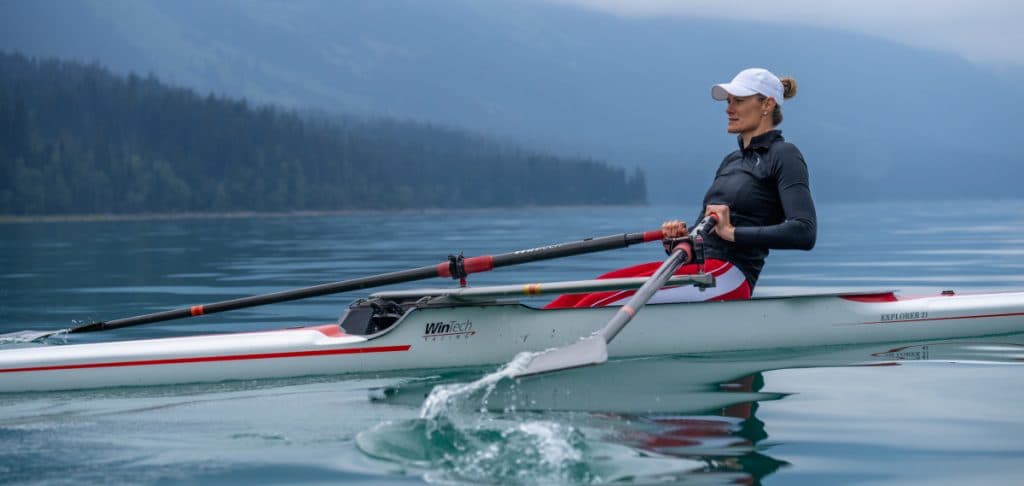
Learning how to use a rowing machine doesn’t have to feel intimidating. At first, the rower may look complicated — too technical or too advanced — but the stroke pattern is simple once you know it. And the reward? A workout that combines strength and cardio, challenges nearly every muscle group, and stays joint-friendly for everyday fitness¹.
Why Learning How to Use a Rowing Machine Feels Intimidating — and Why It Shouldn’t
Walking into a gym, it’s easy to spot rows of treadmills, ellipticals, and bikes. The rower? Usually off to the side, with fewer people using it. That placement alone makes rowing feel less common, maybe even “specialist only.” But the truth is, rowing is designed for everyone.
Unlike running, rowing is non-weight-bearing and low impact, which means it challenges your cardiovascular system without stressing your joints². The stroke is simple once you know the pattern: catch → drive → finish → recovery. After just a few minutes of practice, the cycle starts to feel fluid and natural³. That’s the moment when learning how to use a rowing machine shifts from awkward to empowering.
Benefits of Learning How to Use a Rowing Machine
Rowing activates nearly 85% of your muscle groups — legs, glutes, back, shoulders, arms, and core — in a single movement². That makes it different from most cardio machines, which focus more narrowly on the lower body.
Research also shows rowing improves cardiorespiratory fitness and supports vascular health, even at moderate training volumes⁵. Rowing has been shown to support cardiovascular health and overall metabolic efficiency when part of a consistent fitness routine, according to research⁶.
How to Use a Rowing Machine Step by Step
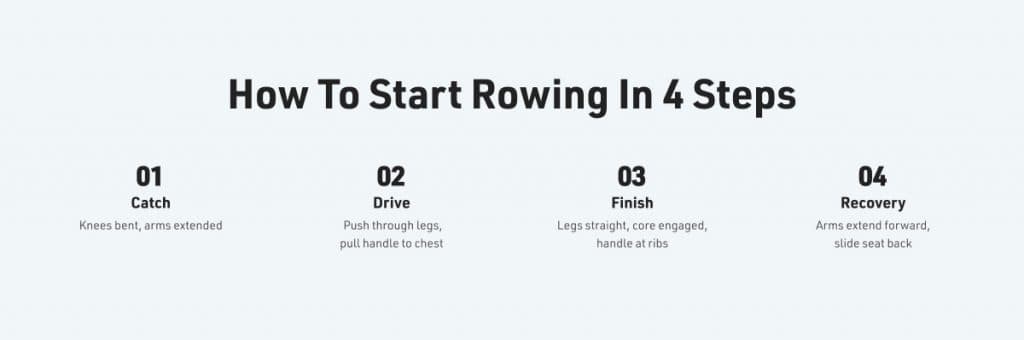
The best way to get comfortable is to start small. Here’s how to use a rowing machine properly from day one:
- Set the damper or resistance low — between 3–5 on most rowers. A lighter setting helps you master the technique without overloading your muscles³.
- Drive with your legs first — press through your heels to push the seat back.
- Engage your core and arms — lean slightly back, then pull the handle to your chest.
- Recover smoothly — extend your arms forward, hinge your body, then bend your knees last.
Focus on rhythm rather than speed, and rowing quickly begins to feel fluid. Many beginners find it even becomes meditative once the movement pattern clicks².
The Best Rower for Home Training
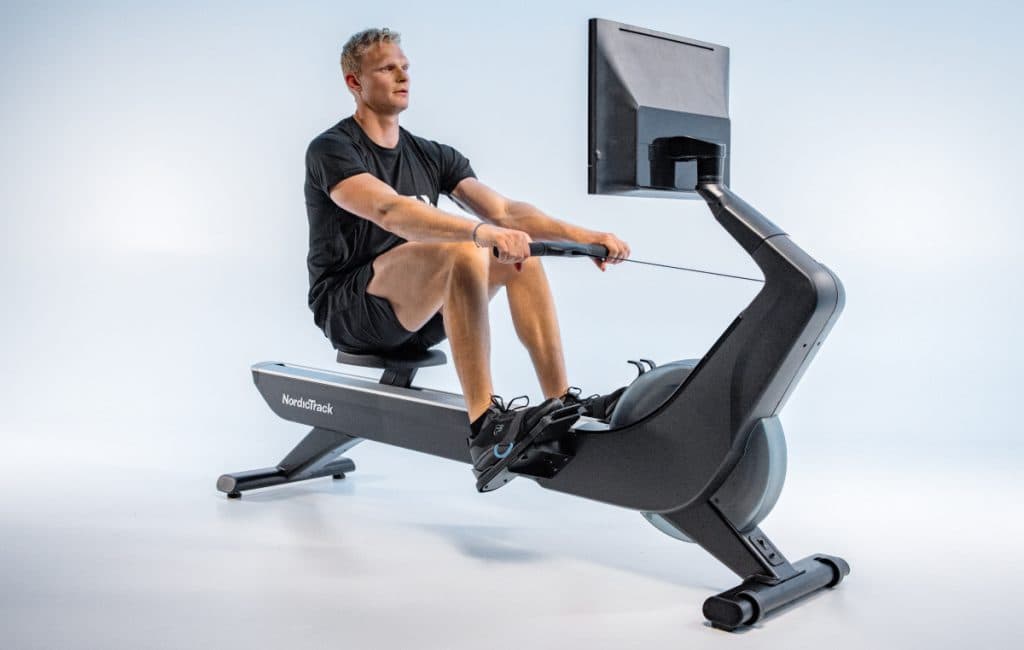
If you’re considering a home setup, the NordicTrack RW900 and RW700 offer features that may appeal to beginners. Both models feature 26 levels of Silent Magnetic Resistance, ergonomic seats, oversized pedals, and SmartAdjust technology that adapts your training as you go. The RW900 adds a 24” HD touchscreen that tilts and pivots, making it easy to follow iFIT trainers on and off the rower. These design features are intended to support a more approachable home rowing experience for new users.
Disclosure: Requires active iFIT membership; features vary by model. Auto-renewal applies.
How iFIT Helps Beginners Row With Confidence
Starting a new workout is easier when you don’t have to figure it out alone. With iFIT beginner rowing programs, you’ll learn how to use a rowing machine with real-time coaching and confidence.
And when you’re ready to go further, iFIT AI Coach creates personalized training schedules that adapt based on your progress. Instead of guessing how much or how often to row, you’ll see structured workouts that grow with you. That structure can help users stay consistent with their workouts and support overall fitness goals.
Explore iFIT Beginner Rowing ProgramsMeet iFIT AI Coach
Adding Variety: Workouts That Keep It Fun
Rowing doesn’t have to mean endless steady sessions. Interval formats, like pyramid rowing, mix work and recovery for an engaging, time-efficient workout. For example, row 200m → 300m → 400m → 500m with easy recovery between, then reverse back down. These progressions keep you mentally fresh while building both aerobic and anaerobic fitness^6.
For even more inspiration, check out 3 Quick HIIT Workouts for Beginners.
The Bottom Line
Rowing doesn’t have to feel intimidating. It’s a simple cycle of legs, core, arms, and recovery that becomes easier each time you practice. With the right rower at home and iFIT’s guided workouts are designed to help users feel more comfortable as they build their fitness.
FAQs
Yes. Rowing is low impact and scalable, making it safe and effective for new exercisers².
Start with 10–15 minutes, focusing on form. Gradually build toward 20–30 minutes as comfort improves³.
Rowing combines cardio with muscle engagement in both upper and lower body, so it provides strength benefits alongside endurance1.
Rowing activates legs, glutes, back, shoulders, arms, and core in one continuous movement2.
Yes. Rowing is non-weight-bearing and joint-friendly, but always check with a physician before starting².
Calorie expenditure during rowing depends on factors such as body weight, effort level, and workout duration. In general, consistent physical activity, including rowing, can support healthy energy balance when combined with proper nutrition⁶.
The NordicTrack RW900 and RW700 offer quiet resistance, ergonomic design, and iFIT integration for guided training.
Follow the four phases — catch, drive, finish, recovery — and keep movements smooth³.
Absolutely. Rowing adapts well to intervals like pyramids, which challenge both aerobic and anaerobic systems6.
iFIT provides trainer-led global workouts, SmartAdjust progression, and AI Coach for customized rowing schedules.
References
- ACE Fitness/SELF.Does Rowing ‘Count’ as Strength Training?
- Cleveland Clinic. Catch, Drive, Finish and Recover! The Top 7 Benefits of Rowing Machines.
- ACE Fitness. Reap the Benefits of Rowing With 3 Fast and Efficient Workouts.
- Hansen D, et al. Rowing exercise increases cardiorespiratory fitness and brachial artery diameter but not traditional cardiometabolic risk factors in spinal cord-injured humans.
- Filipovic M, et al. Maximal Fat Oxidation: Comparison between Treadmill, Elliptical and Rowing Exercises.
- Faelli E, et al. High-Intensity Interval Training in Rowing: Aerobic and Anaerobic Effects.
- Arumugam A, et al. Rowing-Related Injuries and Prevention.
Disclaimer: The primary purpose of this blog post is to inform and entertain. Nothing on the post constitutes or is intended to be a substitute for professional medical advice, prevention, diagnosis, or treatment. Reliance on any information provided on the blog is solely at your own risk. Always seek the advice of your physician or other qualified health provider with any questions you may have regarding a medical condition, and please consult your doctor or other health care provider before making any changes to your diet, sleep methods, daily activity, or fitness routine. Do not disregard professional medical advice or delay seeking it because of information available on this blog. NordicTrack assumes no responsibility for any personal injury or damage sustained by any recommendations, opinions, or advice given in this article. Always follow the safety precautions included in the owner’s manual of your fitness equipment.