
The beginning of a new year often brings a familiar mix of hope and pressure. We want to feel better. Stronger. More balanced with our fitness goals. But many resolutions fade because they ask too much, too fast.
Pilates offers a different starting point.
Rather than focusing on intensity or transformation, Pilates emphasizes controlled movement, breath, and attention. Cleveland Clinic describes Pilates as a form of exercise that can improve muscle tone, flexibility, and strength, stating that “Part of the reason it’s become such a popular mode of exercise is that it’s customizable to fit you and your health goals, regardless of your age, sex, health status and fitness level.” It is often practiced with intention rather than urgency, which makes it easier to return to again and again.
For anyone seeking a calmer, more sustainable relationship with movement this year, Pilates offers a compelling alternative to all-or-nothing goals.
Pilates and the Idea of Longevity
Here, longevity refers to sustaining a movement practice over time, not to lifespan or disease prevention.
Longevity in fitness is not about doing the hardest workout. It is about choosing movement that supports you over time.
Pilates focuses on precision, alignment, and controlled breathing. According to Cleveland Clinic, these principles support strength and stability without relying on high-impact movement.¹ Pilates was originally developed as a method of injury recovery for dancers and is now practiced by a wide range of people as part of a balanced exercise routine rather than a replacement for all other activity.¹
Practices that feel approachable and intentional may be easier to maintain over time.
What Research Says About Pilates and Well-Being
Beyond physical movement, Pilates is often described as a practice that connects body and mind.
An observational study published in Healthcare compared adults who practiced Pilates with inactive controls and found significant reductions in anxiety, depression, and stress-related symptoms in the group practicing Pilates.² The authors emphasized that Pilates involves low- to moderate-intensity exercise and may be appropriate for people who are able to perform this level of activity.²
In the discussion, the authors note that elements such as attention to breathing, body awareness, and controlled movement may help explain these outcomes.² While the authors note that further research is needed, their findings suggest Pilates may be associated with reductions in anxiety, depression, and stress-related symptoms in the studied population.²
This framing is important. Pilates is not presented as a cure or guarantee, but as a practice that may support both physical and mental health when practiced consistently.
Setting Pilates Fitness Goals That Feel Grounding, Not Overwhelming
Instead of asking what you want to achieve this year, it can be more helpful to ask what kind of practice you want to build.
Examples of realistic Pilates goals include:
- Practicing two or three times per week
- Choosing shorter sessions on lower-energy days
- Focusing on quality of movement rather than intensity
- Viewing progress as steadiness, not speed
These goals align with how Pilates is commonly taught and practiced. Cleveland Clinic notes that Pilates routines can be adapted in difficulty and length, which makes them accessible and easier to maintain over time.¹
Guided practice: exploring Pilates with iFIT

For many people, guidance is what turns intention into consistency. Having a trainer lead the session removes decision fatigue and helps keep movement focused and intentional.
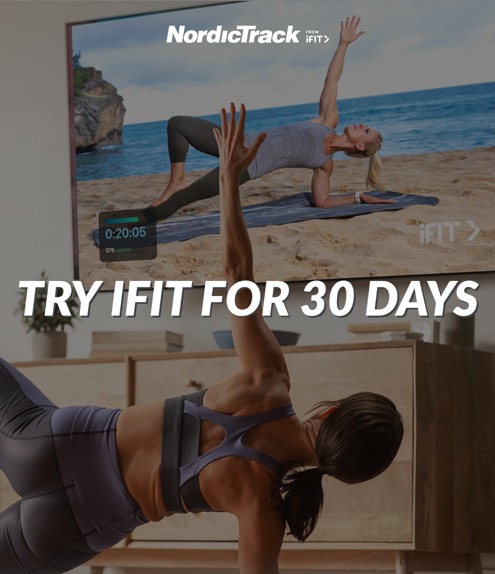
iFIT offers Pilates-based series led by experienced trainers, designed to be practiced at home with minimal equipment.
- Find Your Strength and Flow with Jeni DelPozo focuses on connecting breath and movement through controlled, low-impact sequences that emphasize balance, strength, and fluidity.
- Pilates Strength for Longevity with Pearl Fu is a structured series that blends Pilates-inspired movement with strength training, using intentional progression to support balance and stability over time.
These programs are not about pushing harder. They are about building a repeatable rhythm, which aligns closely with how Pilates is described in both clinical guidance and research.
Pilates 2.0: The Studio Experience for Your New Year Fitness Goals
Pilates has also evolved culturally. Around the world, a new wave of Pilates studios emphasizes calm, design, and ritual alongside movement. These spaces are sometimes described as part of “Pilates 2.0,” where the environment is as intentional as the practice itself.
In cities like Milan and Munich, Pilates studios are designed to feel quiet, grounded, and refined. Movement is slow and controlled. Light, materials, and space encourage presence. Reformers are central to this experience, offering guided resistance and smooth, deliberate motion.
For many people, visiting one of these studios becomes a meaningful way to reconnect with movement. It is not about volume or intensity. It is about stepping into a space that invites focus.
A simple New Year goal might be this: If you find yourself traveling this year, try a Pilates studio that approaches movement as a ritual. See how it feels to slow down, breathe, and move with intention in a thoughtfully designed space.
Understanding the Reformer in Studio Pilates

Cleveland Clinic explains that reformers use a sliding platform and adjustable resistance to change how Pilates exercises are performed.¹ This setup allows for controlled strength work while supporting alignment and precision.
Many of the reformers used in these design-forward studios are commercial-grade machines built for daily use. The Ultra 1 Reform RX-S is one such reformer, designed for studio environments rather than typical home spaces.
If you encounter this machine in a studio, you are experiencing one example of how Pilates is practiced in some modern studio settings. For most people, that studio context is exactly where this type of equipment belongs to help achieve their fitness goals.
If you are curious to learn more about the Reform RX-S itself, you can explore it here.
A Calmer Way Forward
Pilates does not ask you to rush. It asks you to pay attention.
As Cleveland Clinic summarizes, Pilates can be a valuable addition to a balanced exercise routine, offering a low-impact way to build strength and stability.¹ Research also suggests Pilates may be associated with reductions in anxiety, depression, and stress-related symptoms in some adults.²
As you move into the new year, a quieter goal may be the most lasting one: Choose a practice that helps you feel steady, present, and willing to return.
FAQs
Cleveland Clinic states that Pilates is adaptable and can be modified to suit different fitness levels, making it accessible for beginners.¹
Many programs suggest two to three sessions per week as a manageable starting point, especially for those new to Pilates.¹
Not only is it good for your fitness goals, but an observational study also found reductions in anxiety, depression, and stress-related symptoms among adults practicing Pilates compared to inactive controls, while noting the need for further research.²
Cleveland Clinic recommends Pilates as part of a balanced routine that may also include cardiovascular and other strength activities.¹
Yes. Pilates can be practiced on a mat, with guided programs at home, or in studios using reformers and other equipment.¹
Explore more
- Find Your Strength and Flow with Jeni DelPozo
- Pilates Strength for Longevity with Pearl Fu
- How to Practice Pilates at Home and Get a Great Workout In
- Explore the Ultra 1 Reform RX-S
- Milan: The Quiet Luxury of Pilates 2.0
- Munich: The Performance Heart of Reformer Pilates 2.0
References
- Cleveland Clinic. Pilates 101: What It Is and Health Benefits.
- Guidotti S, Fiduccia A, Morisi G, Pruneti C. Benefits of Pilates on Depression, Anxiety, and Stress: An Observational Study Comparing People Practicing Pilates to Non-Active Controls.
Disclaimer: The primary purpose of this blog post is to inform and entertain. Nothing on the post constitutes or is intended to be a substitute for professional medical advice, prevention, diagnosis, or treatment. Reliance on any information provided on the blog is solely at your own risk. Always seek the advice of your physician or other qualified health provider with any questions you may have regarding a medical condition, and please consult your doctor or other health care provider before making any changes to your diet, sleep methods, daily activity, or fitness routine. Do not disregard professional medical advice or delay seeking it because of information available on this blog. NordicTrack assumes no responsibility for any personal injury or damage sustained by any recommendations, opinions, or advice given in this article. Always follow the safety precautions included in the owner’s manual of your fitness equipment.