
GLP-1 and Strength Training: Avoiding a Common Pitfall
Losing weight on a GLP-1 medication? Learn why strength training is essential for protecting muscle, supporting metabolism, and building long-term results that last.
Jan 9, 2026
·
10 min read
IN THIS ARTICLE
If you have started a GLP-1 medication, you are not alone if you feel hopeful, nervous, or a little overwhelmed. Many people begin this journey because they want to feel healthier, move with less discomfort, or reclaim confidence after years of frustration.
As weight starts to come off, there is one common pitfall that often gets overlooked: not all the weight you lose is fat. “If you cut back too drastically on your food intake, especially protein, your body will break down muscle for fuel.9” “Muscle tissue is what doctors and scientists refer to as “metabolically active” — meaning that it takes energy to maintain itself.1”
“Lean muscle mass naturally diminishes with age. Your body fat percentage will increase over time if you don’t do anything to replace the lean muscle you lose over time.2” But the good news is that “strength training can help you preserve and enhance your muscle mass at any age.2” The Mayo Clinic explains that strength training can preserve and enhance muscle mass and improve your ability to do everyday tasks.² Harvard Health also notes that muscle burns more calories than fat, so building your muscle tissue can boost your metabolism.⁴ Because muscle burns calories, even at rest, having less muscle can mean your body burns fewer calories.⁴
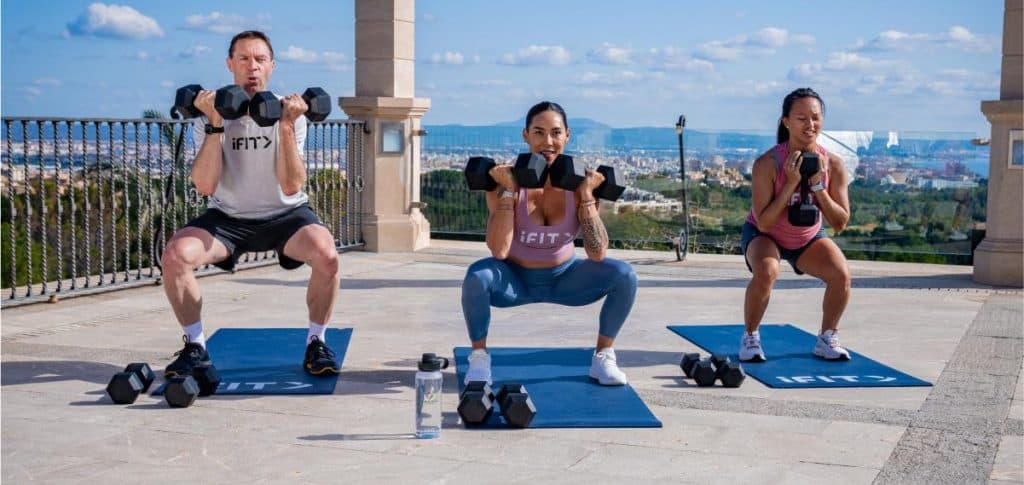
This guide will help you understand why strength training matters while you are losing weight, how to protect your muscle, and how to feel more in control of your journey. You will also hear guidance from iFIT trainer John Peel, who created a strength program designed specifically to help people maintain muscle during weight loss.
You deserve results that last. Strength training is one of the most important ways to support that.
Protect Your Metabolism While Losing Weight
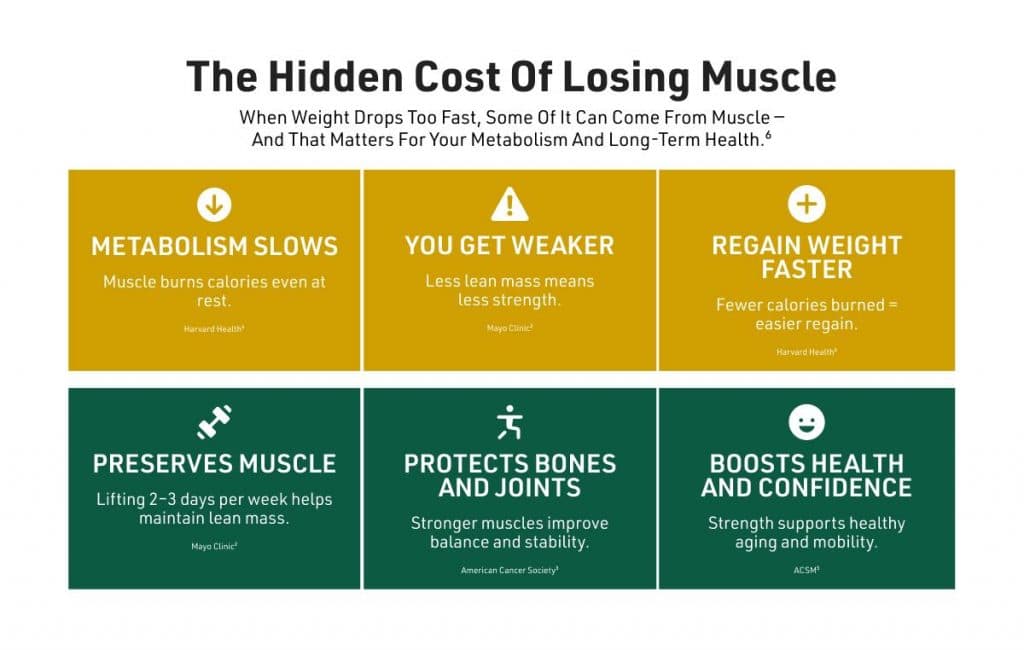
“When you go on a diet, you don’t just lose fat – you lose muscle too… Losing muscle is a problem because muscle burns more calories than fat, and even burns calories when you are at rest.⁴
Harvard Health explains that muscle mass is one of the strongest determinants of basal metabolic rate (“BMR”), meaning the more muscle mass you have, the higher your BMR will generally be.⁴ Separately, Cleveland Clinic notes that cutting calories too drastically, especially protein, can lead the body to break down muscle for fuel, and it emphasizes that muscle mass plays an important role in keeping your metabolism ‘powered up.’⁹
John Peel explains it clearly in his GLP-1 support strength series:
The goal is not just watching the scale move. It is protecting the muscle that helps you stay strong, active, and resilient.
Build a Stronger, More Toned Physique
Strength training can help shape and support your body during weight loss. When fat loss happens alongside resistance training, many people notice more definition and a more balanced shape.
Cleveland Clinic explains that muscle is denser than fat and takes up less physical space for the same weight.¹ This is why two people at the same body weight can look very different depending on how much muscle they carry. Building or maintaining muscle while you lose fat can help you look and feel stronger as your body changes.
To support this process of building or maintaining muscle, your body needs:
- Enough protein to repair and rebuild muscle6
- Enough total calories to fuel workouts and recovery9
- Rest so muscles can adapt between sessions2
You do not need long workouts or heavy weights to begin. The American Cancer Society notes that two or three 20- or 30-minute strength training sessions each week can lead to significant health benefits, including increased muscle mass and improved strength.3
As John Peel puts it:
Improve Your Long-Term Health and Daily Function
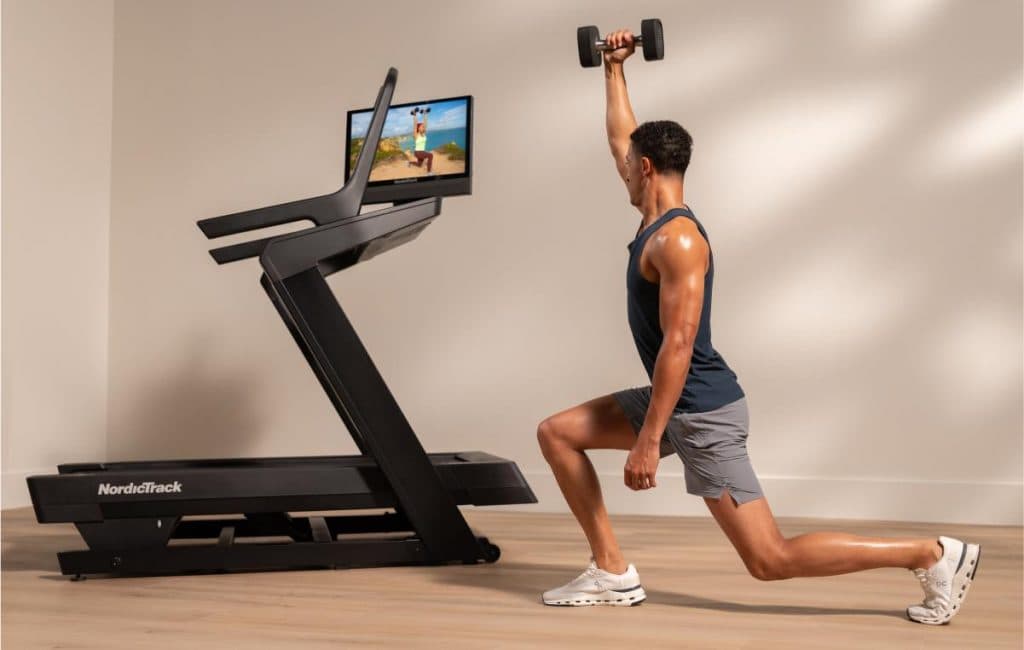
Strength training supports far more than physical appearance. The American Cancer Society highlights several benefits, including: increased muscle mass, stronger bones, better joint flexibility, improved balance, and support for weight control.³ Strength training can help everyday tasks feel easier and can reduce the risk of falls and injuries as you age.³
Mayo Clinic adds that strength training can protect your joints from injury, enhance quality of life, and help you maintain independence by making daily activities, like carrying groceries or climbing stairs, more manageable.²
John Peel shares this message:
Stronger muscles support a stronger life both now and in the future.
Why People Often Feel Tired During Weight Loss
Feeling more tired while you are losing weight is very common, especially if weight is coming off quickly.
Cleveland Clinic explains that starting out with too large of a calorie deficit can lead to side effects like fatigue, headaches, dehydration, nausea and irritability.⁹ If you also cut too much protein from your diet, your body may begin breaking down muscle for fuel, which can further impact strength and metabolism.⁹
Sleep plays a role too. Sleep expert Dr. Michael Breus, a member of the iFIT Science Council, notes:
“Low sleep impairs muscle recovery and energy. When combined with the metabolic changes that happen while taking GLP-1 medications, the result can be greater fatigue.”
Scientific American notes that “the only way to prevent muscle loss somewhat while losing weight is to combine exercise (particularly resistance exercise and endurance exercise) with a diet higher in protein. This is because exercise stimulates muscle growth – but this process can only happen if you have an adequate supply of protein.⁶”
If you want guidance on training through these low-energy days, read: GLP-1 and Energy: How To Work Out When You’re Tire
How To Start Strength Training Safely
You do not need a gym membership or advanced experience to start strength training. The Mayo Clinic notes that you can see significant improvement in strength with just two or three 20- or 30-minute strength training sessions per week.² Common strength training options include:
- Bodyweight exercises: squats, lunges, push-ups, planks
- Resistance bands or tubing
- Free weights: dumbbells or kettlebells
- Weight machines, if you have access to a gym2
Movements that work multiple muscle groups at once, such as squats, lunges, rows, and push-ups, are called compound exercises. The American Council on Exercise explains that compound exercises burn more calories. “Exercises that involve more muscle tissue require more oxygen, which helps the body increase its net energy expenditure.8”
Mayo Clinic recommends choosing a weight or resistance level heavy enough to tire your muscles after about 12 to 15 repetitions.² Research cited by Mayo Clinic shows that a single set of 12–15 repetitions taken to muscle fatigue can build muscle efficiently in most people.² When that becomes easy, gradually increase the weight or resistance.²
To summarize, a strong starting point is:
- 2–3 strength training sessions per week
- Exercises that target all major muscle groups2
- 1 set of each exercise, using a resistance level that leads to muscle fatigue after about 12-15 controlled repetitions.2
John Peel encourages patience with the process:
“The hardest part about following through with any program, especially when it's built around strength, is trusting the process. It's a slow process… One workout isn’t going to get us to the finish line, but one mindset and one program can put us in the right direction.”
Start light. Focus on form. Progress gradually.
A Program Designed with Weight Loss in Mind

iFIT created John Peel’s GLP-1 Strength Support to help people protect their muscle during weight loss and feel less intimidated by strength training.
It is designed for those who:
Are losing weight quickly
Want to protect their muscle
Feel unsure about lifting weights
Need simple routines that work on low-energy days
John’s approach emphasizes slow, controlled lifting and realistic progressions:
“We are here to get better. Not perfect. Better. Quality reps are how we’re going to build muscle, maintain strength, and get stronger every single time.”
Start building strength today with John Peel’s GLP-1 Strength Support and support your progress with Select-A-Weight Dumbbells
Takeaway
Many people on GLP-1 medications ask:
- What if I lose muscle?
- Will I feel too tired to work out?
- How do I keep weight off long term?
- How do I stay motivated when progress slows?
You are not alone. Your body is changing quickly, and that can feel unsettling. Strength training, reasonable nutrition, hydration, and sleep can help you stay grounded, capable, and confident.
Your journey deserves compassion. You deserve results that last. You are building a strong foundation for the future.
FAQs
How can I prevent muscle loss while on a GLP-1?
Strength training is essential to preserve, activate, and build muscle. Per Mayo Clinic, you can see significant improvement in your strength with just two or three 20- or 30-minute full-body strength training sessions per week, and common choices include using resistance bands, dumbbells, or bodyweight exercises.2
How much protein should I be eating?
There is no single protein target that fits everyone. An American College of Sports Medicine presentation on rehabilitative nutrition explains that the Recommended Dietary Allowance (RDA) of protein is: “An estimate of the minimum daily average dietary intake level that meets the nutrient requirements of nearly all (97 to 98%) healthy individuals.⁵”The same presentation notes that “research supports some may benefit from protein intakes greater than the RDA,” particularly “athletes / highly active adults” and “older adults.”⁵Your individual protein needs depend on factors such as activity level, age, health history, and overall energy intake.For personalized guidance, speak with your healthcare provider or a registered dietitian.
What types of exercises should I do?
The best strength exercises are the ones you can perform consistently and safely. The American Council on Exercise notes that compound exercises, such as squats, lunges, push-ups, and rows, use more muscle tissue and can be a time-efficient way to train.⁸ These can often be done with minimal equipment or just bodyweight.
For more help on where to start, check out another Nordictrack article, Master Home Strength Training: Build Real Strength in Your Living Room.
Will weight loss make me too tired to work out?
Fatigue is more likely if your calorie deficit is too large or your meals are not balanced. Cleveland Clinic explains that cutting calories too aggressively can lead to side effects like fatigue, headaches, dehydration, nausea and irritability, and that overly restrictive diets can also slow your metabolism.⁹ While losing weight on a calorie deficit, staying hydrated, and eating enough protein-rich foods can help you feel fuller and stay active.⁹
Why is sleep so important while I’m losing weight?
Fatigue is more likely if your calorie deficit is too large or your meals are not balanced. Cleveland Clinic explains that cutting calories too aggressively can lead to side effects like fatigue, headaches, dehydration, nausea and irritability, and that overly restrictive diets can also slow your metabolism.⁹ While losing weight on a calorie deficit, staying hydrated, and eating enough protein-rich foods can help you feel fuller and stay active.⁹
Do I need heavy weights to protect my muscle?
Not necessarily. According to Mayo Clinic, research shows that a single set of 12 to 15 repetitions with the proper weight can build muscle efficiently in most people.² The key is controlled movement and reaching fatigue safely, not lifting the heaviest possible weight.
What should I do if my appetite is too low to fuel strength training?
If you are eating much less than usual, it may be harder to fuel workouts and recovery. Cleveland Clinic warns that cutting too calories too drastically, especially protein intake, can cause your body to break down muscle for energy and may slow your metabolism.⁹ Nutrient-dense and protein-packed meals and snacks can help you meet your basic needs. Just remember to not cut out the protein.⁹A follow-up article on nutrition provides more guidance on structuring meals while your appetite is changing.
How long will it take before I feel stronger?
Mayo Clinic notes that beginners can see measurable strength improvements with just two or three 20- or 30-minute full-body strength sessions per week.² Strength gains may feel gradual at first, but consistent training supports meaningful progress over time. The American Council on Exercise also highlights that compound exercises can accelerate strength development because they activate more muscle groups at a time.⁸
References
- Cleveland Clinic. The Difference Between Muscle Weight vs. Fat Weight.
- Mayo Clinic. Strength training: Get stronger, leaner, healthier.
- American Cancer Society. 5 Benefits of Strength Training
- Harvard Health Publishing. Can you increase your metabolism?
- American College of Sports Medicine (ACSM) The Emerging Science of Rehabilitative Nutrition: Protein’s Role as the Protagonist.
- Scientific American. Why You Don’t Just Lose Fat When You’re on a Diet
- USA Weightlifting. The Science Behind Weightlifting: How It Affects Your Body
- American Council on Exercise (ACE). 5 Benefits of Compound Exercises.
- Cleveland Clinic. Calorie Deficit: What to Know
- Doherty, R., Madigan, S., Nevill, A., Warrington, G., & Ellis, J. The Sleep and Recovery Practices of Athletes
- Harvard Health. Creating balanced, healthy meals from low-calorie, nutrient-dense foods
Disclaimer: The primary purpose of this blog post is to inform and entertain. Nothing on the post constitutes or is intended to be a substitute for professional medical advice, prevention, diagnosis, or treatment. Reliance on any information provided on the blog is solely at your own risk. Always seek the advice of your physician or other qualified health provider with any questions you may have regarding a medical condition, and please consult your doctor or other health care provider before making any changes to your diet, sleep methods, daily activity, or fitness routine. Do not disregard professional medical advice or delay seeking it because of information available on this blog. NordicTrack assumes no responsibility for any personal injury or damage sustained by any recommendations, opinions, or advice given in this article. Always follow the safety precautions included in the owner’s manual of your fitness equipment.
RECENT ARTICLES

Fitness | Nutrition
GLP-1 and Adjusting Your Diet Correctly: Protecting Muscle and Metabolism
Using a GLP-1 medication? Learn how protein, strength training, hydration, and balanced nutrition help protect muscle and metabolism during weight loss.
Jan 16, 2026 · 11 min read
READ MORE
Fitness
Move Through the Tired Days: How to Work Out When You’re Tired on GLP-1s
Feeling low energy while using GLP-1 medications? Learn how to adjust workouts, support recovery, and stay consistent with smart movement, hydration, and nutrition strategies.
Jan 20, 2026 · 9 min read
READ MORE
Fitness
GLP-1 and Strength Training: The Key to Lasting Weight Loss
Using a GLP-1 medication? Learn why strength training helps preserve muscle, support metabolism, and improve long-term weight maintenance during weight loss.
Jan 21, 2026 · 12 min read
READ MORE