
What PT Clinic Owners Should Know Before Adding a Pilates Reformer to Their Practice
PT clinics have been adding Pilates reformers to their equipment inventory for decades. Here is what clinic owners should evaluate before purchasing: resistance range, patient safety, hygiene, warranty, and the connected content layer.
Sep 25, 2026
·
9 min read
IN THIS ARTICLE
KEY TAKEAWAYS
- The reformer's spring system allows PTs to assist movement at very light loads and progress to genuine challenge — all in the same machine, without changing equipment. That range is the core clinical utility.
Clinical reformer evaluation criteria differ from studio or performance settings: infection control standards, warranty language covering healthcare settings, and weight capacity for a diverse patient population.
The Smart Spine™ tracking system gives PTs real-time resistance and movement data per session — useful for monitoring load and tracking patient progression over time.
PTs can assign appropriate iFIT sessions to suitable patients for independent home practice between clinic visits, extending the programme without additional face-to-face time.
The Reformer Digital Activation is priced per machine: $396 for one year, $999 for three years, or $1,599 for five years.
Physical therapy clinics have been adding Pilates reformers to their equipment inventory for decades. The apparatus was originally designed to assist people with movement through spring-based resistance, starting in positions that reduce gravitational load and progressing as the patient's capacity improves. [1] That fundamental design makes it a practical addition to a musculoskeletal rehabilitation toolkit, which is why PTs have integrated it into their practice and why clinic owners evaluating equipment purchases are increasingly considering it.
This article is for PT clinic owners, practice directors, and healthcare facility operators who want to understand what a reformer brings to a clinical setting and what to look for when evaluating one for purchase.
Why PT Clinics Add Reformers
The reformer's core value in any clinical or performance setting is adjustability. Spring resistance can be set to assist movement at very light loads, provide moderate resistance, or create genuine challenge. All in the same machine, without changing equipment. The carriage allows patients to work in supine, seated, kneeling, or standing positions, giving the PT options across a wide range of patient needs and physical starting points.
PT clinics that have integrated reformers into their practice describe using them for low-impact strengthening when patients cannot tolerate vertical loading, flexibility and range of motion work, core stability programming, and customisable resistance exercise adapted to each patient's capacity and goals. [2]
Clinical education resources for PTs describe the fundamental principle: the reformer's spring system assists patients with strengthening work by starting in supine to reduce gravitational forces and progressing to vertical as tolerance improves. [1] That progression structure gives PTs a wider range of options within a single piece of equipment.
What the Research Supports
A randomized controlled trial of 101 participants compared a Pilates program, a trunk strengthening programme, and a control group over eight weeks. The Pilates group reported greater improvements in functional disability and quality of life than both comparators, and those improvements held at the three-month follow-up. [3]
A separate 12-week Pilates reformer training study in competitive Latin dancers found significant improvements in joint angles, movement speed, and muscle activation measures specific to a dance technique task. [4]
These studies support supervised Pilates exercise as a component of structured exercise programming. They do not constitute evidence that any specific reformer product treats or cures any medical condition. Clinical decisions about whether and how to use reformer-based exercise with any individual patient are made by the treating physical therapist based on their professional judgement and the patient's individual circumstances.
What to Look for When Buying a Pilates Reformer for a PT Clinic
PT clinics have operational requirements that differ from studios or performance facilities. The evaluation criteria reflect those differences.
Resistance Range
PTs need precise spring weight control across a broad range. A patient early in a structured programme needs very light assisted movement. A patient working toward full functional activity needs challenging loads. The same machine should serve both without requiring a change of equipment.
The Ultra 1 Reform RX-S provides up to 143 lbs (65 kg) of resistance across four push-button springs. The push-button system allows fast resistance changes without interrupting the session, which matters in a clinical environment where the PT is actively managing the patient's load throughout.
Patient Safety
Patients in a clinical setting may have limited mobility, balance concerns, or precautions from their treating physician. The Ultra 1 Reform RX-S uses a Smart Spine™ Enclosed-Spring Solid Spine design intended to reduce pinch-point exposure during resistance changes, purpose-built for environments where users operate without direct instructor supervision. For a PT clinic where multiple patients use the machine across the day, that design characteristic has practical safety value.
Weight Capacity
Clinical populations include patients across a wide range of body types and weights. The Ultra 1 Reform RX-S carries a 375 lb (170 kg) user capacity, appropriate for a clinical floor serving a diverse patient population.
Hygiene
Clinical environments require surfaces that can be thoroughly cleaned between patients using standard clinical disinfectants. The Ultra 1 Reform RX-S uses Grade 5 antimicrobial vinyl carriage material rated for high-traffic commercial use and repeated cleaning without degradation.
Durability and Warranty
A busy clinic may put multiple patients through the reformer each day. Commercial-grade components with manufacturer warranty terms that explicitly cover clinical use are the baseline. Confirm warranty terms in writing before purchasing. Some warranties cover commercial use without specifying clinical or healthcare settings.
The Connected Layer: iFIT Pro in a Clinical Setting
The Reformer Digital Activation subscription unlocks the iFIT Pro library on the Ultra 1 Reform RX-S. For a PT clinic, this has a specific operational application: PTs can assign appropriate beginner-accessible iFIT sessions to suitable patients for independent home practice between clinic visits, extending the program without requiring additional face-to-face time.
The Resilient Body with Ashley Paulson is one example from the iFIT library: a foundational reformer program designed for users with limited prior reformer experience. Read more about The Resilient Body at iFIT.
Activation is priced per machine: $396 for one year, $999 for three years, or $1,599 for five years. The treating PT determines whether and how independent reformer practice is appropriate for any individual patient. iFIT sessions are one tool the PT can choose to incorporate into a patient's program.
Questions to Ask Before Purchasing
Infection control. Confirm that the carriage, footbar, and straps can all be cleaned with the disinfectants your clinic uses, and that the materials are rated for repeated clinical cleaning without degradation.
Warranty language. Some warranties cover commercial use without explicitly naming clinical or healthcare settings. Get written confirmation that the warranty covers your specific context.
Liability coverage. Review your professional liability policy with your broker before the first patient session. Reformer use with patients may require a specific endorsement.
Patient population. Match the machine's spring range and weight capacity to the patients who will actually use it. A clinic serving a mixed population needs broader range and higher capacity than one working with a narrower patient profile.
Scope of practice. Most state PT practice acts do not restrict reformer use by licensed PTs, but confirm with your licensing board if you have any questions about your specific jurisdiction.
Does a PT Clinic Need a Certified Pilates Instructor?
No. Physical therapists are licensed practitioners who determine the appropriate therapeutic exercise tools and techniques for their patients within their professional scope of practice. Many PTs pursue additional Pilates-specific continuing education to expand their clinical skills with the apparatus. The Medbridge platform offers Pilates continuing education courses specifically designed for PT clinical settings. [1]
Explore More
FREQUENTLY ASKED QUESTIONS
References
Orthopaedic Associates of Duluth. The Pilates Reformer and its Use in Physical Therapy
The primary purpose of this blog post is to inform and entertain. Nothing on the post constitutes or is intended to be a substitute for professional medical advice, prevention, diagnosis, or treatment. Reliance on any information provided on the blog is solely at your own risk. Always seek the advice of your physician or other qualified health provider with any questions you may have regarding a medical condition, and please consult your doctor or other health care provider before making any changes to your diet, sleep methods, daily activity, or fitness routine. Do not disregard professional medical advice or delay seeking it because of information available on this blog. NordicTrack assumes no responsibility for any personal injury or damage sustained by any recommendations, opinions, or advice given in this article. Always follow the safety precautions included in the owner's manual of your fitness equipment.
RECENT ARTICLES
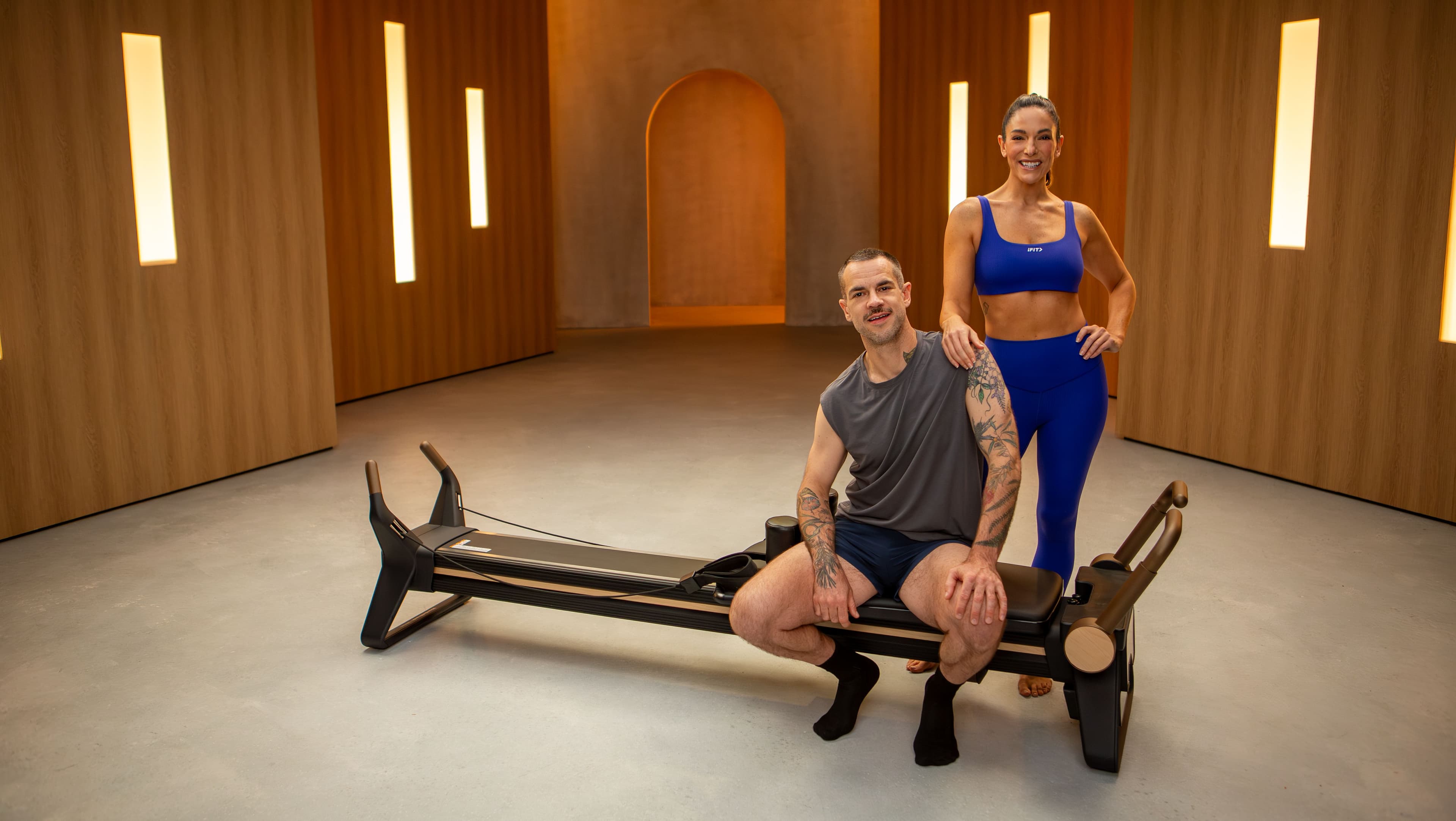
iFIT App | Trainers
Meet the Instructors Behind Your iFIT Pilates Workouts
Nine instructors. Nine different backgrounds. Here is who is leading your iFIT reformer sessions and what each of them brings to the practice.
Jun 30, 2026 · 7 min read
READ MORE-Feb_25-146.jpg&w=3840&q=75)
Equipment
Why Commercial Gyms Are Adding Pilates Reformers (And What It Means for Your Facility)
Boutique Pilates members spend $200 to $260 a month, compared to $30 to $50 at a high-volume gym. See why Crunch and 24 Hour Fitness are adding reformers to capture that revenue.
Aug 21, 2026 · 8 min read
READ MORE
Equipment
What to Look for When Buying a Commercial Pilates Reformer for Your Studio
Buying a commercial Pilates reformer is not a home purchase decision. Here is what actually matters for a studio floor: resistance range, frame durability, safety design, floor space, and service support.
Sep 2, 2026 · 11 min read
READ MORE