
Is Running on a Treadmill Bad for Your Knees? What the Research Actually Says
Wondering if treadmill running hurts your knees? Here's what the research actually shows about impact, training load, form, and long-term joint health for runners.
Aug 19, 2026
·
8 min read
IN THIS ARTICLE
KEY TAKEAWAYS
- Running on a treadmill does not inherently damage healthy knees
How you train (load, form, progression) matters more than the machine itself
Treadmill cushioning and incline can change how impact feels
High-intensity, long-term training in athletes shows different patterns than recreational use
An elliptical is a lower-impact alternative when knees need a break
The Short Answer
No, running on a treadmill is not inherently bad for your knees. Research shows that running itself does not cause knee arthritis in healthy individuals.¹
That said, how your knees feel during treadmill running depends on factors like training load, running form, footwear, and how quickly you increase intensity.²
Treadmill running can also feel more manageable for some people because it provides a flat, consistent, and cushioned surface compared to harder outdoor terrain.¹
Why People Think Treadmills are Bad for Knees
This idea mostly comes from a simple assumption: running equals impact, and impact must be bad for your joints.
But that is not what research shows.
A systematic review found that running is associated with small, short-term changes in knee cartilage after a workout, and these changes appear to be transient.³ Your knee responds to the stress of a run and then begins to recover afterward.
Because these changes have been observed to recover over time, the findings suggest that these short-term responses are not necessarily indicative of lasting cartilage changes in healthy individuals.³
What Research Says About Running and Knee Health
The relationship between running and knee health is more nuanced than people think.
Research reviewing physical activity and the knee joint shows mixed results, but more recent evidence suggests that regular activity may support cartilage health rather than harm it.² Your joints are designed to handle movement. Staying active can help maintain how your knees function, as long as you are not overloading them.
At the same time, higher levels of intense or long-term loading, especially in athletes, can increase stress on joint structures depending on how training is managed.⁴
This is why the real question is not whether running is bad, but how you train.
Treadmill vs Outdoor Running for Knees
Surface matters more than location.
Hard surfaces like concrete create more impact forces on your joints compared to softer or cushioned surfaces.¹
A treadmill provides a more controlled environment with consistent pacing and fewer external variables like uneven ground or obstacles.¹
That consistency can make it easier to manage effort and avoid sudden spikes in intensity.
But treadmill running is not automatically better. Repetitive movement patterns and pushing the pace too aggressively can still lead to discomfort.
Why Your Knees Might Hurt on a Treadmill
If your knees hurt during treadmill running, the cause is usually not the treadmill itself.
Common reasons include:
Increasing speed, incline, or duration too quickly
Running with a long stride or stiff posture
Wearing shoes that no longer absorb impact well
Using settings that do not match your current fitness level
Injury history also plays a role. Research shows that prior injury is a major factor in the development of joint issues over time.²
A Key Nuance: When Treadmill Running Can Become a Problem
This is where context matters.
A recent study on athletes found that long-term, high-intensity treadmill running was associated with thinner knee cartilage compared to non-athletes.⁴ The same study also identified a weak negative relationship between time spent running and cartilage thickness.⁴
However, the researchers also note that the long-term impact of sustained treadmill running on joint health remains uncertain.⁴
What this means is that while high-volume, high-intensity training may be linked to changes in cartilage in athletes, this does not establish that treadmill running itself causes joint damage, especially in recreational or moderate use.
But this does not apply to most people.
These findings are specific to high-intensity, long-duration training in athletes, not moderate or recreational treadmill use.
The takeaway is simple. Overuse and intensity matter more than the treadmill itself.
Can Treadmill Cushioning Help?
Cushioning can change how running feels.
A treadmill’s surface is designed to be more forgiving than very hard outdoor terrain, which can reduce perceived impact during a run.¹
That does not mean it prevents injury or protects your knees in every case.
It simply means some runners may find it more comfortable, especially when managing training volume.
Is Incline or Flat Treadmill Running Better for Your Knees?
Incline changes how your joints are loaded.
Research on incline walking shows that increasing treadmill grade can reduce knee joint loading in certain directions, particularly the internal knee abduction moment.⁵ This means that walking on an incline can slightly change how force moves through your knee, which may reduce certain types of stress on the joint.
That does not mean incline is always better. Too much incline, especially too soon, can still irritate your knees if your body is not ready for it.
How to Make Treadmill Running Easier on Your Knees
If you want treadmill running to feel better, focus on the basics:
Start at a pace you can control
Keep your stride short and relaxed
Increase time, speed, or incline gradually
Replace worn-out shoes regularly
Add rest and recovery between harder sessions
Research consistently shows that gradual progression and proper recovery can help reduce joint stress over time.¹ Your knees handle running better when you build up slowly instead of jumping into harder workouts too quickly.
If you want more structure, guided workouts can help manage pacing and progression. That is where iFIT can support consistency through trainer-led sessions and controlled intensity changes. iFIT subscription sold separately. Features vary by tier.
When an Elliptical is a Smart Alternative
If running is irritating your knees, an elliptical can be a useful option.
Elliptical training is considered low impact and places less stress on the joints compared to higher-impact activities like running.⁶
That said, effort still matters.
A biomechanics study found that increasing speed on elliptical machines can raise knee joint forces and torque.⁷ Even low-impact machines can become harder on your joints if intensity increases too quickly.
So the benefit comes from controlled, moderate use, not pushing intensity too quickly.
NordicTrack Machines to Consider
If knee comfort is part of your decision, both treadmills and ellipticals offer useful options.
For treadmill training:
For lower-impact alternatives:
These options give you flexibility to adjust your training based on how your body feels.
When to Scale Back and Get Expert Input
Pay attention to how your body responds.
Consider scaling back or getting guidance if:
Pain changes how you run
Discomfort keeps getting worse
You notice swelling or instability
Symptoms do not improve with rest and adjustment
The Bottom Line
Running on a treadmill is not inherently bad for your knees.¹
Short-term cartilage changes from running appear to be temporary and recover over time in healthy individuals.³
What matters most is how you train. Load, progression, form, and recovery all shape your experience.²
If running starts to feel uncomfortable, adjusting your setup or switching to lower-impact options like an elliptical can help you stay consistent without overloading your joints.⁶
Explore NordicTrack treadmills with cushioning and incline options built for at-home training, or compare models to find the right fit for your comfort, training style, and running goals.
FREQUENTLY ASKED QUESTIONS
References
Cleveland Clinic. Is Running Bad for Your Knees?
British Journal of Sports Medicine. The effect of physical activity on the knee joint: is it good or bad?
BMC Musculoskeletal Disorders. Impact of treadmill running on distal femoral cartilage thickness.
Gait & Posture. The influence of incline walking on joint mechanics.
Cleveland Clinic. 10 Ways an Elliptical Machine Benefits Your Health.
Disclaimer: The primary purpose of this blog post is to inform and entertain. Nothing on the post constitutes or is intended to be a substitute for professional medical advice, prevention, diagnosis, or treatment. Reliance on any information provided on the blog is solely at your own risk. Always seek the advice of your physician or other qualified health provider with any questions you may have regarding a medical condition, and please consult your doctor or other health care provider before making any changes to your diet, sleep methods, daily activity, or fitness routine. Do not disregard professional medical advice or delay seeking it because of information available on this blog. NordicTrack assumes no responsibility for any personal injury or damage sustained by any recommendations, opinions, or advice given in this article. Always follow the safety precautions included in the owner’s manual of your fitness equipment.
RECENT ARTICLES
Equipment
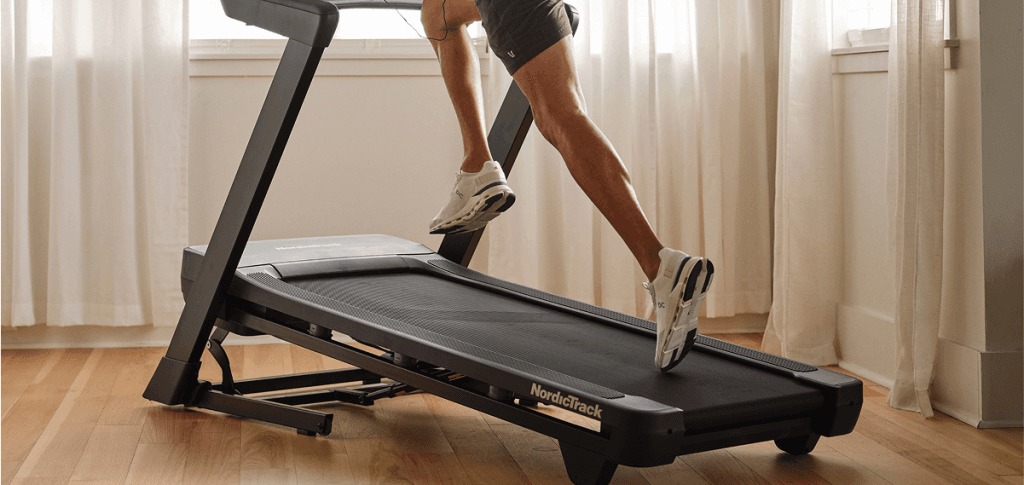
What to Know About Treadmill Cushioning & Impact
Treadmill cushioning changes how impact forces move through your feet and legs and influences energy cost and training feel. Learn how to match NordicTrack deck settings, firmer for roadlike runs, softer for recovery.
Oct 10, 2025 · 6 min read
READ MORE
Equipment
How to Choose a Treadmill for Walking
Most treadmill guides are written for runners. This one explains what walkers actually need: cushioning, low-speed motor quality, incline, and foldability, and why each spec matters for daily use.
Jul 13, 2026 · 10 min read
READ MORE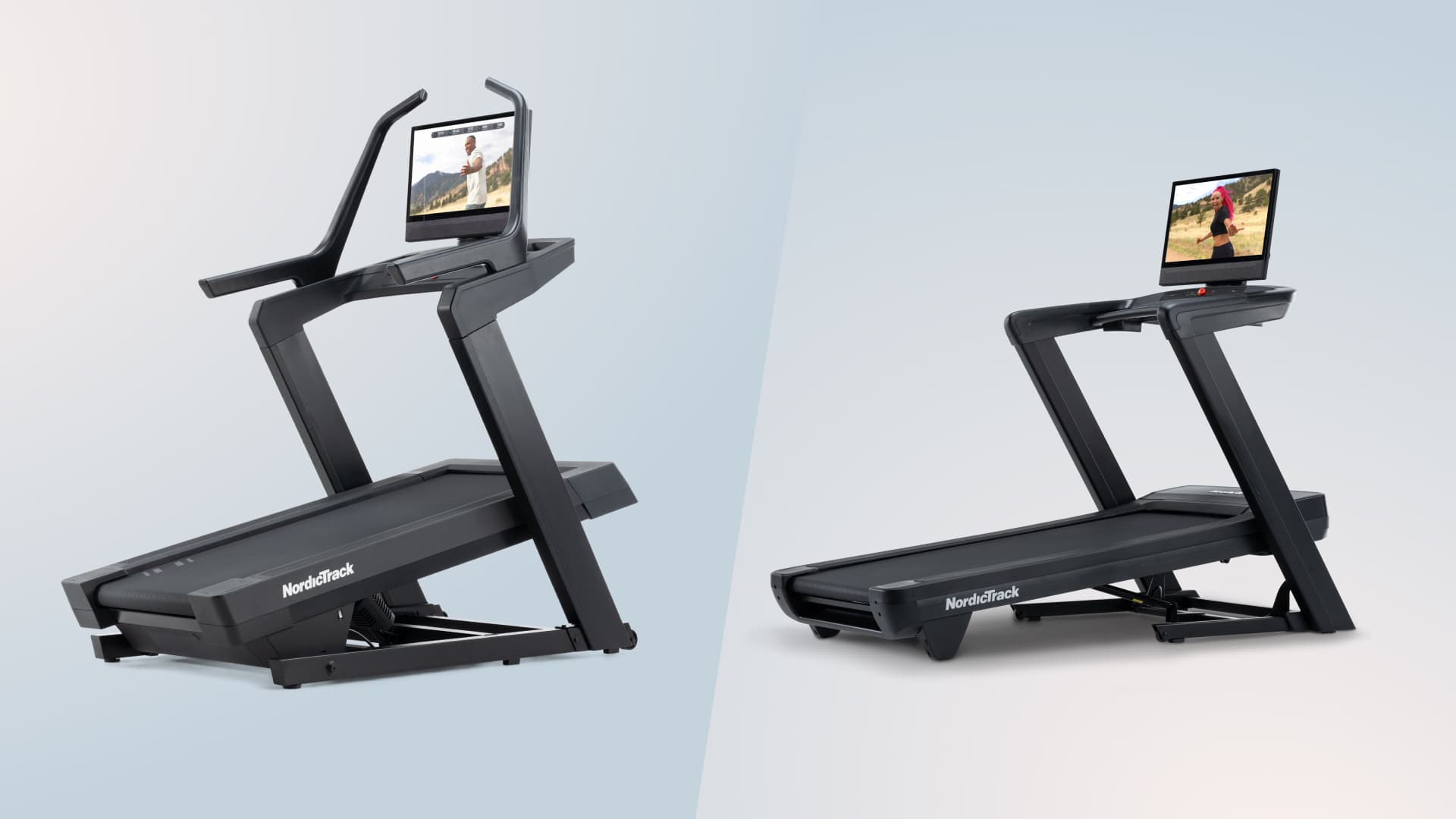
Equipment
NordicTrack Commercial 2450 vs X24: Which One Should You Buy
Compare the NordicTrack Commercial 2450 vs X24 to find the right treadmill for your goals, whether you prefer running performance or high-intensity incline training.
Mar 18, 2026 · 8 min read
READ MORE