
What Is ActivePulse? How Heart Rate Training Helps Guide Your Workout
Learn how ActivePulse uses heart rate training to automatically adjust your workout intensity, helping you stay on track and train more effectively with less guesswork.
Mar 26, 2026
·
6 min read
IN THIS ARTICLE
KEY TAKEAWAYS
- ActivePulse uses heart rate training to automatically adjust workout intensity in real time
- Helps maintain the right effort level for better consistency and results
- Reduces the need for manual speed, incline, or resistance changes
- Supports structured progress tracking through iFIT performance data
- Ideal for users who want guided, data-driven workouts without constant adjustments
What Is ActivePulse?
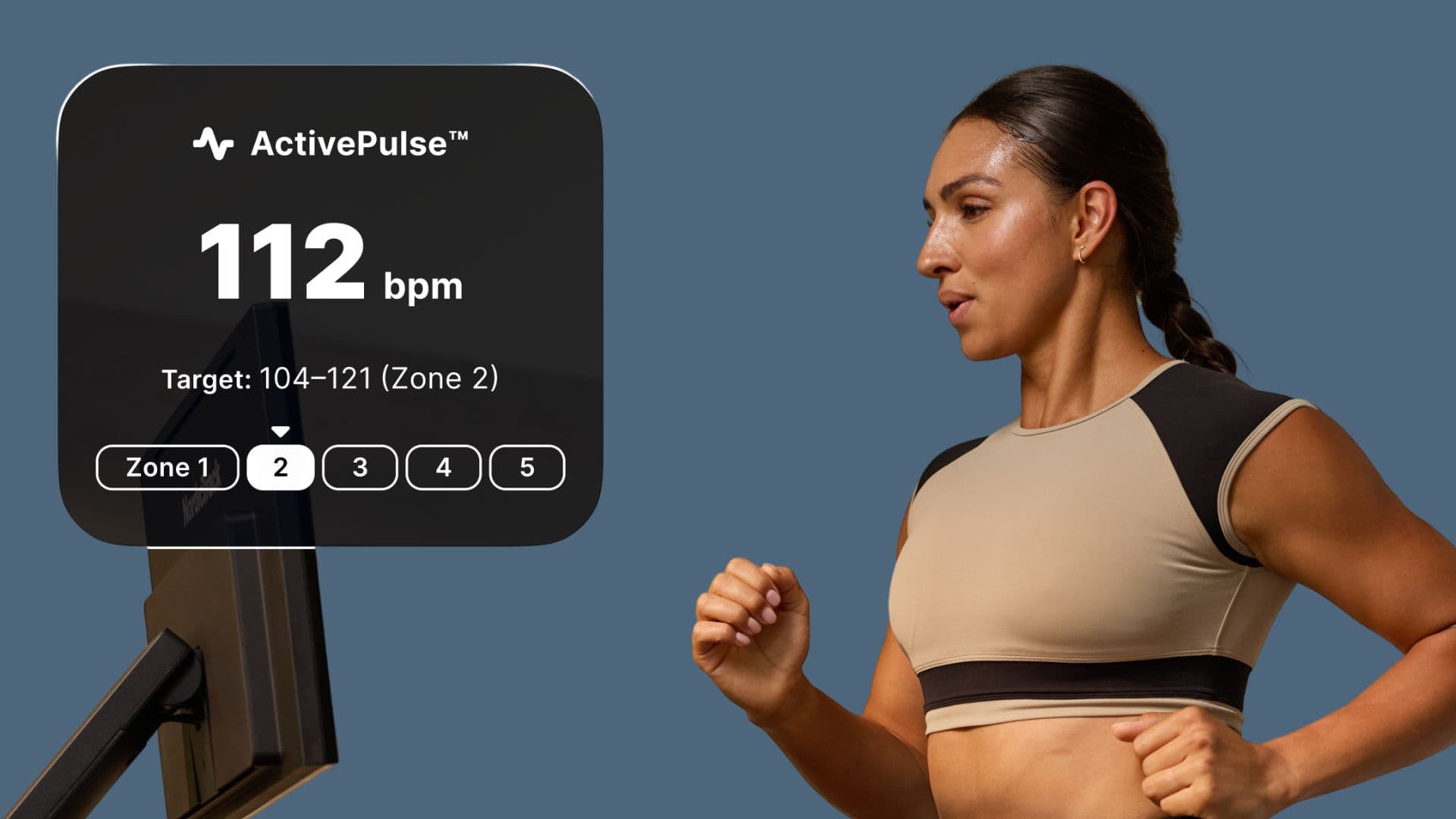
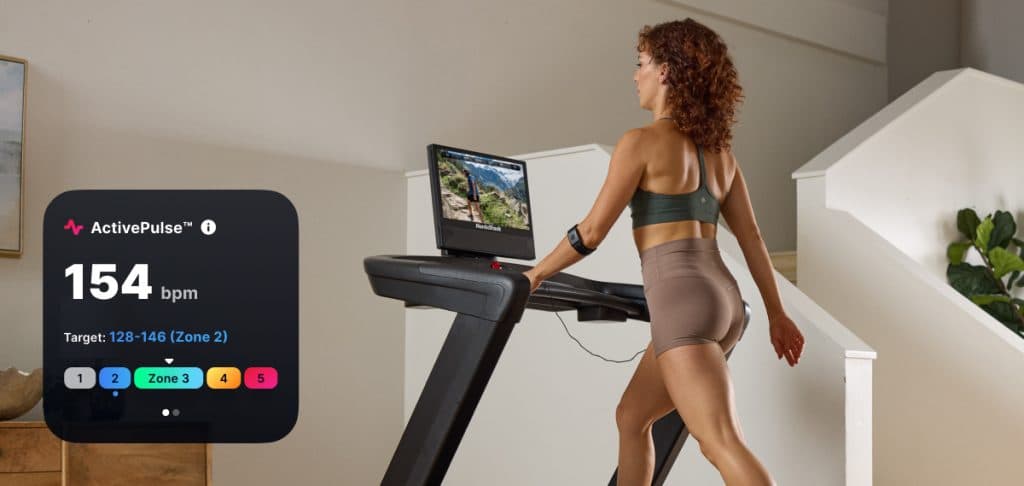
ActivePulse is an iFIT feature that uses your heart rate during a workout to adjust your speed, incline, or resistance automatically.
Instead of guessing how hard you should be working, your machine responds to your body in real time. If your heart rate is too low, it increases intensity. If it gets too high, it eases off.
The goal is simple. It helps you stay at the right effort level without needing to constantly adjust your workout.
Why Heart Rate Matters for Your Fitness Goals
Most workouts are built around effort. The challenge is knowing if you are actually working at the right level.
Heart rate gives you a clear signal of how hard your body is working. When your heart rate is too low, your workout may not be doing enough. When it is too high, you may burn out too quickly. Staying in the right range helps your training feel more controlled and more consistent.
This is where heart-rate-based training becomes useful. It helps you match your effort to your goal, whether that is building endurance, improving speed, or just getting through a workout at a steady pace.
How ActivePulse Uses Workout Metrics in Real Time
ActivePulse works by using your heart rate to guide how your machine responds during a workout.
When enabled, it creates a feedback loop:
Your heart rate is tracked through a connected monitor
Your workout intensity is compared to a target effort level
Your equipment adjusts automatically to bring you closer to that target
Depending on the equipment, this can include:
Treadmills: speed and incline adjustments
Bikes: resistance changes
If your heart rate is below the intended effort, your machine may increase intensity. If it’s above, it may reduce intensity.
This happens continuously throughout the workout, allowing your session to respond to how your body is actually performing, not just what was programmed.
ActivePulse and Progress Tracking Over Time
Training is not just about the workout. It’s about how those workouts build over time. ActivePulse supports this by helping create more consistent effort across sessions.
When your workouts stay closer to their intended intensity:
Your training becomes more structured
Your effort is easier to compare between workouts
Your progress becomes easier to track
Inside iFIT, this connects to your workout history and performance trends, helping you see how your training is changing over time.
What ActivePulse Adjusts During a Workout
ActivePulse focuses on adjusting intensity, not the structure of your workout.
Depending on the equipment, this may include:
Speed changes during running or walking sessions
Incline adjustments on treadmills
Resistance adjustments on bikes
These changes are designed to help you stay closer to the intended effort of the workout, whether that’s a steady effort session or a more variable interval-style workout.
What You Need to Use ActivePulse
To use ActivePulse, you’ll need a few key components:
iFIT-enabled equipment (such as a compatible treadmill or bike)
An iFIT workout that supports ActivePulse
A Bluetooth-enabled heart rate monitor that can broadcast your heart rate
Once connected, ActivePulse can be enabled during the workout to begin adjusting intensity based on your heart rate.
Features and availability may vary by equipment and subscription tier.
ActivePulse vs SmartAdjust: What’s the Difference?
ActivePulse and SmartAdjust both personalize your workouts, but they do it in different ways.
ActivePulse uses your heart rate during the workout to adjust intensity in real time. SmartAdjust looks at your past workouts and learns how you tend to change speed or incline, then uses that history to scale future sessions.
ActivePulse reacts to how your body is performing right now. SmartAdjust adapts based on what you have done before. Together, they create a more responsive and personalized training experience.
Who Should Use Heart-Rate-Based Training?
Heart-rate-based training can be useful for a wide range of users, especially those who want more guidance during their workouts. It may be a good fit for:
People who want help pacing their workouts
Users who prefer less manual adjustment during training
Anyone exploring more data-driven fitness experiences
Because ActivePulse adjusts in real time, it can help reduce the need to constantly monitor or adjust your workout settings.
When ActivePulse May Be Most Helpful
ActivePulse works best when effort matters more than fixed numbers.
This includes interval workouts where intensity changes often. It also works well during steady workouts where you are trying to hold a consistent effort.
It can also be helpful on days when your energy is lower or higher than usual. Instead of forcing the same settings, the workout adapts to how you feel.
How to Get Started With ActivePulse
Getting started is simple.
Choose compatible iFIT-enabled equipment
Connect a supported Bluetooth heart rate monitor
Select a workout from the iFIT library
Enable ActivePulse once your workout begins
Let the system adjust your workout based on your heart rate
Explore Smarter Training With iFIT
ActivePulse is part of a bigger system designed to make workouts easier to follow and easier to stick with.
Instead of planning every detail yourself, iFIT helps guide your training using real-time data and past performance.
That means less time adjusting settings and more time focusing on your workout. If you are new to iFIT, you can try ActivePulse with a short intro workout led by iFIT Trainer Tommy Rivs.
If you want a more connected training experience, explore NordicTrack equipment with iFIT features built in.
iFIT subscription sold separately. Features vary by tier.
The Bottom Line
ActivePulse uses your heart rate to guide your workout in real time.
It adjusts your machine so your effort stays where it should be. That makes your workouts more consistent and easier to follow.
If you want a simpler way to train without constantly managing your settings, this is a feature worth using.
FAQs
Disclaimer: The primary purpose of this blog post is to inform and entertain. Nothing on the post constitutes or is intended to be a substitute for professional medical advice, prevention, diagnosis, or treatment. Reliance on any information provided on the blog is solely at your own risk. Always seek the advice of your physician or other qualified health provider with any questions you may have regarding a medical condition, and please consult your doctor or other health care provider before making any changes to your diet, sleep methods, daily activity, or fitness routine. Do not disregard professional medical advice or delay seeking it because of information available on this blog. NordicTrack assumes no responsibility for any personal injury or damage sustained by any recommendations, opinions, or advice given in this article. Always follow the safety precautions included in the owner’s manual of your fitness equipment.

RECENT ARTICLES
Fitness
What Heart Rate Zone Should You Really Be Training In?
Learn how heart rate zones impact fat burning, endurance, and performance. Discover why Zone 2 training has become a foundation for smarter, more sustainable workouts.
Jan 2, 2026 · 9 min read
READ MORE
Fitness
VO₂ Max Explained and How to Improve It
Discover what VO₂ max means, why it matters for your fitness, and how structured training with NordicTrack and iFIT can help you improve it over time.
Mar 23, 2026 · 4 min read
READ MORE
Equipment | iFIT App
What Is SmartAdjust and How Does It Personalize Your Workout?
Learn how SmartAdjust in iFIT automatically personalizes your workout intensity based on your fitness level, helping you stay challenged, consistent, and on track.
Mar 20, 2026 · 6 min read
READ MORE