
What to Know About Treadmill Cushioning & Impact
Treadmill cushioning changes how impact forces move through your feet and legs and influences energy cost and training feel. Learn how to match NordicTrack deck settings, firmer for roadlike runs, softer for recovery.
Oct 10, 2025
·
6 min read
IN THIS ARTICLE
KEY TAKEAWAYS
- Treadmill cushioning can reduce peak plantar forces at the forefoot and midfoot at faster speeds, while rearfoot impact may be unchanged.
- The effect of cushioning scales with speed, making deck selection more consequential at higher training paces.
- NordicTrack offers three distinct cushioning systems: SelectFlex, RunFlex, and SpringFlex, each suited to different training styles and goals.
- Treadmill biomechanics are broadly comparable to overground running, with specific footstrike differences that make firmness selection relevant for race-specific training.
- Match deck firmness to session type: softer for recovery, firmer for tempo and race prep.
Protect Your Joints Without Sacrificing Performance
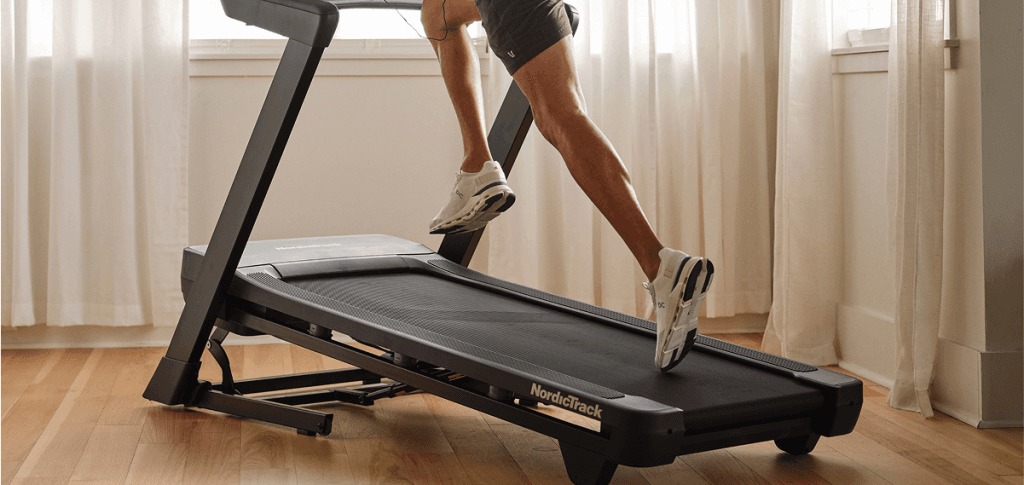
When you train indoors, treadmill cushioning isn’t just a comfort feature—it influences how forces travel through your feet and legs and how hard a workout feels¹³. Lab research shows cushioned decks can lower peak plantar forces at the forefoot (and at the midfoot at faster speeds) versus non-cushioned decks, though they don’t reduce rearfoot impact in that protocol; they can also slightly increase energy cost at the same speed¹. Emerging engineering work on actively controlled systems that respond to your ground reaction force (GRF) suggests up to ~10% reductions in GRF versus a conventional cushioned treadmill in testing².
NordicTrack offers deck systems so you can pick the feel you want for each run—firmer for a road-like vibe or softer for recovery days—without changing your training plan.
Why Cushioning Matters
- Targets where load lands. In a controlled study, a cushioned deck reduced peak plantar force at the forefoot (8 & 10 km/h) and midfoot (10 km/h) vs. a non-cushioned deck; rearfoot forces were unchanged¹.
- Effects scale with speed. The cushioning effect was larger at 10 km/h than 8 km/h¹.
- Training feel. The same study found higher metabolic energy consumption on a cushioned deck at a set speed¹.
- What’s “like outside”? A meta-analysis finds most treadmill vs. overground biomechanics are broadly comparable, with sagittal-plane differences at footstrike (e.g., foot-ground angle, knee flexion) that you should consider when extrapolating to outdoor runs³.
- Active systems. In experimental testing, an active, force-responsive deck reduced total GRF by up to ~10% compared with a conventional cushioned system².
Takeaway: Cushioning can shift how and where force is absorbed—especially at faster paces—and active systems may further trim overall GRF. Match deck feel to your session goals¹.
Types of Treadmill Cushioning
Feature descriptions only; health/medical claims are limited to the cited evidence above.
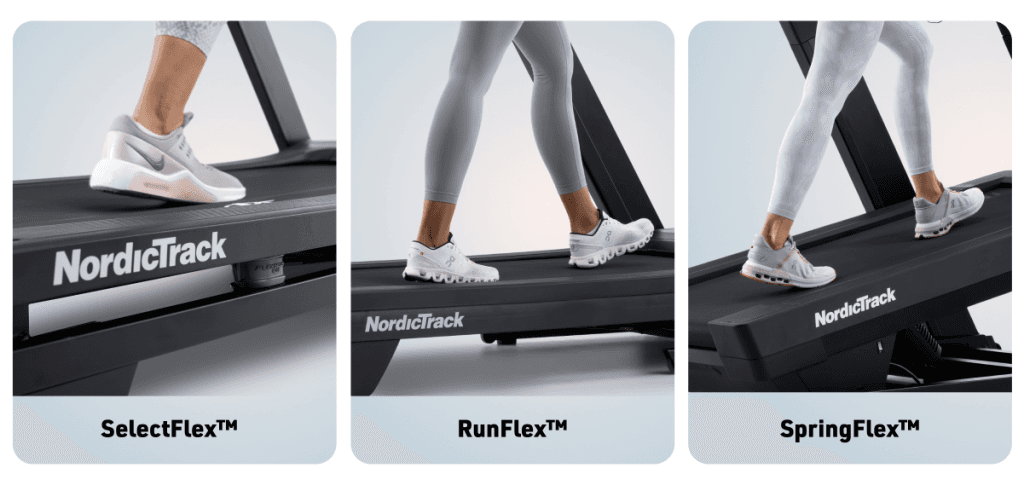
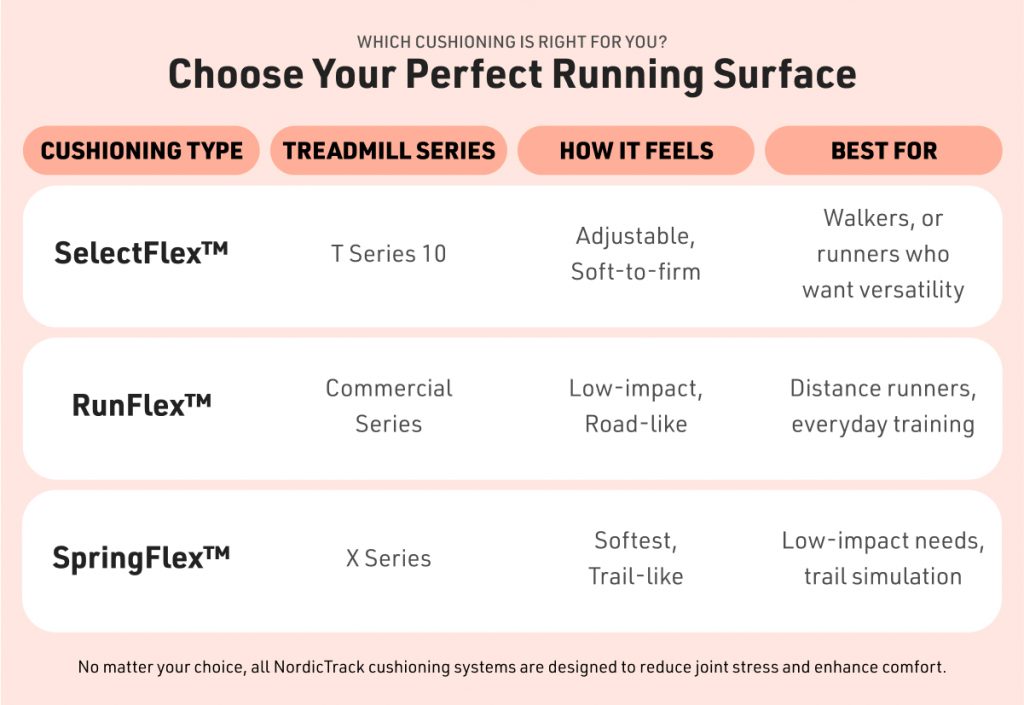
- SelectFlex™ (e.g., T Series 10)Dial in softer for easy days or firmer for a roadlike feel—great when your weekly plan mixes recovery with tempo.
- RunFlex™ (e.g., Commercial Series like the 2450)A fixed, responsive feel that keeps workouts consistent for runners who like predictable mechanics.
- SpringFlex™ (e.g., X Series such as X16) A plusher, trail-inspired sensation for walkers or runners who prefer a softer ride.
If you’re deciding, skim our Treadmill FAQ and the 2025 Treadmill Buying Guide.
Cushioning, Belts, and Deck feel—How It All Adds Up
Smoothness isn’t only about elastomers or springs. Belt construction, lubrication, and deck size affect how steady the surface feels underfoot. Pair the belt/deck you like with a cushioning setting that fits the workout (firmer for workouts that mimic outside; softer for recovery).
For footwear tips, see What Running Shoes Are Best for Your Home Treadmill.
How Treadmill Cushioning Compares To Outside Running
Most spatiotemporal and kinetic measures are largely comparable between treadmills and overground, with notable sagittal-plane differences at footstrike (e.g., smaller foot-ground angle, slightly more knee flexion on treadmills)³. That’s why choosing firmness that matches your outdoor goal pace can help your indoor session transfer to road conditions³.
- Want outdoor-like mechanics? Choose a firmer setting for tempos/thresholds. ³
- Want gentler loading at the forefoot/midfoot? Choose a softer setting, especially at faster aerobic paces¹.
- Curious about active systems? Early experiments show additional GRF reductions vs. conventional cushioning².
Quick Decision Guide
- Comfort first (walkers, new runners): Softer setting for easy miles and recovery days. Pair with supportive shoes¹.
- Outdoor-race prep (tempos/intervals): Firmer setting to mimic road feel and cadence³.
- Mixed weeks (most people): Start soft on easy days; go firmer for quality sessions¹.
- Tech-curious: Consider models with adjustable or active approaches to fine-tune feel².
New to running? Start here: How to Start Running.
Joint-Smart Habits That Complement Cushioning
- Wear supportive shoes appropriate for walking or running (see our shoe guide).
- Keep posture tall, core lightly engaged; let the belt guide cadence. ³
- Vary incline/effort across the week to distribute stress. ³
- Use auto-adjust features to avoid sudden spikes in effort as terrain changes. ³
Evidence notes: cushioned decks changed plantar force distribution and energy cost in testing; effects were speed-dependent¹. Active control reduced overall GRF vs. a conventional cushioned deck in experiments². Treadmill vs. overground mechanics are broadly comparable with specific footstrike differences³.
FREQUENTLY ASKED QUESTIONS
References
- ScienceDirect: Effects of treadmill cushion and running speed on plantar force and metabolic energy consumption in running.
- MDPI (Applied Sciences): Research on Optimal Control of Treadmill Shock Absorption Based on Ground Reaction Force Constraint.
- PubMed Central: Is Motorized Treadmill Running Biomechanically Comparable to Overground Running? A Systematic Review and Meta-Analysis of Cross-Over Studies.
Disclaimer: The primary purpose of this blog post is to inform and entertain. Nothing on the post constitutes or is intended to be a substitute for professional medical advice, prevention, diagnosis, or treatment. Reliance on any information provided on the blog is solely at your own risk. Always seek the advice of your physician or other qualified health provider with any questions you may have regarding a medical condition, and please consult your doctor or other health care provider before making any changes to your diet, sleep methods, daily activity, or fitness routine. Do not disregard professional medical advice or delay seeking it because of information available on this blog. NordicTrack assumes no responsibility for any personal injury or damage sustained by any recommendations, opinions, or advice given in this article. Always follow the safety precautions included in the owner’s manual of your fitness equipment.
RECENT ARTICLES
Equipment
Choosing The Best Treadmill For Running
There are countless treadmills out there and taking some time to figure out exactly how you would plan to use it, you can get the best one for you at the right price.
Sep 15, 2016 · 4 min read
READ MORE
Equipment
2026 Treadmill Buying Guide: Find the Best Treadmill for Your Home
Not all treadmills are built the same. This 2026 treadmill buying guide helps you match goals, space, and budget to the right NordicTrack model, comparing specs, features, and tiers so you can buy with confidence.
Apr 20, 2026 · 11 min read
READ MORE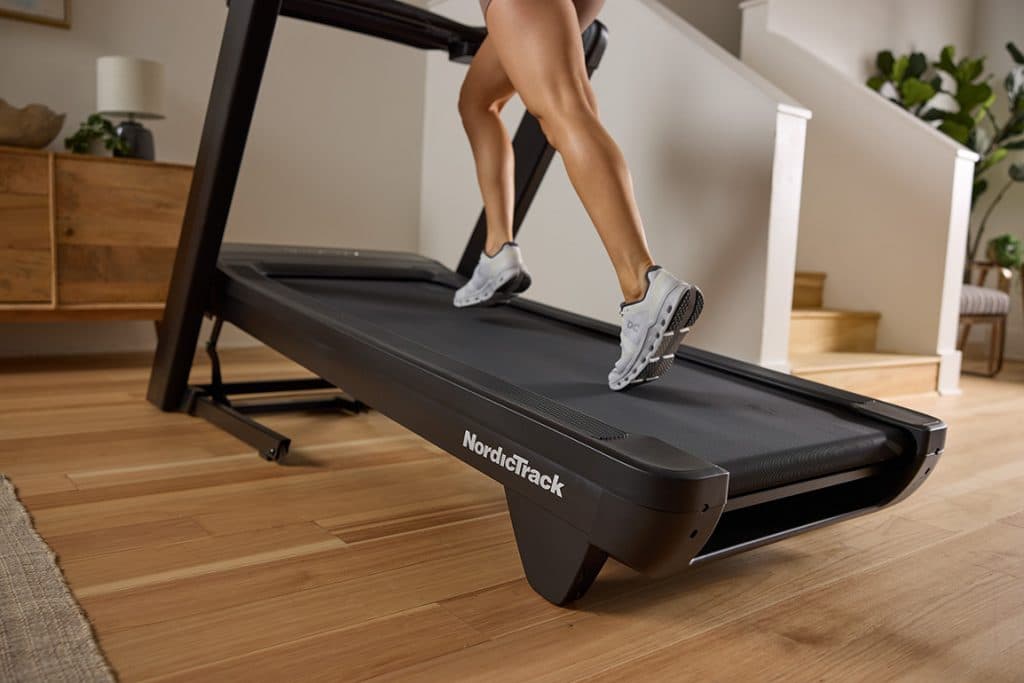
Equipment | Fitness
Best Running Shoes for Workouts: What to Look For + Top Treadmill Picks
UPDATED, 09/01/2025 - There are key differences when it comes to choosing the best running shoes based upon your workouts and feet. Let’s look at the differences.
Oct 6, 2015 · 10 min read
READ MORE