
Designing a Luxury Wellness Space at Home: A Complete Guide to Integrating Pilates into your Wellness Routine
Discover how Pilates supports core strength, posture, mobility, and stress reduction. Get practical equipment guidance, learn what connected reformers add, and use simple design tips to build a home studio you will actually use.
May 28, 2026
·
9 min read
.jpg&w=3840&q=75)
IN THIS ARTICLE
KEY TAKEAWAYS
- Pilates for wellness delivers clinically supported benefits including core strength, improved posture, flexibility, and measurable reductions in anxiety and stress.
- A mat and a few props are enough to start a home Pilates practice, but a connected reformer expands your options and brings instructor-led guidance directly to your space.
- Connected Pilates equipment pairs spring-resistance hardware with on-screen programming, helping beginners build correct form and progress safely without an in-person instructor.
- Designing a home wellness space around simplicity and low friction, the right flooring, lighting, storage, and layout makes consistent practice significantly more likely.
- Two to three sessions per week is the instructor-recommended starting point for steady improvements in strength, mobility, and posture.
Better posture, stronger core, clearer focus. You want the results of a Pilates studio practice without the commute, the crowded classes, or the scheduling hassle. That tension is real. This guide helps you bridge it.
We’ll start with the evidence-backed reasons Pilates belongs in a wellness routine. Then we cover the equipment choices that matter for a home studio, explain what connected Pilates equipment adds, and give practical tips for designing a space you’ll actually use. No fluff. Just clear guidance so you can make confident choices.
Why Pilates Belongs in Your Wellness Routine: Evidence-Backed Reasons
Pilates is a form of exercise and body conditioning developed by Joseph Pilates in the early 20th century, originally as a method of injury recovery.3 It utilizes a combination of approximately 50 simple, repetitive exercises to create muscular exertion.1 While it has long been popular among dancers,3 decades of practice and clinical studies show it supports several practical wellness goals for a wide range of individuals, regardless of age, sex, or fitness level:3
Core strength and stability: One of the primary reasons Pilates serves as a high-quality workout is its specific focus on building core strength.3 In Pilates, the "core" or trunk extends beyond the abdomen to include the sides, mid-to-lower back, buttocks, and hips.3 Each exercise is initiated by stabilizing this core musculature, specifically the abdominal, gluteal, and paraspinal muscles, before proceeding through a controlled range of motion.1 There is empirical support for its effectiveness in improving abdominal and lumbo-pelvic stability,1 which establishes a strong physical foundation.3
Posture and alignment: Daily human habits and sitting at desks can cause muscle imbalances from underuse and misalignment; Pilates is explicitly designed to counteract this.3 It encourages specific structural alignments, including slight forward flexion of the cervical vertebra, stabilization of the scapula, connection of the rib cage to the hips, and a posterior pelvic tilt.1 Research shows that specific, cued Pilates interventions allow individuals to volitionally alter their automatic muscle activity patterns, resulting in improved abdominal strength, better upper spine posture, and stabilized core positioning.1
Flexibility and mobility: Pilates features a significant amount of stretching, which translates directly to improved flexibility.3 Controlled studies have demonstrated measurable increases in flexibility after engaging in Pilates,1 which helps relax muscles and protects against injury.3
Stress reduction and mental focus: Pilates is a mind-body discipline that places a heavy focus on body awareness, helping individuals better understand where they store tension.3 This practice demands strict concentration and intentional breathing, which adds a distinct psychological element to the physical movement.1 Controlled research has demonstrated that a structured Pilates program yields a significant decrease in anxiety, depression, and somatization, while drastically improving an individual's ability to mentally relax and "take one's mind away" from daily commitments.2
Low-impact conditioning: Pilates relies on low- to moderate-intensity exercises that are easily learned.2 It focuses on improving muscle tone, stability, and endurance rather than bulking up the body.3 The system is highly adaptable, meaning exercises can be modified to provide gentle strength training for rehabilitation or escalated to challenge skilled athletes.1 Because it challenges the abdominals while imposing a minimal load on the lumbar spine, it is widely recognized in clinical trials for reducing pain intensity and functional disability.1
While a century of anecdotal evidence and clinical literature strongly supports these outcomes,3 researchers note that some findings should be interpreted with caution due to historical limitations in sample sizes and study methodologies.3 If you have a specific health condition, are recovering from surgery, or experience persistent pain, always consult a healthcare professional before starting a new program.
Essential Pilates Equipment for a Wellness Space at Home
You don’t need every tool to get started. Prioritize based on space, goals, and budget.
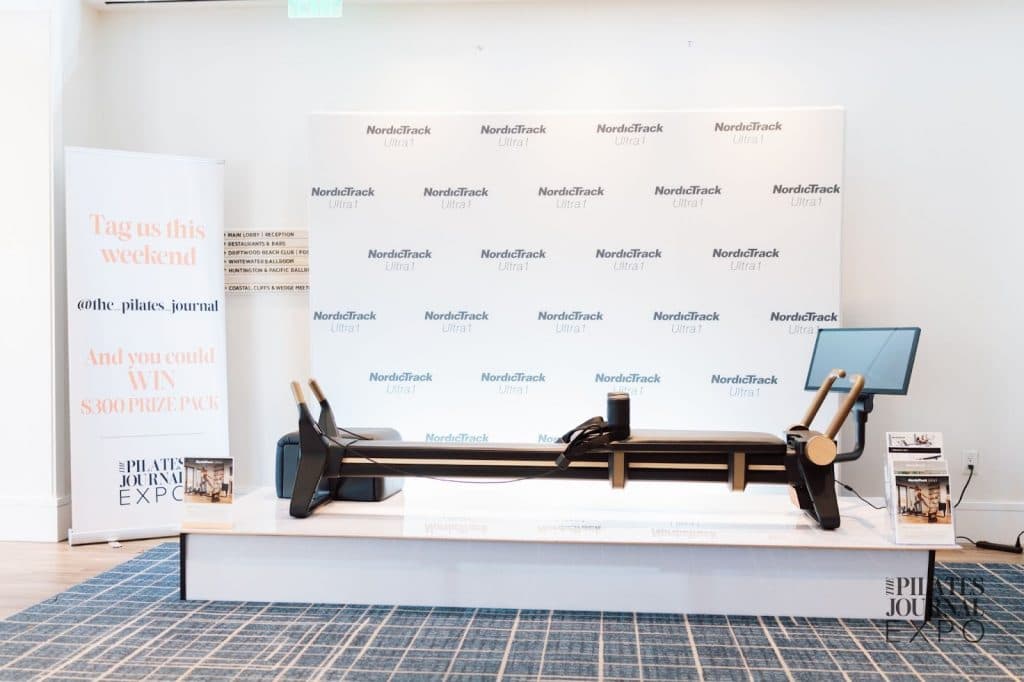
Reformer: The reformer is a bed-like structure that serves as a highly versatile Pilates apparatus.3 It features a sliding horizontal carriage on a solid frame where a person sits, stands, kneels, or reclines while varying resistance is provided via resistance springs and a simple pulley system.1 While working with an instructor or utilizing expert guided programming is key to mastering correct alignment and ensuring you move safely,3 modern connected options make this professional guidance easily accessible right from home. It can serve as a versatile centerpiece for a dedicated home studio. Explore the Ultra 1 Reformer to see how its design and guided, on-screen instruction can elevate your home wellness space.
Mat: A dedicated Pilates mat is thicker and firmer than a typical yoga mat.3 In a mat class, participants typically sit or lie supine or prone and use gravity to help stabilize the core.1 Because body weight is the main resistance that is used throughout the series of exercises, freeform Pilates can actually be harder on the back than using a reformer.3 It provides the cushioning needed for floor-based work and is the lowest-cost way to begin a robust practice.3Download the iFIT app todayto explore progressive mat Pilates classes designed to maximize your results right from your home space.
Pilates Chair: Compact and bold in its challenge, the chair targets balance, leg strength, and core stability through spring resistance. It is a smart addition for variety once you have built a base.
Ring: This tool represents an inexpensive, easy-to-store ring made of a semi-flexible material with a diameter of approximately 30 to 40 cm, complete with side handles and bearings on each side.2 It is highly advantageous for strengthening the entire body, correcting posture, and improving breathing without putting excessive stress on the joints.2 It allows the performance of both isometric and isotonic movements with both the upper and lower limbs.2
Small ball (softball): This inflatable ball has a diameter of approximately 20 cm and is used to challenge balance, increase muscle load, and obtain more conscious stability.2 It requires a deeper activation of the muscles to keep the body aligned.2
What Makes Connected Pilates Reformers Different
Traditional equipment gives you the tools. Connected equipment pairs those tools with guided programming. Here is what connected reformers and other Pilates machines add in practical terms:
Instructor-led sessions on the machine’s screen guide your form, breathing, and pacing. Having an instructor watch you perform the exercises is important to ensure correct alignment.3 This detailed guidance helps when you do not have an instructor physically beside you.
Structured progressions and varied class formats help you avoid plateaus. Instructors recognize that exercises must be at your personal level and that you must build up the difficulty slowly.3
A broad content library makes it easier to find sessions that match your level, focus, and time available. Traditional Pilates sequences repeat exercises only a few times so the body is constantly being exposed to new muscular and kinesthetic challenges.1
NordicTrack machines integrated with iFIT provide on-screen, instructor-led Pilates content and a library of programming designed to support workout consistency and variety. That combination may help users engage more consistently with their home Pilates routine. If you are evaluating connected options, look for devices that pair quality hardware with thoughtful, progressive instruction and clear beginner pathways.
How to Design a Home Pilates Space That Works
A luxury wellness space starts with practical design. The goal is a place that removes friction and invites consistent practice.
Space: Mat work needs roughly 6 ft x 2 ft. A reformer typically requires about 8 ft in length plus room on either side for movement. Measure before you buy.
Flooring: Hardwood or low-pile carpet works for mat work. If you put a reformer on hardwood, add a protective Reformer Mat underneath. Avoid placing the reformer on very thick carpet.
Lighting: Natural light helps with alertness and mood. If that’s not possible, choose warm, diffused lighting rather than harsh fluorescents. The Ultra 1 Reformer has built in lighting under the frame, that softly illuminates your space
Mirrors: A side mirror can help with self-cueing and alignment when you’re practicing solo.3
Storage: Keep props accessible. Wall hooks, a small shelf, or a basket reduces friction and makes it more likely you’ll use them.
Atmosphere: Keep the space uncluttered, easy to enter, and visually calm. The single design principle that matters most: make it easier to start than to skip.
Building a Sustainable Pilates Practice at Home
Equipment and design set the conditions. Consistency creates the results.3
Schedule it: Block sessions like you would an appointment. Observational data shows that participating in an hour-long Pilates session even once a week for three months yields statistically significant reductions in anxiety, depression, and stress disorders.2 Many instructors recommend starting with two to three sessions per week to see steady improvements in strength, mobility, and posture.3
Start simple: Learn the basics first. Each exercise in a traditional series is typically repeated only a few times, usually three to five and rarely more, so that the focus remains on quality of movement and energy efficiency.1
Progress gradually: Even if you are a fitness buff, it is important to start your practice slow and easy.3 iFIT’s instructors will offer progressions or regressions for many movements. Increase complexity, alter body positions, or change resistance to increase difficulty. It’s important to listen to your body. It may feel different from one day to the next, even when performing the same movements.1
Track the small wins: Improvements in posture, reduced lower back pain, better balance, and an enhanced ability to relax your mind are real, documented markers of progress.3
Mix and complement: Use Pilates alongside cardio or strength training. Pilates is not as heavy a cardiovascular workout, so it should be part of a well-balanced exercise program that includes aerobic exercise and strength-building activities for the shoulders and arms.3
Your Next Step Toward a Home Wellness Practice
If you’re ready to bring Pilates home, start by defining your goals, measuring your space, and prioritizing equipment that supports progression. A reformer with guided programming plus a solid mat and a few props covers most bases for a home studio.
Explore NordicTrack’s connected Pilates options to see how models, programming, and feature sets match your space and goals: browse our Pilates equipment guide and the Ultra category for premium options.
Building a home wellness space takes planning and consistency. The right equipment and design don’t replace effort — they make it easier to show up and do the work. You’ve done the thinking. Now build a space you’ll use.
FREQUENTLY ASKED QUESTIONS
References
Muscle, Ligaments, and Tendon Journal. Pilates: how does it work and who needs it?
Cleveland Clinic. Pilates 101: What It Is and Health Benefits.
National Center for Complementary and Integrative Health. Yoga for Health: What the Science Says.
Disclaimer: The primary purpose of this blog post is to inform and entertain. Nothing on the post constitutes or is intended to be a substitute for professional medical advice, prevention, diagnosis, or treatment. Reliance on any information provided on the blog is solely at your own risk. Always seek the advice of your physician or other qualified health provider with any questions you may have regarding a medical condition, and please consult your doctor or other health care provider before making any changes to your diet, sleep methods, daily activity, or fitness routine. Do not disregard professional medical advice or delay seeking it because of information available on this blog. NordicTrack assumes no responsibility for any personal injury or damage sustained by any recommendations, opinions, or advice given in this article. Always follow the safety precautions included in the owner’s manual of your fitness equipment.
RECENT ARTICLES
Equipment
Pilates Is Entering a New Era: How Connected Reformer Pilates Is Shaping the Future of Movement
Discover how connected reformer Pilates is evolving the method with smart resistance, guided progression, and studio-quality experiences at home.
Jan 30, 2026 · 7 min read
READ MORE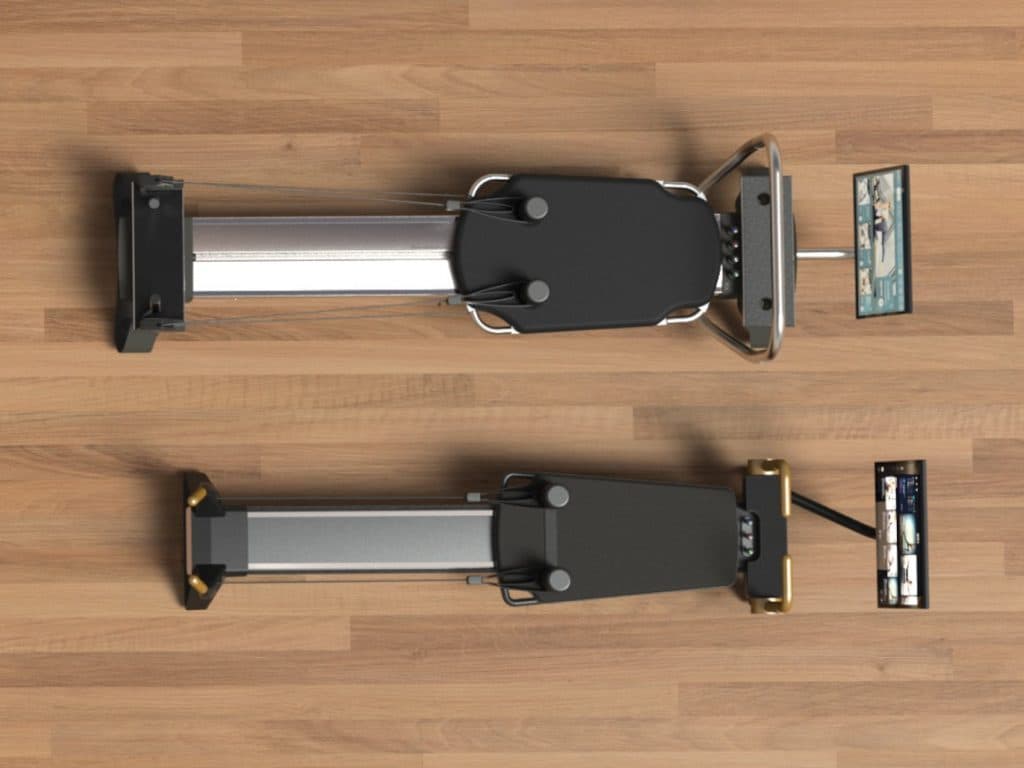
Equipment
Introducing the NordicTrack Ultra 1 Reformer Series
Meet the NordicTrack Ultra Reformer Series, featuring the Ultra 1 Reform RX-S and Ultra 1 Reformer—two connected Pilates reformers designed to bring studio-quality training into your home.
Nov 14, 2025 · 8 min read
READ MORE
Fitness
How Yoga Can Help You Reach Your Health & Fitness Goals Sooner
Jun 19, 2023 · 7 min read
READ MORE