
Is Cycling the Best Cardio Workout There Is?
Cycling delivers real cardiovascular training with minimal joint stress, flexible intensity, and results that hold up across every fitness level. Find out when it beats other cardio and when it doesn't.
Jul 6, 2026
·
13 min read
IN THIS ARTICLE
KEY TAKEAWAYS
- Cycling is classified as moderate aerobic exercise and can fully meet the AHA's 150-minute weekly recommendation for cardiovascular health
- Biking burns approximately 292 calories per hour for a 160-pound person at a standard pace, with vigorous interval work pushing output considerably higher
- Cycling delivers cardiovascular benefits comparable to running with significantly less joint stress, making it suitable for riders who cannot handle high-impact exercise
- Regular aerobic training strengthens the heart muscle, improves blood flow, reduces coronary heart disease risk factors, and builds mitochondrial density over time
- NordicTrack connected bikes and iFIT work as one integrated system: the bike delivers the resistance, iFIT provides the adaptive programming and progression
The short answer: for a lot of people, yes. Cycling delivers real cardiovascular training with far less joint stress than running, fits a home setup without sacrificing intensity, and scales from a 20-minute recovery ride to a hard interval session that leaves your legs genuinely spent. Whether it is the single best cardio option depends on your goal. This article covers the science, the comparisons, and the workouts so you can make that call with actual information.
When Cycling Beats Other Cardio (and When It Doesn't)
Cycling earns a strong case for three specific situations.
The first is joint health. Mayo Clinic notes that cycling gets the heart pumping while putting minimal impact on the joints, and that for people whose joints cannot handle the stress of walking or running, cycling can decrease pain while increasing aerobic capacity. [1] That is a real advantage over running, which requires the body to absorb the repetitive impact of each foot strike.
The second is consistency. The cardio you will actually do, week after week, tends to produce better results than the option you keep skipping. A bike at home removes weather, commute, and time as obstacles simultaneously.
The third is intensity without recovery debt. A hard cycling session challenges the cardiovascular system without the muscle damage and extended recovery that heavy-impact training demands. That makes riding four or five days a week genuinely sustainable for most people.
Where cycling gives ground: pure calorie burn per hour. Running generally produces higher total energy expenditure than cycling at a comparable intensity level, partly because it recruits more muscle groups and carries bodyweight against gravity. [2] If maximum calorie output in a single session is the only metric, running leads. For most people, the ability to sustain training over weeks and months matters more than peak burn on any given day.
The Science: Calories, Heart Rate, and What Cycling Does to Your Body
Cycling is classified as moderate aerobic exercise, alongside brisk walking and swimming. [2] What that means in practice depends on how hard you ride.
According to Mayo Clinic, biking burns approximately 292 calories per hour for a 160-pound person at a standard pace. [2] Intensity is the dominant variable: resistance, body position, and effort level all affect output significantly, meaning a vigorous interval session will burn considerably more than a steady easy ride.
The cardiovascular effects go beyond calorie burn. When done regularly, moderate- and vigorous-intensity physical activity strengthens the heart muscle and improves its ability to pump blood throughout the body. More blood flows to muscles, oxygen levels in the blood rise, and capillaries widen to deliver more oxygen and carry away waste products. [3] Over time, regular aerobic training also lowers the risk for coronary heart disease by helping reduce blood pressure, triglycerides, and CRP (a marker of inflammation), and by raising HDL ("good") cholesterol. [3]
There is also a longer-term metabolic benefit that often gets overlooked. Regular steady-state cardio that targets the aerobic system can enhance mitochondrial density in muscle cells, which improves cellular function and has been linked to slowing the normal biological aging process. [4]
For calorie burn, effort level is a reliable guide. Mayo Clinic describes moderate-intensity exercise as the point where breathing quickens but you can still hold a conversation. Vigorous intensity means breathing is deep and rapid, and saying more than a few words without pausing becomes difficult. [5] Knowing where you fall in that range tells you how hard your cardiovascular system is working, which matters more for long-term progress than any single number on the display.
Reading the Metrics: Watts, Heart Rate, and Cadence
If you ride a connected bike, three numbers come up more than anything else: watts, heart rate, and cadence. Each tells you something different.
Watts
Watts measure the actual power you are producing. Unlike speed, which changes with resistance settings, watts reflect true effort. A watt is a watt regardless of the gear you are in. This makes power the most honest measure of fitness progress over time. If your average watts for a 30-minute steady-state ride increases over 8 weeks, your fitness has improved. New cyclists often sustain around 100 to 150 watts for a moderate session. Fit recreational riders typically average 150 to 200 watts. The specific number matters less than the upward trend.
Heart Rate Zones
Heart rate zones are a practical way to structure training for different outcomes. Mayo Clinic offers a useful formula for estimating maximum heart rate: multiply your age by 0.7, then subtract the result from 208. For a 45-year-old, that's approximately 176 beats per minute. [5]
Zone 2 (Roughly 60–70% of Max Heart Rate)
This is the aerobic base zone. Breathing is elevated but comfortable, and you can hold a conversation. Fat oxidation is highest here, mitochondrial adaptations accumulate, and recovery between sessions stays manageable. For general health and sustainable cardio fitness, the majority of riding should happen in this zone.
Zone 3–4 (Roughly 70–85% of Max Heart Rate)
Breathing is harder, and conversation becomes choppy. Tempo rides and moderate intervals live here. Effective for building aerobic capacity and improving the intensity at which the body can sustain effort over time.
Zone 5 (Roughly 85–95% of Max Heart Rate)
Short, hard intervals. This is HIIT territory, effective for improving VO2 max and peak aerobic power, but demanding enough that it requires deliberate recovery days.
Cadence
Cadence is how many times per minute you complete a full pedal revolution. Around 80 to 90 RPM at a manageable resistance is a solid starting point for fitness riding. Lowering cadence and adding resistance shifts demand toward leg strength. Raising cadence and lightening resistance shifts it toward cardiovascular output. Both approaches have a place depending on the session goal.
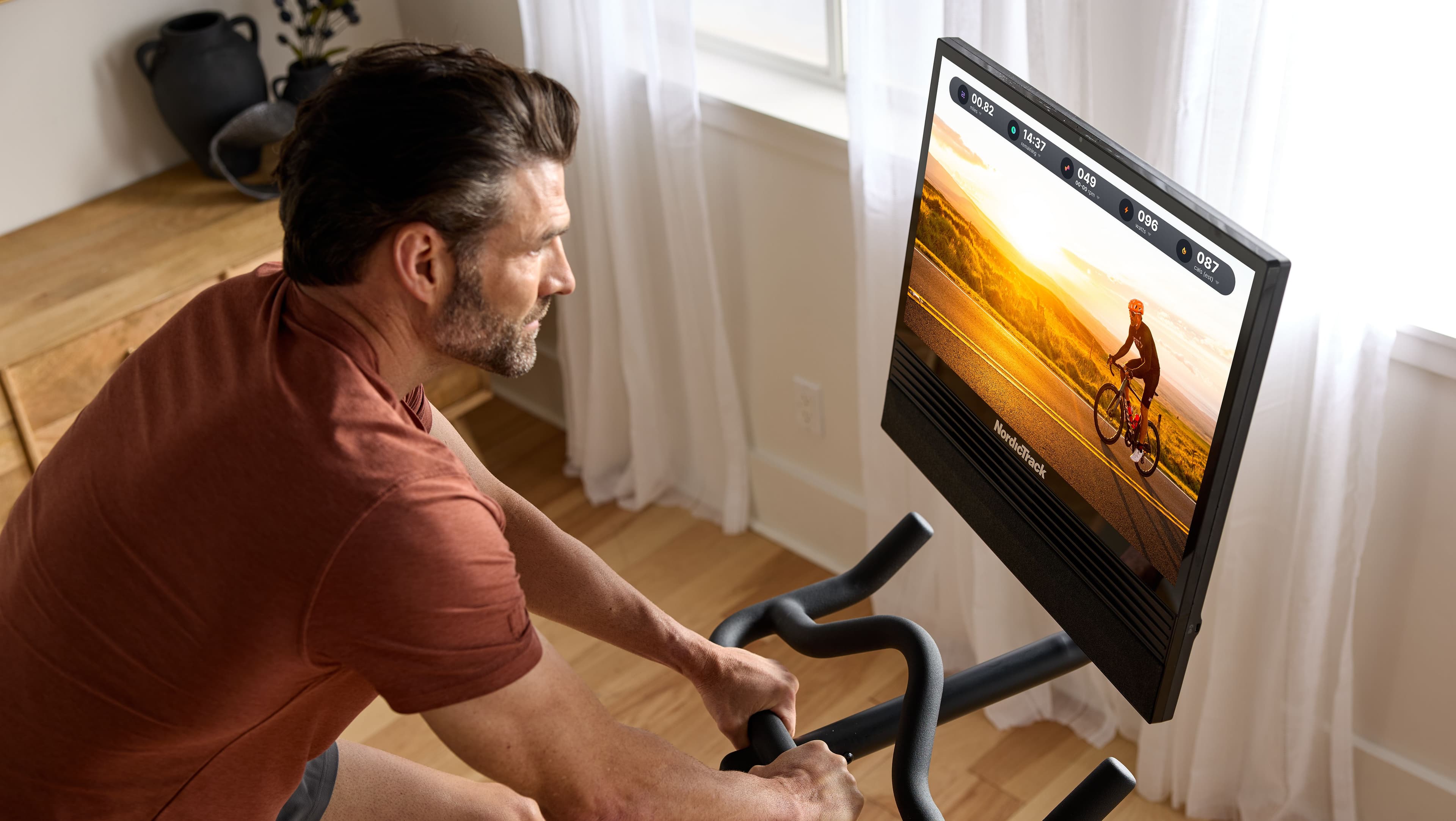
On NordicTrack connected bikes including the X24 Bike and the S24 Studio Bike, SmartAdjust technology automatically adjusts resistance during iFIT-guided workouts. The bike delivers the mechanical resistance; iFIT provides the programming intelligence that decides when to push and when to recover. As one system, they remove the guesswork from hitting the right training zones.
Workouts That Deliver Results: Beginner, Fat-Loss, HIIT, and Endurance Plans
The best cycling workout is the one matched to what you actually need right now.
Beginner Steady-State (20–30 Minutes, 3x Per Week)
This is the entry point. The goal is building an aerobic base and getting comfortable on the bike before adding intensity.
Warm-up: 5 minutes easy, low resistance, ~70–80 RPM
Main set: 15–20 minutes at Zone 2 (breathing is elevated but you can talk without straining)
Cool-down: 5 minutes easy, gradually reducing RPM and resistance
After 3 to 4 weeks at this volume, heart rate at the same effort level typically drops. That is aerobic adaptation. When it happens, add 5 minutes to the main set. The American Heart Association recommends at least 150 minutes of moderate-intensity aerobic activity per week for cardiovascular health. [6] Three 30-minute sessions gets most riders there.
Fat-Loss Intervals (35–40 Minutes, 3–4x Per Week)
Interval work increases total calorie burn and can help preserve lean muscle mass during a calorie deficit. A 2023 randomized trial in overweight adults found that HIIT prevented lean tissue loss while the diet-only group lost 2.8% of lean mass over the same period. [9]
Warm-up: 5 minutes easy
Work set: 8 rounds of 2 minutes at Zone 4 effort (breathing is hard, talking is difficult), followed by 2 minutes easy recovery
Cool-down: 5 minutes easy
The structure produces 16 minutes of hard effort with enough recovery between rounds to maintain quality throughout. Calorie burn per session is higher than a steady-state ride of the same duration.
HIIT Power Intervals (30 Minutes, 2–3x Per Week)
For riders targeting VO2 max improvement or peak cardiovascular conditioning.
Warm-up: 8 minutes, gradually increasing to Zone 3 by the end
Sprint intervals: 10 rounds of 30 seconds at near-maximum effort, followed by 90 seconds easy recovery
Cool-down: 5 minutes easy
American Council on Exercise (ACE)-sponsored research found that standing cycling at high effort reached 87 to 89% of actual VO2 max and 91 to 94% of maximum heart rate, well within the range required to maintain and improve cardiorespiratory fitness. [7] Two to three sessions per week with full recovery days in between is the appropriate frequency.
Endurance Base Build (45–60 Minutes, 2x Per Week)
For athletes building toward longer events, or anyone who wants to develop sustained aerobic capacity.
Warm-up: 10 minutes easy
Main set: 35–45 minutes at steady Zone 2–3, holding consistent power output throughout
Cool-down: 5 minutes easy
Adults who performed two to four times the recommended weekly activity minimum (300 to 600 minutes of moderate physical activity) had a 26 to 31% lower risk of mortality from all causes. [8] Longer endurance sessions are one practical way to accumulate that volume without requiring multiple daily workouts.
Ready to put those intervals into a structured program? The Washington National Parks Power & Incline Cycling Series with iFIT trainer Ashley Paulson is built around exactly this kind of training. Filmed across Olympic National Park and the surrounding terrain, the series combines power rides, threshold sessions, and interval climbs that pair directly with NordicTrack's incline and SmartAdjust capabilities. It's available now on iFIT.
Indoor Vs. Outdoor: Choosing the Right Bike and Setup
Upright Stationary Bikes
The standard home option. Upright bikes position the rider similarly to a road bike and work well for interval training, zone-based sessions, and everyday cardio. Most NordicTrack connected bikes in the lineup are upright.
Recumbent Bikes
The seat is lower and reclined, with pedals out in front rather than directly below. This reduces demand on the lower back and core and distributes more bodyweight onto the seat. A useful option for riders seeking a more supported, comfort-focused riding position, though peak cardiovascular output tends to be lower than an upright bike. The NordicTrack 10 Recumbent Bike is built for this use case, with a comfort-forward seat, 10-inch HD touchscreen, and 26 digital resistance levels for iFIT-guided sessions.
Indoor Smart Bikes
Connected bikes with touchscreens, automatic resistance adjustment, and guided programming fall here. The NordicTrack X24 Bike features a 24-inch HD touchscreen, handlebar resistance controls, SmartAdjust automatic resistance, and incline and decline training through iFIT. The S24 Studio Bike offers a 24-inch HD touchscreen and automatic resistance adjustment through iFIT in a studio cycling format, with access to iFIT's full library of live and on-demand rides.
For home buyers, the decision generally comes down to whether you want resistance to adjust automatically during guided workouts or prefer manual control, how much space you have, who else in the household will use the bike, and whether the primary goal is general health maintenance or structured performance training.
A connected bike with iFIT access offers guided programming, adaptive features, and performance tracking that may help riders support a variety of training goals. That is the practical value of NordicTrack hardware and iFIT working together as one system: the machine provides the training platform, while iFIT delivers guided workouts, adaptive programming, and progress tracking.
Outdoor Cycling
Outdoor riding adds terrain variety, fresh air, and a different riding experience than a stationary bike. Connected indoor bikes can provide integrated performance metrics and structured workout programming, while outdoor riding involves changing terrain and environmental conditions. The right choice depends on an individual's training goals, preferences, and riding environment.
Tracking Progress
A few numbers worth checking every three to four weeks:
Average watts over a standard session. If this rises at the same perceived effort over 6 to 8 weeks, fitness has improved.
Resting heart rate. A gradual decrease over months of consistent training is one of the clearest signs of cardiovascular adaptation. Most fitness trackers log this automatically.
Heart rate at a fixed effort. If your heart rate during a 30-minute Zone 2 ride drops from 145 BPM to 138 BPM over two months, the same output is costing your cardiovascular system less. That is progress.
Weekly volume. Total minutes per week is blunt but useful. Tracking it prevents the pattern of high weeks and low weeks that average out to less than the recommended baseline.
iFIT's performance dashboard, accessible on NordicTrack connected bikes, logs all of this automatically across sessions and surfaces trends over time. For riders who would rather train than manage spreadsheets, it keeps the data honest without requiring any extra effort.
Explore More
FREQUENTLY ASKED QUESTIONS
References
Mayo Clinic News Network. Mayo Clinic Q and A: How to add variety to your cardiovascular routine
Mayo Clinic. Exercise for weight loss: Calories burned in 1 hour
National Heart, Lung, and Blood Institute. Physical Activity and Your Heart — Benefits
American Council on Exercise. 7 Often-overlooked Benefits of Cardiovascular Training
Mayo Clinic. Exercise intensity: How to measure it
American Heart Association. American Heart Association Recommendations for Physical Activity in Adults and Kids
American Council on Exercise. ACE-sponsored Research: The Metabolic Cost of Weighted Vests During Standing Cycling
American Heart Association. New study finds lowest risk of death was among adults who exercised 150–600 minutes/week
Disclaimer: The primary purpose of this blog post is to inform and entertain. Nothing on the post constitutes or is intended to be a substitute for professional medical advice, prevention, diagnosis, or treatment. Reliance on any information provided on the blog is solely at your own risk. Always seek the advice of your physician or other qualified health provider with any questions you may have regarding a medical condition, and please consult your doctor or other health care provider before making any changes to your diet, sleep methods, daily activity, or fitness routine. Do not disregard professional medical advice or delay seeking it because of information available on this blog. NordicTrack assumes no responsibility for any personal injury or damage sustained by any recommendations, opinions, or advice given in this article. Always follow the safety precautions included in the owner's manual of your fitness equipment.
RECENT ARTICLES

Equipment | Fitness
The Top 8 Exercise Bike Benefits, According to Research
Feb 27, 2024 · 18 min read
READ MOREEquipment | Fitness
Exercise Bike vs. Rowing Machine: How to Decide Which One is Right For You
Mar 25, 2024 · 16 min read
READ MORE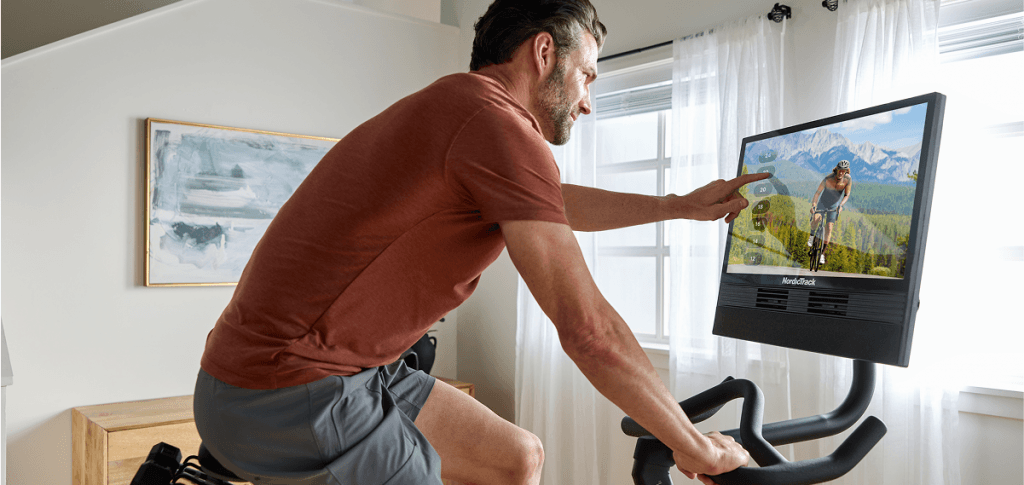
Equipment | Fitness | Workouts
How to Create Fun Circuit Bike Workouts on the S24
Turn your S24 Studio Bike into a full-body circuit session. These structured bike workouts for home blend cycling intervals with strength blocks to build cardio and muscle in 30 minutes.
Oct 7, 2025 · 8 min read
READ MORE