
Indoor Cycling Bike vs. Upright Bike vs. Recumbent: What's Actually the Difference?
Not sure which exercise bike is right for you? Compare indoor cycling bikes, upright bikes, and recumbent bikes across comfort, training style, and space to find the best fit for home.
Jul 16, 2026
·
8 min read
IN THIS ARTICLE
KEY TAKEAWAYS
- Recumbent bikes prioritize back support and low-impact cardio, making them the most accessible option for people with joint concerns or seniors looking for daily movement.
Indoor cycling bikes are built for interval training and class-style intensity, with flywheel mechanics that support high-cadence efforts and standing climbs.
Upright bikes offer a compact, familiar riding position suited to general home cardio and steady-state aerobic training.
All three bike types deliver real cardiovascular exercise; bike choice shapes comfort and training format, not whether meaningful fitness is achievable.
NordicTrack bikes including the S24 Studio Bike, X24 Bike, and 10 Recumbent Bike integrate with iFIT for coached workouts, adaptive programming, and leaderboard features.
Choosing between an exercise bike for home use comes down to three things: how your body feels during a ride, what kind of training you want to do, and how much space you have. Here is the short answer before the detail: choose a recumbent bike if comfort, back support, and low-impact cardio are your priority; choose an upright bike if you want a compact, versatile home cardio machine; choose an indoor cycling bike if you want class-style intensity, interval training, and performance metrics.
The rest of this article covers the mechanics, tradeoffs, and practical details behind that decision so you can choose with confidence and start riding.
TL;DR Decision Grid
Your Priority | Best Fit |
Low-impact cardio, back support, or joint concerns | Recumbent bike |
General home cardio, compact footprint, flexibility | Upright bike |
Interval training, class-style intensity, power metrics | Indoor cycling bike |
Senior fitness or longer steady-state rides | Recumbent bike |
Connected classes, leaderboards, coached workouts | Indoor cycling or upright with iFIT integration |
How the Three Bike Types Differ
All three bikes deliver cardiovascular exercise through pedaling against resistance. Body position, resistance mechanics, and the type of training each one is built for are what set them apart.
Recumbent Bikes
On a recumbent bike, you sit in a reclined seat with a backrest, and the pedals are positioned in front of you rather than directly beneath your hips. This keeps your spine supported throughout the ride, reduces pressure on your lower back and joints, and makes it easier to sustain longer sessions without discomfort. Your body weight is distributed across a larger seat rather than concentrated on a narrow saddle.
This setup makes recumbent bikes particularly well-suited for people who have joint concerns or find standard bike seating uncomfortable. According to Mayo Clinic, if your joints cannot take the impact of walking or running, cycling can decrease pain while increasing aerobic capacity. [2]
Upright Bikes
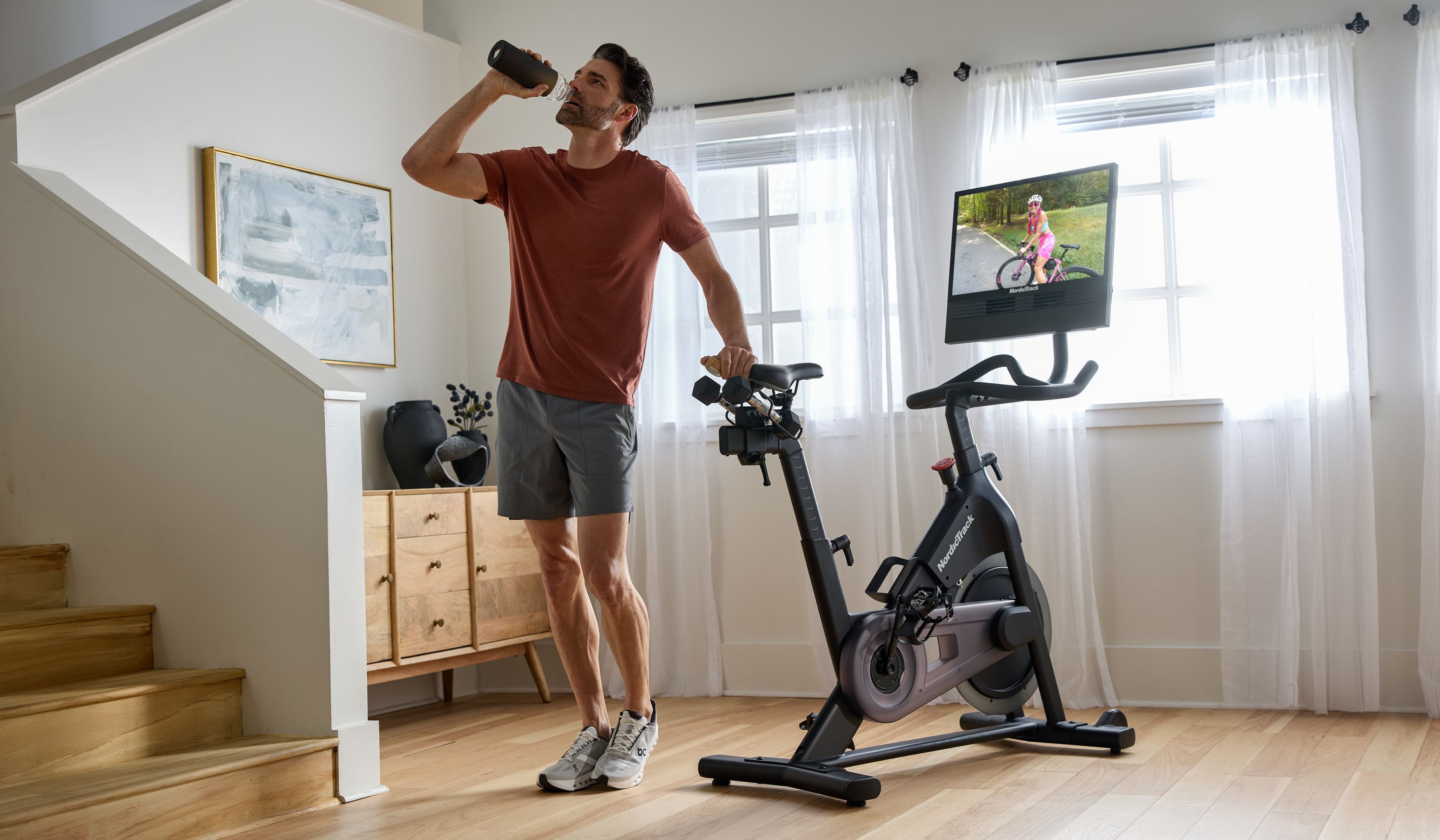
An upright bike positions you the same way a standard outdoor bicycle does: seated directly over the pedals, handlebar in front, torso upright. It is the most familiar configuration for most riders. Upright bikes are typically the most compact option and the easiest to fit into a spare room or small home gym. Resistance systems vary between magnetic (quieter, maintenance-free) and friction-based models.
Indoor Cycling Bikes
Indoor cycling bikes replicate the geometry and feel of road cycling. You lean forward slightly toward drop-style handlebars, and the pedals drive a weighted flywheel that creates a momentum-based resistance feel. Most indoor cycling bikes allow you to stand and pedal out of the saddle, which is central to the class-style cycling experience.
The flywheel design means resistance changes are immediate and the pedal stroke feels fluid at high cadences. Indoor cycling bikes are built for interval training, standing climbs, and power-based work where output metrics matter.
Comfort, Injury Risk, and Accessibility
For riders managing joint discomfort, recovering from an injury, or looking for a bike that supports longer daily sessions without physical wear, recumbent bikes offer the most forgiving platform.
Aerobic exercise may help lower blood pressure and control blood sugar, and it can reduce pain and improve function in people with arthritis. [1] A recumbent bike lets you access those benefits without the postural demands of upright or indoor cycling positions.
Upright bikes sit in the middle ground. They require a bit more postural awareness than recumbents, but most riders adapt quickly. Proper seat height matters on any bike. For guidance on getting the fit right, How to Adjust Your Exercise Bike Seat covers the basics.
For seniors or anyone prioritizing sustainable, long-term movement, recumbent bikes offer the gentler option. The lower entry height, full back support, and forward pedal placement remove most of the balance and flexibility demands that can make upright or indoor cycling bikes uncomfortable.
A simple fit check before you buy:
Can you reach the handlebars without rounding your shoulders forward?
Is there a slight bend in your knee at the bottom of the pedal stroke?
Does the seat height allow you to maintain that knee bend without hip rocking?
If the answer to any of those is no, it is either the wrong bike type or an adjustability limitation worth confirming before you purchase.
Performance, Training, and Metrics
For structured training, intervals, and output-based workouts, indoor cycling bikes are the strongest platform of the three.
According to the American Council on Exercise, HIIT is a system calling for repeated bouts of short-duration, high-intensity exercise intervals intermingled with periods of lower intensity active recovery. [4] High intensity is defined as exercising above 80% of maximum heart rate, and stationary bikes are a recommended HIIT mode. [4] According to ACE, HIIT can improve cardiovascular fitness levels, and with the heart beating near maximal exertion, there is an increase in stroke volume, which improves VO2 max. [5]
Indoor cycling bikes support this kind of training most naturally because they allow you to stand out of the saddle, replicate road cycling cadence, and make rapid resistance changes mid-interval. That said, upright and recumbent bikes both deliver meaningful aerobic training. Aerobic exercise generally reduces the risk of conditions including obesity, heart disease, high blood pressure, type 2 diabetes, metabolic syndrome, stroke, and certain cancers. [1] Vigorous cycling on any stationary bike, defined as pedaling between 161 and 200 watts, reaches 11.0 METs. [7] The bike type shapes comfort and training format. It does not determine whether you can get a real workout.
For riders who want connected classes, leaderboard competition, and coaching that adjusts in real time, the NordicTrack S24 Studio Bike delivers a full studio cycling experience at home, while the X24 Bike adds incline and decline capability for terrain-based training. Both bikes integrate fully with iFIT, which is what transforms the hardware from a stationary machine into a coached training system. iFIT provides the instruction, programming, and adaptive progression that turns each ride into something guided, not guessed.
What Cycling Works in Terms of Muscles
All three bike types primarily engage the lower body. According to ACE, the primary function of the gluteus maximus is hip extension, and it controls the movement for cycling. [3] The quadriceps, hamstrings, calves, and hip flexors all contribute to the pedal stroke. Cycling engages Type I aerobic muscle fibers, which use oxygen to sustain lower-intensity, long-duration endurance work. [6]
The main difference across bike types is core and upper body involvement. On an upright bike, the core works lightly to maintain posture. On an indoor cycling bike, the upper body stabilizes against the handlebars during standing intervals. On a recumbent bike, the backrest supports the torso throughout.
Sample Workouts to Try First
These are starting points, not prescriptions. Adjust intensity based on how you feel, and consult your physician before starting a new exercise routine.
Indoor Cycling Bike: 20-Minute Beginner Interval
5 minutes: Easy warm-up, light resistance, conversational effort
10 minutes: Alternate 30 seconds of hard effort (above 80% of max heart rate) with 90 seconds of easy recovery, repeating throughout
5 minutes: Easy cool-down, reduce resistance gradually
This follows the HIIT structure ACE describes: short, high-intensity work intervals alternated with lower-intensity recovery periods. [4]
Upright Bike: 25-Minute Steady-State Ride
5 minutes: Warm-up at easy resistance
15 minutes: Moderate pace, resistance level where you can hold a conversation but feel you are working
5 minutes: Easy cool-down
Good for building an aerobic base and extending ride duration over time.
Recumbent Bike: 30-Minute Low-Impact Session
5 minutes: Very easy pace, minimal resistance
20 minutes: Comfortable, consistent effort, RPE 4-5 out of 10
5 minutes: Gradual slow-down
Easy to extend as fitness improves and consistent enough to do daily without joint accumulation.
Space, Setup, and Total Cost of Ownership
Indoor cycling bikes and upright bikes have a smaller footprint than recumbent bikes. Recumbent bikes require more floor space because of the extended seat-and-pedal layout, so measure your available floor space before purchasing.
Noise matters in apartment settings. Magnetic resistance bikes of any type are quieter than friction-based models. Indoor cycling bikes with direct-contact brake pads require periodic pad replacement. Magnetic bikes have fewer consumable parts.
For advice on setting up any of these bikes in a home space, Adding an Exercise Bike to Your Home Gym covers placement, flooring, and practical setup considerations.
The Right Bike Is the One You Actually Ride
The best exercise bike is the one you will use consistently. A recumbent bike ridden every day delivers better long-term results than an indoor cycling bike that sits unused. Pick the type that fits your body, your available space, and the training style you are realistically going to show up for.
NordicTrack's lineup covers all three types, and every bike with iFIT integration connects you to a system that adapts as you improve. The NordicTrack 10 Recumbent Bike is a comfortable, accessible entry point for daily low-impact cardio. The S24 Studio Bike and X24 Bike take performance training further with iFIT coaching, adaptive programming, and connected classes.
For riders who want structured progression alongside scenic riding, the Washington National Parks Power & Incline Series with iFIT trainer Ashley Paulson is a four-week, 12-workout program that builds endurance and climbing power through Washington's national parks. It is a strong fit for indoor cycling or upright riders who want a clear training path rather than a random playlist of rides.
To compare specific models side by side, Best Exercise Bikes gives a structured breakdown by use case and feature set.
Explore More
FREQUENTLY ASKED QUESTIONS
References
Mayo Clinic. Aerobic exercise: Top 10 reasons to get physical
Mayo Clinic News Network. Mayo Clinic Q and A: How to Add Variety to Your Cardiovascular Routine
American Council on Exercise. 8 Butt-Toning Moves
American Council on Exercise. What Is High Intensity Interval Training (HIIT) and What Are the Benefits?
American Council on Exercise. How to Add Variety to Your HIIT Workouts
American Council on Exercise. 10 Things to Know About Muscle Fibers
American Council on Exercise. The Surprising Benefits of Rucking
Disclaimer: The primary purpose of this blog post is to inform and entertain. Nothing on the post constitutes or is intended to be a substitute for professional medical advice, prevention, diagnosis, or treatment. Reliance on any information provided on the blog is solely at your own risk. Always seek the advice of your physician or other qualified health provider with any questions you may have regarding a medical condition, and please consult your doctor or other health care provider before making any changes to your diet, sleep methods, daily activity, or fitness routine. Do not disregard professional medical advice or delay seeking it because of information available on this blog. NordicTrack assumes no responsibility for any personal injury or damage sustained by any recommendations, opinions, or advice given in this article. Always follow the safety precautions included in the owner's manual of your fitness equipment.
RECENT ARTICLES

Equipment | Fitness
How to Choose the Best Exercise Bike to Meet Your Fitness Goals
Sep 11, 2023 · 11 min read
READ MORE
Equipment | Fitness
The Top 8 Exercise Bike Benefits, According to Research
Feb 27, 2024 · 18 min read
READ MORE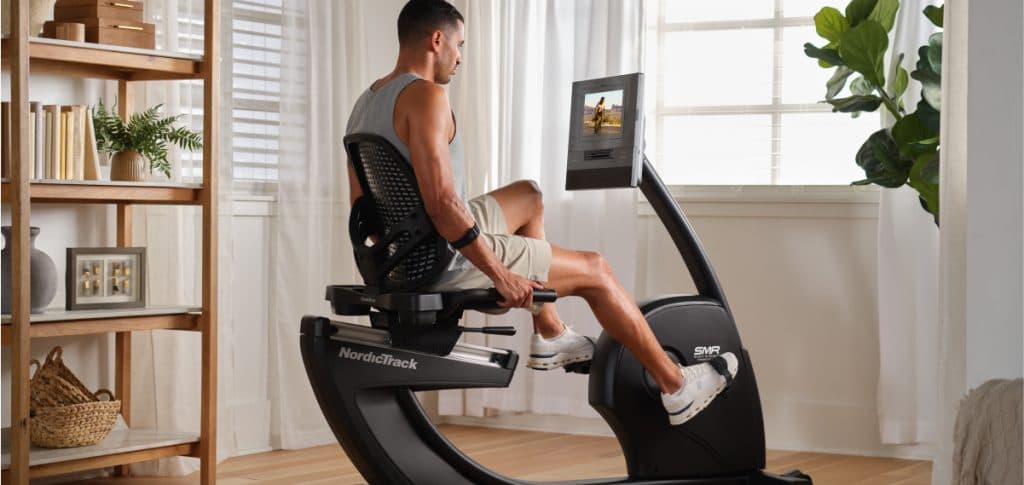
Equipment | Fitness
What’s the Best Cardio Machine for Bad Knees?
Discover the best cardio machine for bad knees and how to stay active with less joint stress. Compare bikes, treadmills, and more to find the safest path to consistent, low-impact fitness.
Oct 24, 2025 · 9 min read
READ MORE