
Can an Elliptical Help You Lose Belly Fat? What the Research Actually Shows
An elliptical can help reduce belly fat, but only as part of a caloric deficit. Get the research, calorie math, and a 4-week NordicTrack plan to get real results.
Jul 17, 2026
·
14 min read
IN THIS ARTICLE
KEY TAKEAWAYS
- An elliptical contributes to belly fat loss by burning calories that support an overall caloric deficit, not by targeting the belly directly.
Spot reduction is a myth: research confirms that fat loss occurs across the whole body, not in isolated areas.
Studies show aerobic exercise reduces abdominal adipocyte size more effectively than diet alone.
HIIT on the elliptical significantly reduces total, abdominal, and visceral fat mass, according to a meta-analysis of 39 studies.
Zone 2 steady-state cardio and HIIT both produce fat loss; the best protocol is the one you can sustain consistently over weeks and months.
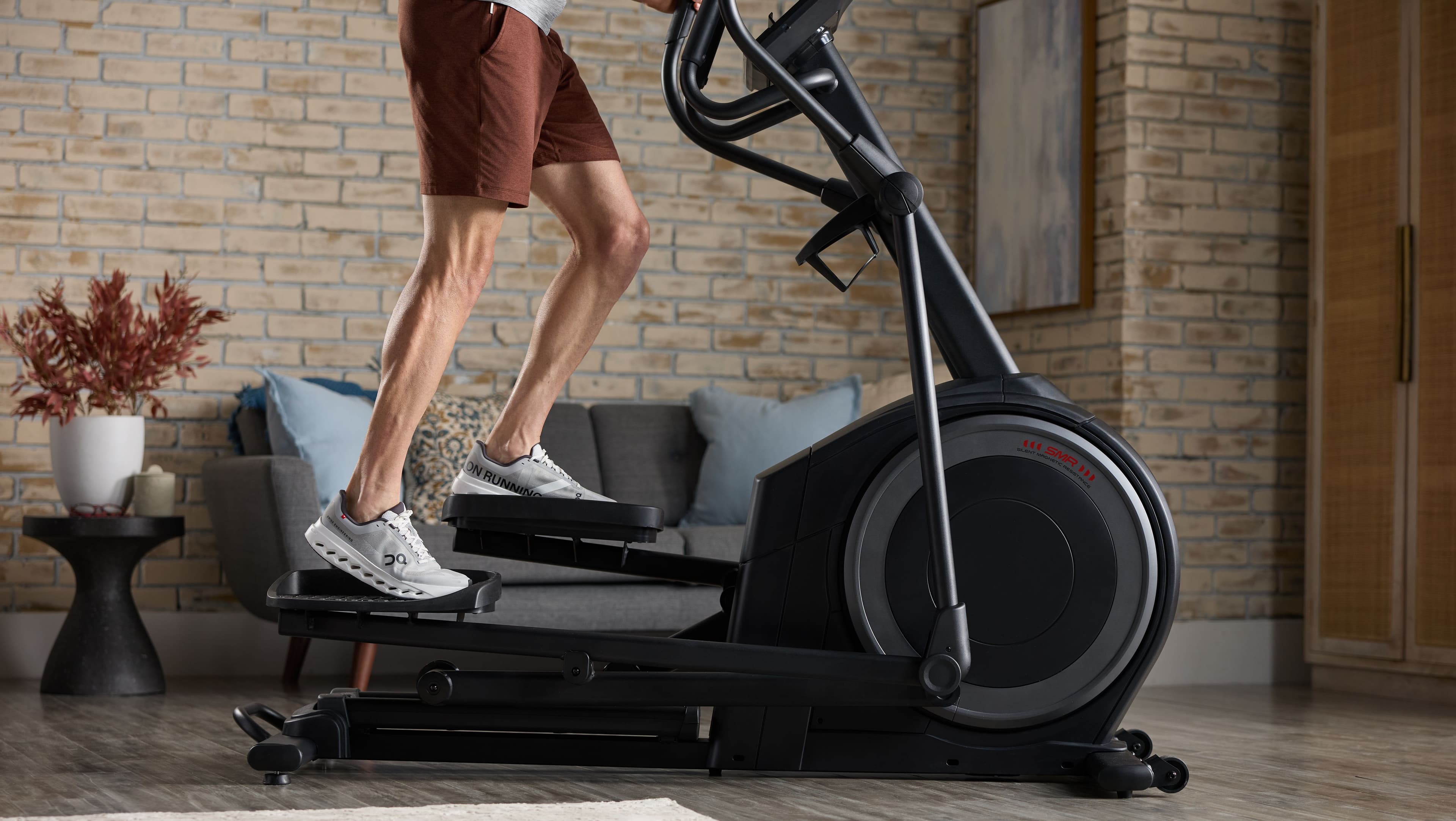
The short answer is yes, with one condition: you have to be in a caloric deficit. An elliptical can be an effective tool for burning calories and supporting fat loss across your whole body, including your midsection. What it cannot do is target your belly specifically. Here is what the research actually says, how the math works, and what your workouts should look like.
The Bottom Line on Ellipticals and Belly Fat
An elliptical helps you lose belly fat the same way it helps you lose fat anywhere else: by burning calories that contribute to an overall energy deficit. When your body burns more calories than you consume over time, it draws from fat stores throughout the body, including visceral fat (the deep abdominal fat around your organs) and subcutaneous fat (the layer directly under your skin). Neither fat type disappears on its own because you trained your abs or stepped on a specific machine.
The good news is that regular aerobic exercise, including elliptical cardio, is well-supported by research as an effective strategy for reducing overall body fat. If you are consistent, create a caloric deficit, and combine the right workout protocols, your belly will be part of what changes.
How Belly Fat Actually Works
There are two types of fat in your abdominal region. Visceral fat sits deep inside the abdomen, wrapped around the organs. Subcutaneous fat is the softer layer you can pinch.
The reason crunches and ab workouts do not burn belly fat is straightforward: exercising a muscle does not pull fat from the tissue above it. According to ACE Fitness, the concept of spot reduction follows a false belief that training a specific muscle will result in fat loss in that area of the body. [1] Fat reduction is a function of energy expenditure, not local muscle recruitment. Spot reduction does not work because it usually targets muscles that are relatively small through exercises that are relatively insignificant in terms of enhancing overall fitness, strength, and energy expenditure. [1]
An elliptical, by contrast, is a full-body cardio machine that burns substantially more calories per session than isolated ab exercises
What the Research Says About Cardio and Abdominal Fat
Studies consistently show that aerobic exercise reduces abdominal fat as part of overall fat loss, and that adding exercise to dietary restriction produces better abdominal results than diet alone.
A longitudinal study published in PubMed compared three interventions in obese, middle-aged women over 20 weeks: a hypocaloric diet alone, diet plus low-intensity exercise, and diet plus high-intensity exercise (all groups maintained a 2,800 kcal/week deficit). All three groups lost similar amounts of body weight and total fat mass. However, diet alone did not change subcutaneous abdominal adipocyte size, whereas both diet-plus-exercise groups significantly reduced abdominal adipocyte size. [2] The conclusion: adding exercise to a caloric deficit preferentially reduces subcutaneous abdominal adipocyte size in a way that diet alone does not. [2]
A separate randomized controlled trial found that both aerobic exercise and resistance exercise, without caloric restriction, produced significant reductions in total and visceral fat compared to a non-exercising control group over three months. [3]
A 2021 review published in Frontiers in Physiology noted that even when exercise training does not produce weight loss, it remains an effective way to improve body composition, including increasing muscle mass and decreasing fat. [4]
The takeaway from the research is consistent: aerobic exercise reduces abdominal fat, works better alongside a caloric deficit than diet alone, and delivers results even when the scale does not move immediately.
Calories, Math, and What to Realistically Expect
Fat loss requires a sustained caloric deficit. An ACE Fitness-commissioned study found that exercisers on elliptical trainers burned approximately 8 to 9 calories per minute, comparable to the calorie expenditure for intense aerobic dancing and running at an 11.5-minute mile pace. [5] At that rate, a 30-minute moderate elliptical session burns roughly 240 to 270 calories, and a 45-minute session burns roughly 360 to 405 calories. These figures vary based on your body weight, resistance level, and effort.
The U.S. Department of Health and Human Services recommends adults get at least 150 to 300 minutes of moderate-intensity aerobic activity per week for substantial health benefits. [6] For weight loss specifically, working toward the higher end of that range, at least 300 minutes per week, provides additional health benefits and greater overall calorie expenditure.
For progress tracking, waist circumference measurements taken weekly are a useful companion to scale weight, since fat loss around the midsection may show up in measurements before it registers on the scale.
Best Elliptical Workouts for Fat Loss
There is no single best protocol. Zone 2 steady-state cardio and HIIT both work. They work differently, and the right choice depends on your fitness level, time, and recovery capacity.
Zone 2 Steady-State Cardio
Zone 2 is low to moderate intensity, where you can hold a full conversation but your breathing is noticeably elevated. According to the National Academy of Sports Medicine (NASM), Zone 2 training improves the body's ability to use oxygen and fat for fuel and creates an aerobic foundation that supports all other training. [7]
For an elliptical, Zone 2 is the effort level where you can hold a conversation but feel the work. Sessions of 30 to 60 minutes, three to five days per week, build sustainable aerobic capacity and calorie expenditure over time.
NASM also notes that according to a meta-analysis comparing HIIT and steady-state cardio for fat loss, both approaches fared equally well in research studies examining efficacy for fat loss, and that steady-state cardio may be a less intimidating alternative for beginning exercisers, older adults, and individuals with certain health conditions or limitations. [8] Consistency matters more than which protocol you choose.
Sample Zone 2 Elliptical Session (40 Minutes)
Minutes 0 to 5: warm-up at low resistance, easy pace
Minutes 5 to 35: maintain steady, conversational-pace effort, resistance level 4 to 6
Minutes 35 to 40: cool down, reduce resistance, slow stride rate
HIIT on the Elliptical
High-intensity interval training alternates short bursts of maximum effort with longer recovery periods. ACE Fitness notes that HIIT raises your metabolic rate both during and after exercise, increases aerobic and anaerobic pathways, and creates greater EPOC (excess post-exercise oxygen consumption), which means you continue burning calories at a higher rate after the session ends. [9]
The research on HIIT and abdominal fat is strong. A meta-analysis published in Sports Medicine, covering 39 studies and 617 subjects, found that HIIT significantly reduced total, abdominal, and visceral fat mass, with consistent results across both men and women. [10]
The elliptical is well-suited to HIIT because you can adjust resistance and stride rate to spike effort quickly, and reduce them just as quickly for recovery.
Sample HIIT Elliptical Session (25 Minutes)
Minutes 0 to 5: warm-up at low resistance, easy pace
Minutes 5 to 22: alternate 40 seconds at maximum effort (resistance 8 to 10, fast stride) with 80 seconds at easy recovery (resistance 3 to 4, slow stride) for seven rounds
Minutes 22 to 25: cool down, reduce to low resistance, slow breathing
Two HIIT sessions per week is sufficient for most people. More than that without adequate recovery can increase injury risk and reduce performance.
Resistance Intervals
A middle-ground protocol involves keeping a steady pace while progressively increasing resistance over the course of the session. This maintains aerobic work while recruiting more muscle and elevating calorie burn without the full intensity demand of HIIT sprints. This is a practical option for people building toward HIIT or who prefer lower-impact sessions.
Sample Resistance Interval Session (35 Minutes)
Minutes 0 to 5: warm-up at resistance level 3, easy stride
Minutes 5 to 10: resistance level 5, moderate pace
Minutes 10 to 15: resistance level 7, slightly slower stride
Minutes 15 to 20: resistance level 9, maintain form
Minutes 20 to 25: resistance level 7, pick pace back up
Minutes 25 to 30: resistance level 5, steady output
Minutes 30 to 35: cool down at resistance level 3
Elliptical vs. Treadmill vs. Exercise Bike for Belly Fat
All three machines burn calories and contribute to fat loss when used consistently. The differences come down to impact, muscle engagement, and what you can actually sustain.
A treadmill is weight-bearing and tends to place more stress on the knees, hips, and ankles, which can be a limiting factor for people with joint issues or those returning from injury.
An exercise bike is the lowest-impact option and is generally the most comfortable for people carrying significant body weight or dealing with knee pain.
The elliptical sits between the two. It is lower-impact than a treadmill, with the upper-body handles adding muscle engagement that a bike does not offer. For people who want sustained, lower-impact sessions over 30 to 45 minutes, it is often the most accessible option for consistent training.
The honest answer is that the best machine for belly fat loss is the one you will use consistently at sufficient intensity and duration. Adherence matters more than marginal differences in per-session calorie burn.
A 4-Week NordicTrack Elliptical Plan
This suggested plan builds progressively over four weeks, mixing Zone 2 sessions with HIIT and resistance intervals. It is designed for someone who can currently handle 20 to 30 minutes of continuous cardio at moderate effort.
Week 1: Build the Base
Three sessions per week. Two Zone 2 sessions of 30 minutes each, one resistance interval session of 30 minutes. Focus on finding sustainable effort levels before increasing duration or intensity.
Week 2: Add Duration
Three to four sessions per week. Extend Zone 2 sessions to 40 minutes. Add one 20-minute HIIT session with 6 intervals (40 seconds on, 80 seconds off).
Week 3: Add Intensity
Four sessions per week. One 45-minute Zone 2 session, two HIIT sessions (7 intervals each), one resistance interval session of 35 minutes. This is the highest-demand week.
Week 4: Consolidate
Four sessions per week. Return to the Week 2 structure but at slightly higher resistance levels. Allow the body to absorb the training before reassessing progress and adjusting.
The NordicTrack X16 Elliptical is built for this kind of progressive programming. Its auto-adjustable stride, incline and decline range, and iFIT integration let you vary resistance and effort in the same session without manual adjustments mid-workout. The NordicTrack AirGlide 16 offers a similar combination of adjustable stride and incline, well-suited to the interval and resistance work in Weeks 2 through 4.
Both machines connect with iFIT, giving you access to structured elliptical programs led by iFIT trainers. If you want a session that handles the effort cues for you, the Yellowstone and Grand Teton Snowshoeing Series with trainer Elyse Miller on iFIT mixes speed intervals, steady-state training, and Tabata-style workouts to build the strength and endurance you need to stay active.
Tracking, Motivation, and Making It Stick
The research works in theory. The hard part is doing the sessions consistently enough for weeks and months for the numbers to add up.
A few practical checkpoints:
Track more than the scale. Body weight fluctuates daily based on water, food volume, and hormones. Waist circumference, measured at the same point and time each week, gives you a cleaner signal on abdominal fat changes. Track both.
Increase gradually. After two to three weeks at the same protocol, add five minutes to your longer Zone 2 sessions or one additional HIIT interval. Small, regular progressions prevent adaptation without requiring a complete program overhaul.
Pair cardio with strength training. Research shows that both aerobic exercise and resistance exercise produce significant reductions in total and visceral fat. [3] Two strength sessions per week alongside your elliptical work is a solid structure.
Address diet separately but in parallel. Exercise supports fat loss but does not override a significant caloric surplus. The U.S. Department of Health and Human Services recommends at least 150 to 300 minutes of moderate-intensity aerobic activity per week, with additional benefits gained beyond 300 minutes. [6] You do not need to overhaul your diet to start, but tracking your food even loosely for a few weeks gives you useful information.
Set a 30-day commitment before evaluating. Belly fat changes are not visible in one or two weeks. A 30-day run of consistent sessions, combined with attention to caloric intake, is a reasonable minimum before drawing conclusions about what is and is not working.
Explore More
FREQUENTLY ASKED QUESTIONS
References
American Council on Exercise. Myths and Misconceptions: Spot Reduction and Feeling the Burn
You T, Murphy KM, Lyles MF, Demons JL, Lenchik L, Nicklas BJ. Addition of aerobic exercise to dietary weight loss preferentially reduces abdominal adipocyte size
Kolnes KJ, Petersen MH, Lien-Iversen T, Højlund K, Jensen J. Effect of Exercise Training on Fat Loss: Energetic Perspectives and the Role of Improved Adipose Tissue Function and Body Fat Distribution
American Council on Exercise. Are All Elliptical Trainers Created Equal?
U.S. Department of Health and Human Services. Top 10 Things to Know About the Second Edition of the Physical Activity Guidelines for Americans
National Academy of Sports Medicine. Heart Rate Training Zones Explained for Certified Personal Trainers
Golden N. What is Steady-State Cardio?
American Council on Exercise. Try This HIIT Workout on the Elliptical Trainer
Maillard F, Pereira B, Boisseau N. Effect of High-Intensity Interval Training on Total, Abdominal and Visceral Fat Mass: A Meta-Analysis
Disclaimer: The primary purpose of this blog post is to inform and entertain. Nothing on the post constitutes or is intended to be a substitute for professional medical advice, prevention, diagnosis, or treatment. Reliance on any information provided on the blog is solely at your own risk. Always seek the advice of your physician or other qualified health provider with any questions you may have regarding a medical condition, and please consult your doctor or other health care provider before making any changes to your diet, sleep methods, daily activity, or fitness routine. Do not disregard professional medical advice or delay seeking it because of information available on this blog. NordicTrack assumes no responsibility for any personal injury or damage sustained by any recommendations, opinions, or advice given in this article. Always follow the safety precautions included in the owner's manual of your fitness equipment.
RECENT ARTICLES
Equipment | Fitness
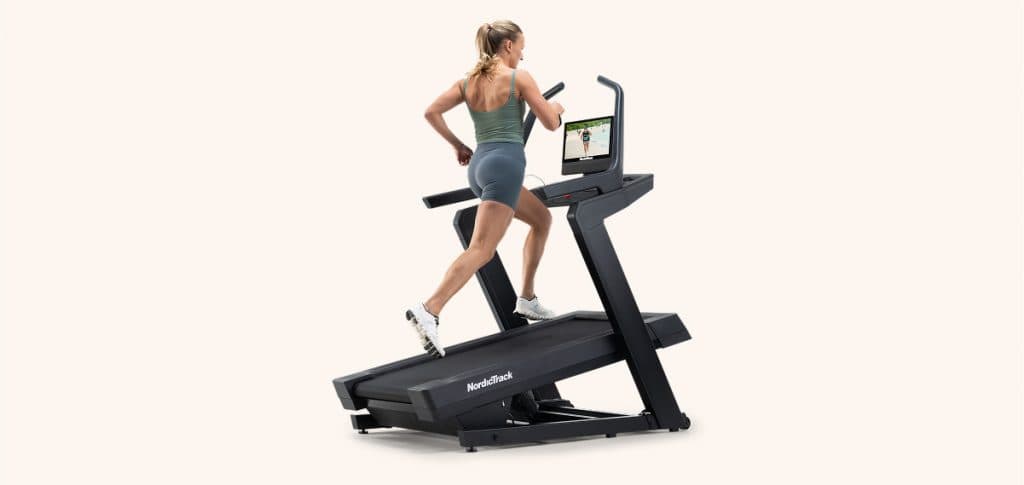
What's the Best Cardio Machine for Fat Loss?
Not all cardio machines deliver the same fat-loss results. Compare treadmills, ellipticals, rowers, and bikes to find the best exercise machine to lose weight faster.
Sep 26, 2025 · 6 min read
READ MORE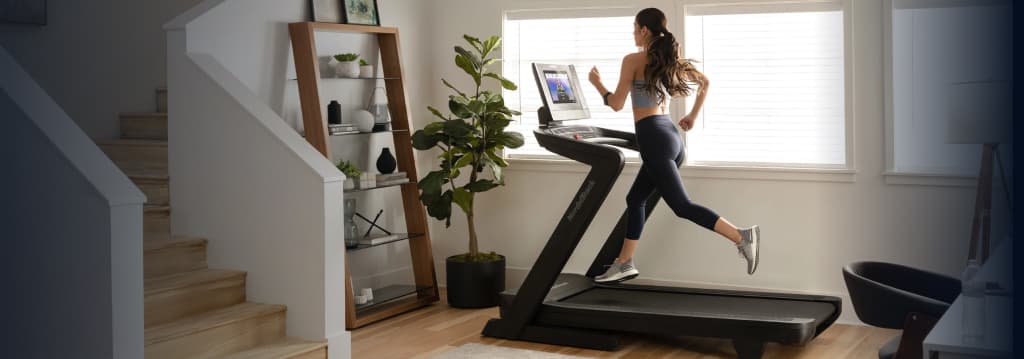
Equipment
Ellipticals vs. Treadmills: Which Is Right for You?
Not sure whether to choose an elliptical or treadmill? Compare benefits, calorie burn, and training goals to find the right cardio machine for your home gym.
Aug 4, 2026 · 9 min read
READ MORE
Nutrition
Exploring Different Weight Loss Methods: Are They Effective?
We are clarifying which weight loss trends work and which are a full-on sham. Let’s start with what NOT to do if you’re aiming to get healthy and fit.
Jan 27, 2020 · 14 min read
READ MORE