
Common Running Injuries And How To Avoid Them On Your Treadmill
Most treadmill running injuries trace back to five fixable habits. Learn the warning signs, safety basics, and product picks that help you run injury-free.
Aug 10, 2026
·
7 min read
IN THIS ARTICLE
KEY TAKEAWAYS
- Most treadmill running injuries come from five preventable habits: no warm up, poor hydration, distraction, ignored leg pain, and risky mid-run movements.
A short warm up before you run can help lower injury risk, even on shorter sessions.
Shin splints typically ease with rest, ice, and stretching; if self-care isn't helping, that's the cue to see a doctor.
Hydrating before, during, and after a run is the guidance fitness professionals recommend for longer sessions.
Cushioned treadmill decks can reduce peak plantar impact forces, particularly at faster paces.
Most treadmill running injuries come down to five preventable habits: skipping the warm up, running dehydrated, multitasking instead of focusing on your stride, ignoring early leg pain, and adding risky movements mid-run. Fix those five, and treadmill running is one of the safest ways to train.
The popularity of treadmills has grown for several reasons. A treadmill allows you to run at full speed in the comfort of a gym or your own home without having to deal with the elements. When you are running on a treadmill, you don't have to worry about other runners, icy roads, car traffic, or fading daylight.
For many people who exercise, a treadmill provides the perfect way to fit in a daily run, burn calories, and keep the body moving. However, the ease of using a treadmill lulls many runners into a false sense of security, especially when it comes to injuries. Running injuries are common, even on treadmills, and many of the injuries sustained on a treadmill are the same kind you might suffer running on the open road or a track.
Getting Injured By Forgetting The Basics
Some of the most common treadmill injuries occur because runners forget the basics of using a treadmill. You should take the same safety precautions running indoors as you would running outdoors, including a proper warm up before you run and a cool down after. Warming up gradually raises muscle temperature and blood flow, which can help lower injury risk. [1]
Broken bones and sprained ankles commonly happen when runners reach the end of a run and forget to stop the belt. The same injuries can happen when a runner's shoelaces come untied and get caught in the edge of the treadmill, or when a runner steps on their own laces. Any time you are running, look straight ahead, never down, to maintain your balance.
If you are just building this habit, the T Series 16 Treadmill is a good entry point for practicing the fundamentals. Its 16 inch belt gives newer runners a stable, wider landing zone while they get comfortable with pace, posture, and the treadmill's safety key.
So Don't Forget
Start with a proper warm up. [1]
Stop the machine when you're done running or need a break.
Make sure your shoes are tied.
Look straight ahead to maintain balance while running.
Dehydration and Cramping
Time spent on a treadmill mimics running on the road, which means you need to take the same hydration precautions, including a cool down after your run. For longer sessions, hydrating before, during, and after your workout is the guidance fitness professionals recommend, rather than waiting until you feel thirsty. [2]
The benefit of running on a treadmill is that it's easy to keep water within reach the entire time. Runners should also make sure they are eating enough protein to support muscle recovery between runs. Treadmill running doesn't exempt you from cramps, so keeping hydration and a balanced diet part of your routine matters just as much indoors as it does outdoors.
So Don't Forget
Keep plenty of water on hand.
Hydrate before, during, and after your run, not just when you feel thirsty. [2]
Have enough protein in your diet.
Injuries from Multitasking
Running on a treadmill puts your phone and other devices conveniently close at hand, but that convenience can turn into a distraction. Most runners approach treadmill use by starting out slow and building up to a brisk pace. As you build speed, texting, phone calls, or other screen use can lead to a missed step or a stumble.
Runners on the open road already know that too much distraction can be dangerous, since it pulls attention away from surroundings. A treadmill is a controlled environment, so runners can safely listen to music, but should still avoid texting, phone calls, or watching a screen that isn't built into the treadmill dashboard. Losing focus, even briefly, is one of the more common causes of a missed step at speed.
So Don't Forget
Minimize distractions.
Limit texting and multitasking to avoid injury.
Shin Splints and Stress Fractures
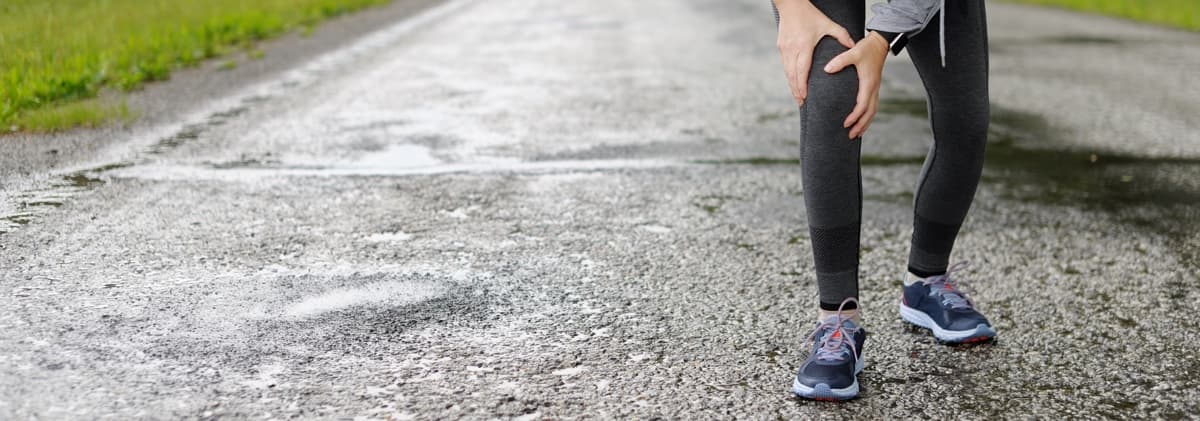
Excessive running in any environment can lead to shin splints or, less commonly, a stress fracture. Runners often assume the two are the same and try to push through the pain, but they call for different responses. Shin splints typically show up as tenderness, soreness, or mild swelling along the inner shin, and the pain often eases once you stop exercising or after some rest and stretching. [3]
If rest, ice, and over-the-counter pain relievers aren't easing the pain, or it keeps coming back and becoming ongoing, treat that as your cue to see a doctor, since a stress reaction or stress fracture becomes more likely at that point. [3]
Cushioned treadmill decks can reduce peak plantar impact forces at the forefoot and midfoot compared to non-cushioned decks, particularly at faster paces. [4]
So Don't Forget
Pay attention to the pain in your legs. [3]
Shin splints often ease with rest, ice, and stretching.
If self-care isn't helping or the pain keeps returning, see a doctor rather than pushing through. [3]
Breaks and Dislocations
A treadmill is built for walking, jogging, or running, not for skipping, jumping, or hopping. Dislocated knees, hips, and broken legs most commonly happen when a runner tries to add those movements into a treadmill workout. The belt keeps moving under you, and that creates a dangerous setting for anyone who tries to interject other exercises mid-run. Keep your focus on your running pace and skip the improvised movements.
Exercising on a treadmill still gives you full control of your pace, environment, and the type of run you want. You can adjust incline, and on some models decline, to mimic outdoor conditions without the unpredictable weather. A wider belt and a stable deck, like the 24 inch belt on the Commercial 2450 Treadmill, give faster runners more room to stay locked into a steady stride instead of adjusting their footing mid-run.
If you want that structure built in for you instead of improvising mid-run, iFIT's Rivs Run Club: New Zealand Season with trainer Tommy Rivs is a guided running program that keeps you locked into pace and terrain changes instead of guessing. Running on a NordicTrack treadmill with iFIT means the machine adjusts speed and incline automatically to match the trainer, so your focus stays where it should be: on your stride, not on the console. Explore Rivs Run Club
The injuries that come from irresponsible running can happen on an open track or a treadmill. Commit to safe running habits, and a treadmill remains one of the most controlled, lowest-risk ways to log your miles.
Explore More
FREQUENTLY ASKED QUESTIONS
References
Mayo Clinic. Aerobic exercise: How to warm up and cool down
American Council on Exercise. Hydration Strategies for Optimal Performance: The Latest Research
Mayo Clinic. Shin splints - Symptoms and causes
Disclaimer: The primary purpose of this blog post is to inform and entertain. Nothing on the post constitutes or is intended to be a substitute for professional medical advice, prevention, diagnosis, or treatment. Reliance on any information provided on the blog is solely at your own risk. Always seek the advice of your physician or other qualified health provider with any questions you may have regarding a medical condition, and please consult your doctor or other health care provider before making any changes to your diet, sleep methods, daily activity, or fitness routine. Do not disregard professional medical advice or delay seeking it because of information available on this blog. NordicTrack assumes no responsibility for any personal injury or damage sustained by any recommendations, opinions, or advice given in this article. Always follow the safety precautions included in the owner's manual of your fitness equipment.
RECENT ARTICLES
Equipment | Fitness | Workouts
How to Exercise on a Treadmill for Beginners
Starting your first fitness routine on a treadmill can be daunting, but after using this guide, you’ll be fully prepared to rock your workout!
Aug 16, 2024 · 8 min read
READ MORE
Equipment
What to Know About Treadmill Cushioning & Impact
Treadmill cushioning changes how impact forces move through your feet and legs and influences energy cost and training feel. Learn how to match NordicTrack deck settings, firmer for roadlike runs, softer for recovery.
Oct 10, 2025 · 6 min read
READ MORE
Equipment | Fitness
Best Running Shoes for Workouts: What to Look For + Top Treadmill Picks
UPDATED, 09/01/2025 - There are key differences when it comes to choosing the best running shoes based upon your workouts and feet. Let’s look at the differences.
Oct 6, 2015 · 10 min read
READ MORE