
Choosing a Cardio Routine You Can Stick To in 2026
Build a sustainable cardio routine in 2026 with treadmills, bikes, rowing, and guided iFIT programs designed for flexibility, structure, and long-term consistency.
Dec 30, 2025
·
8 min read
IN THIS ARTICLE
KEY TAKEAWAYS
- A sustainable cardio routine prioritizes consistency over intensity.
- Treadmills and bikes offer adjustable speed and resistance to match energy levels.
- Guided iFIT programs reduce decision fatigue and add structure to repeatable sessions.
- Rowing and ellipticals provide low-impact variety without disrupting routine.
- The best cardio routine is one you can return to across seasons and schedules.
The start of a new year often brings renewed motivation to move more. But the challenge is rarely getting started. It is choosing a form of movement that feels sustainable, adaptable, and realistic beyond January.
Rather than committing to a single goal or intensity level, many people benefit from establishing a practice. A practice is a repeatable way of moving that can evolve with energy levels, schedules, and seasons of life.
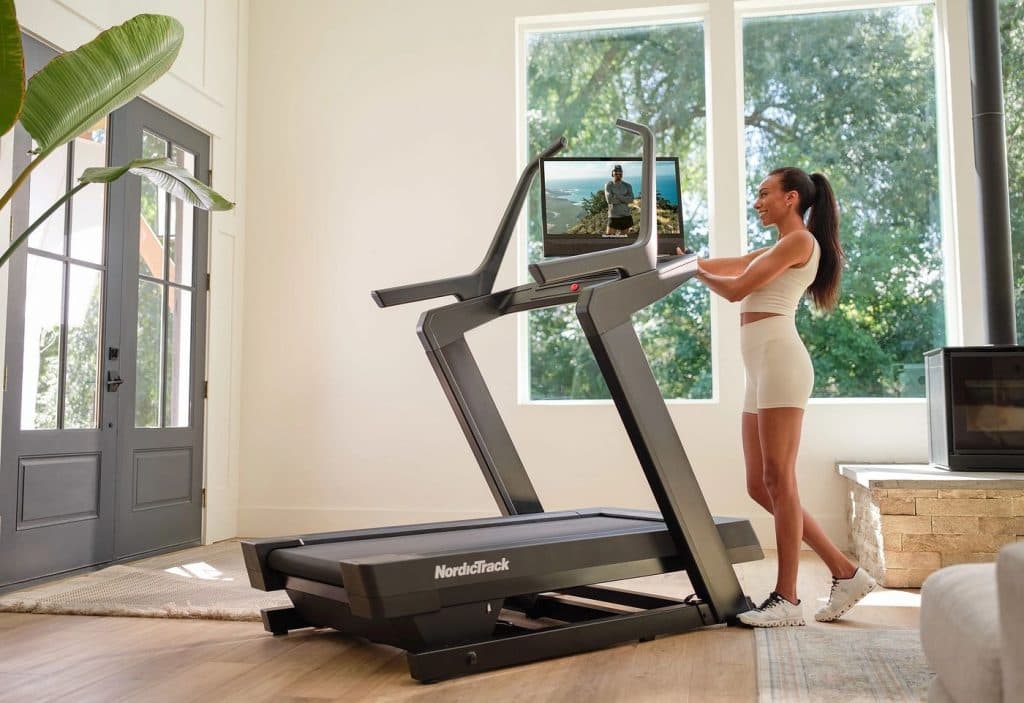
Cardio equipment like treadmills and exercise bikes are often central to that kind of practice because they offer structure without rigidity. Harvard Health notes that treadmills allow users to control speed and incline.¹ This allows workouts to vary depending on the goal of the session. That flexibility can make a routine easier to return to over time.
The Treadmill: A Familiar Foundation You Can Personalize
Walking and running are among the most commonly performed forms of physical activity, and treadmills remain widely used because they allow people to move in a controlled environment.
Harvard Health highlights that treadmills provide a stable surface, protection from weather, and the ability to vary speed and incline depending on the goal of the session.¹
The publication also notes that treadmills can be useful for people recovering from injury, because speed and intensity can be controlled.¹
For many people, the treadmill becomes less about performance and more about consistency. Some days that might mean a steady walk. Other days it could mean intervals or gradual progression. The structure stays the same even when effort changes.
A sustainable new-year practice might look like this: not committing to a specific pace or distance, but committing to stepping on the belt a few times each week and letting the workout meet you where you are.
Guided Treadmill Walking With Built-in Scenery

For those who prefer walking over running, guided treadmill hikes can provide structure without pressure.
The Mediterranean Hiking for Weight Loss Series is an eight-workout iFIT program led by Trainer Erica Lugo. The series uses guided hiking workouts filmed across Mediterranean landscapes, including coastal paths, rocky terrain, and gradual elevation changes.
Each workout follows a consistent hiking format, which can make it easier to return to walking regularly without needing to plan routes or progression. The scenery and pacing cues encourage focus on steady movement and effort rather than speed or distance.
This type of guided walking can be a helpful option for anyone looking for treadmill workouts that feel immersive while remaining repeatable.
The Exercise Bike: Structured Effort Without Impact
Exercise bikes offer a different kind of consistency. Seated, rhythm-based movement can feel approachable on days when impact or joint loading feels like a barrier.
A systematic review published in Sports Medicine – Open describes indoor cycling as an activity offered to people across a wide range of fitness levels, with intensity commonly guided by cadence, resistance, and perceived exertion rather than speed alone.² This creates a consistent movement pattern across sessions.
Because resistance and cadence can be modified quickly, cycling is often chosen by people who want predictable sessions with clear structure.
A repeatable practice here might mean choosing a set ride length and allowing effort to vary day to day, rather than chasing performance metrics every session.
Structured Cycling Designed to Feel Manageable

For those who enjoy guided rides, cycling programs with a consistent format can reduce decision fatigue.
The Mediterranean Biking for Weight Loss Series is a guided iFIT cycling program led by Trainer Jenny Fletcher. The series combines structured rides with Mediterranean scenery, using intervals and steady pacing to create a familiar workout rhythm.
Each ride follows a clear format, allowing resistance and cadence to be adjusted while keeping the session structure consistent. The scenery adds variety without changing the movement pattern, which can help maintain interest while keeping workouts approachable.
Rowing and Elliptical: Complementary Ways to Change the Feel
While treadmills and bikes often anchor a cardio routine, rowing machines and ellipticals are commonly used to add variety without abandoning structure.
Rowing uses a repeated movement pattern that involves both upper- and lower-body coordination. Some people use rowing as an alternative on days when they want a different movement pattern while still following a structured session.
Ellipticals offer continuous motion with adjustable resistance and incline. These machines are often selected when people want sustained cardio movement without the sensation of foot strike associated with running.
In a long-term routine, these modalities tend to support treadmills and bikes rather than replace them. They provide options for days when variety matters more than progression.
Bonus: Strength Support Within a Cardio-First Routine

While cardio often anchors a routine, some people choose to layer in strength training to support overall movement. Some people choose to complement their cardio practice with short, structured strength sessions.
The GLP-1 Strength Support Series is a six-workout beginner strength program led by iFIT Trainer John Peel. Each workout focuses on upper-body, lower-body, or total-body exercises and averages 20 minutes or less.
The series is designed to fit alongside other forms of movement rather than replace them. Workouts are available through the iFIT app and can be completed at home or while traveling.
For those looking to add occasional strength sessions to a cardio-focused routine, this series offers a simple, structured option.
A Practice That Adapts With You
Across all modalities, one theme remains consistent: the ability to adjust effort, duration, and structure without abandoning the routine altogether.
Harvard Health describes the rate of perceived exertion as one way to gauge exercise intensity.¹ This perspective supports choosing workouts based on how the body feels rather than rigid expectations.
That mindset can be especially useful at the start of a year, when motivation is high but long-term sustainability is still being built.
Moving Forward With Intention
A new year does not require a new identity or extreme goal. It can begin with a decision to return to movement in a way that feels realistic and repeatable.
Whether that practice centers on treadmill walking, structured cycling, or rotating in rowing and elliptical sessions, the most important factor is not intensity or novelty. It is choosing a routine you are willing to come back to.
Sometimes the strongest reset is simply redefining what consistency looks like.
References
Harvard Health Publishing. Get Smart About Treadmills.
Chavarrias M, et al. Health Benefits of Indoor Cycling: A Systematic Review.
DeJong Lempke AF, et al. Biomechanical Differences During Treadmill and Overground Running.
Disclaimer: The primary purpose of this blog post is to inform and entertain. Nothing on the post constitutes or is intended to be a substitute for professional medical advice, prevention, diagnosis, or treatment. Reliance on any information provided on the blog is solely at your own risk. Always seek the advice of your physician or other qualified health provider with any questions you may have regarding a medical condition, and please consult your doctor or other health care provider before making any changes to your diet, sleep methods, daily activity, or fitness routine. Do not disregard professional medical advice or delay seeking it because of information available on this blog. NordicTrack assumes no responsibility for any personal injury or damage sustained by any recommendations, opinions, or advice given in this article. Always follow the safety precautions included in the owner’s manual of your fitness equipment.
RECENT ARTICLES

Equipment
2025 Treadmill Buying Guide: Find the Best Treadmill for Your Home
Find the best treadmill for your home with this 2025 buying guide. Compare features, models, and expert tips to choose the right machine for your fitness goals.
Jul 11, 2025 · 6 min read
READ MORE
Equipment | Fitness
What's the Best Cardio Machine for Fat Loss?
Not all cardio machines deliver the same fat-loss results. Compare treadmills, ellipticals, rowers, and bikes to find the best exercise machine to lose weight faster.
Sep 26, 2025 · 6 min read
READ MORE
Equipment
The Best Ellipticals for Home Gyms: 2024 Elliptical Buying Guide
Find the best elliptical for your home gym with this complete 2024 buying guide. Compare top NordicTrack models, key features, stride lengths, incline options, warranties, and tips to choose the right fit.
Nov 8, 2023 · 21 min read
READ MORE