
Best Treadmill for Seniors in 2026: Safety, Cushioning, and Ease of Use
The safest treadmills for older adults in 2026 share a short list of specs that matter most: low step-up height, cushioned deck, full-length handrails, and a minimum speed slow enough to step on confidently.
Jul 7, 2026
·
11 min read
IN THIS ARTICLE
KEY TAKEAWAYS
- The most important specs for older adult walkers are minimum speed (0.5 to 1.0 mph), full-length side handrails, a magnetic safety key, and a cushioned deck with at least 20 inches of belt width
- Regular walking for 150 to 300 minutes per week supports cardiovascular health and can reduce fall risk, per U.S. Department of Health and Human Services Physical Activity Guidelines [3]
- Incline walking at a slower pace reduces lower-extremity joint loading compared to fast flat walking, making the 12-3-30 protocol a practical option for seniors managing joint sensitivity [8]
- The NordicTrack T Series 16 (SelectFlex cushioning, 12% incline, SpaceSaver fold) and Commercial 2450 (lowest impact among leading competitors, 400 lb capacity, lifetime motor warranty, 12%/-3% incline) are both confirmed in-stock options at NordicTrack.com
- Connected iFIT programming and SmartAdjust are useful for seniors who benefit from external structure; both machines also work without an active subscription
Buying a treadmill at 65 or 70 is a different decision than buying one at 35. The questions shift. You want to know whether it starts slowly enough to step on safely. Whether there are handrails to hold. Whether the deck absorbs the kind of impact that starts to matter more when your knees have a few decades on them. Whether you'll actually use it when the weather turns or the sidewalks get slick.
This guide answers those questions with specifics. You'll find the features that actually matter for older adults, an honest look at two NordicTrack models built for low-impact daily walking, guidance on whether connected fitness or a simpler setup fits your situation, and a step-by-step protocol for a safe first session. The research backing this guide comes from the American Heart Association, the U.S. Department of Health and Human Services, the National Institute on Aging, the CDC, and peer-reviewed journals.
What Features Actually Matter for Older Adults
Most "best treadmill for seniors" lists lead with price or brand. A better place to start is the handful of specs that separate a machine that's safe and usable from one that isn't.
Step-Up Height
This is the vertical distance from the floor to the walking belt. Lower is better. If stepping onto the belt requires a wide stride or a balance check, that's a problem before you've even started walking. Look for machines under 8 inches. Folding treadmills tend to have lower step-up profiles than fixed-frame commercial units, though the trade-off is that folding latches require inspection before each use.
Minimum Speed and Speed Increments
A treadmill that starts at 1.0 mph is very different from one that bottoms out at 2.5 mph. For older walkers, especially those returning to regular activity or managing a health condition, the ability to walk at a slow, controlled pace is not optional. Look for a minimum speed of 0.5 to 1.0 mph and speed increments of 0.1 mph so you can ease in gradually. Machines with one-touch speed buttons are easier to manage than continuous dials.
Handrails and Emergency Stop
Full-length side handrails, running the length of the belt, give you somewhere to stabilize if your balance shifts. Handrails that only extend to the console are less useful during the actual walk. A magnetic safety key that clips to your clothing and stops the belt instantly if you step back is a non-negotiable safety feature. Some machines also include handlebar-mounted pulse sensors that monitor your heart rate without a chest strap.
Deck Cushioning
Walking on a cushioned treadmill deck puts less force through your knees and ankles than walking on concrete or asphalt. A 2011 study published in Medicine and Science in Sports and Exercise found that walking at a slower speed on an incline reduced peak knee extension and adduction moments compared to faster-paced level walking on a flat surface, suggesting that the combination of speed control and surface compliance matters for joint loading. [8] The NordicTrack T Series 16 uses SelectFlex cushioning, adjustable between soft and firm, so you can match deck feel to your workout type.
Motor Size and Belt Width
A motor in the 3.0 to 3.6 CHP range handles steady walking reliably without overheating during longer sessions. The minimum useful belt width for walking is 20 inches; 22 inches gives more room to step confidently. Belt length should be at least 55 inches. For walkers specifically, a slightly wider belt matters more than a longer one.
Weight Capacity
Most quality home treadmills support 300 to 400 lbs. Check this spec explicitly. A machine rated at 250 lbs running near its weight limit wears out faster and can feel unstable.
Why Regular Walking Matters More as You Age
A 2023 review published in GeroScience (Springer Nature) found that walking decreases the risk or severity of cardiovascular and cerebrovascular diseases, type 2 diabetes, cognitive impairment, and dementia, while also improving mental well-being, sleep, and longevity. [1]
The American Heart Association recommends at least 150 minutes per week of moderate-intensity aerobic activity for adults, which brisk walking satisfies. [2] The U.S. Department of Health and Human Services Physical Activity Guidelines for Americans specify that older adults should aim for 150 to 300 minutes of moderate-intensity activity per week, ideally spread across the week, and include balance and muscle-strengthening activities as well. [3]
Falls are the leading cause of injury for adults ages 65 and older, and over 14 million older adults, about 1 in 4, fall each year. [4] Regular physical activity can improve physical function, reduce the risk of falls, and lower the risk of fall-related injuries. [5] Exercises that target balance, gait, and muscle strength can prevent falls in community-dwelling adults age 65 and older, according to a Cochrane systematic review cited by Healthy People 2030. [6] A treadmill at home removes weather, sidewalk conditions, and time-of-day constraints from the equation. That consistency is the point.
Physical activity is also good for the brain. HHS research shows that regular activity can improve cognition, including executive function, attention, and memory, in adults over 50, and can lower the risk of dementia and reduce symptoms of anxiety and depression. [5] The National Institute on Aging notes that staying active and getting at least 150 minutes of physical activity per week supports bone health, which matters for anyone concerned about fractures from a fall. [7]
The Case for Incline Walking
Walking on an incline changes the load calculation in ways that matter for older adults. Research published in Medicine and Science in Sports and Exercise found that walking at a slower speed on an uphill grade significantly reduced lower-extremity net muscle moments and loading rates compared to walking faster on a flat surface. [8] A slow walk up a modest incline can deliver a cardiovascular challenge without asking your joints to absorb the kind of force that comes with fast or running-pace flat walking.
This is why the 12-3-30 protocol has become popular among older adults and those managing joint sensitivities: 12% incline, 3.0 mph, 30 minutes. It's challenging enough to count as moderate-intensity exercise while remaining low-impact. You won't be pounding the belt.
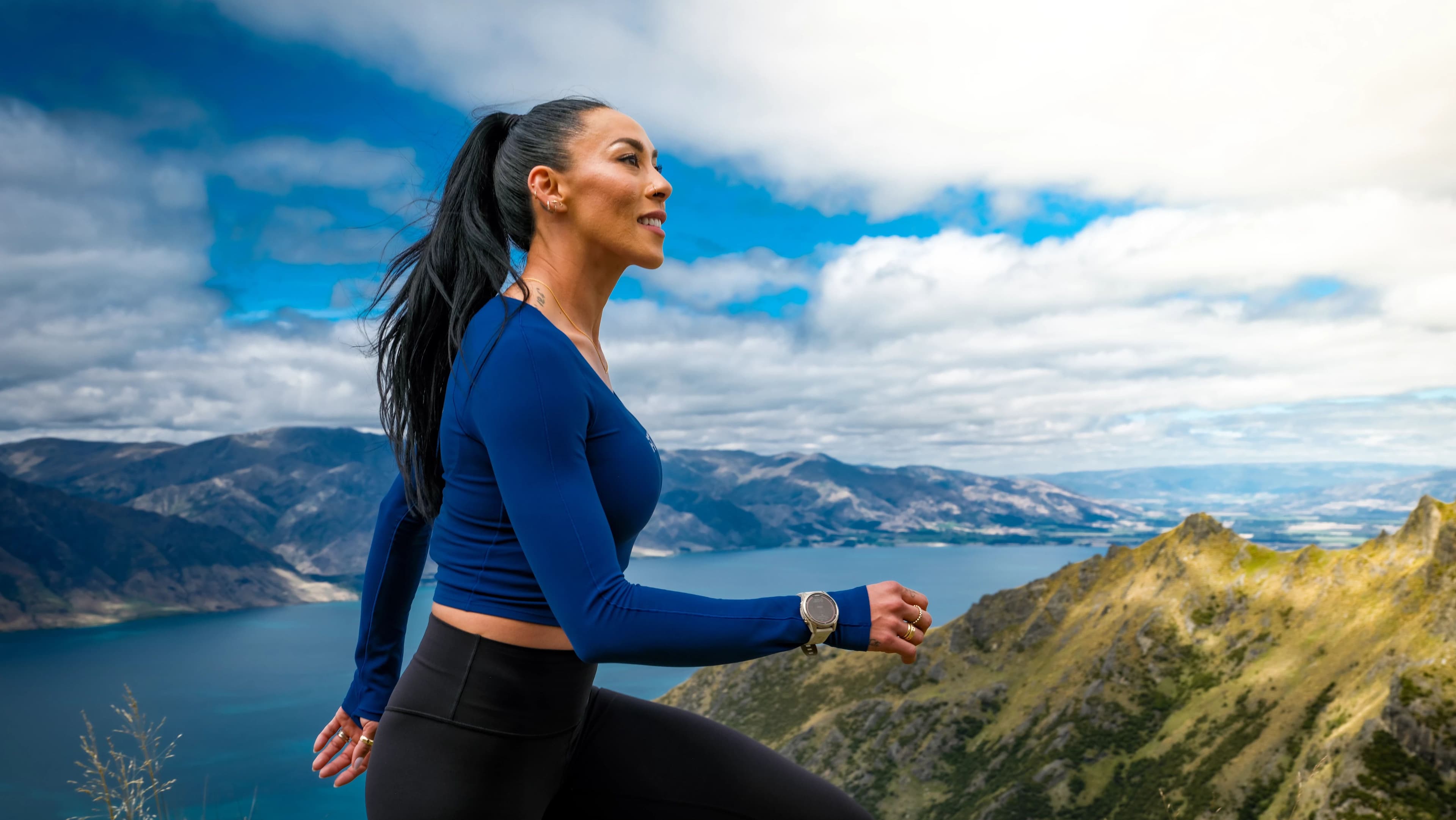
The NordicTrack T Series 16 reaches 12% incline, which makes this protocol possible. The iFIT New Zealand 12-3-30 Hiking Series with trainer Hannah Eden (released June 2026) is built around exactly this format, with trainer-led sessions shot on location in New Zealand. iFIT's SmartAdjust syncs the treadmill's incline and speed to the trainer's cues automatically. The series is available at iFIT.com.
Two NordicTrack Models Worth Considering
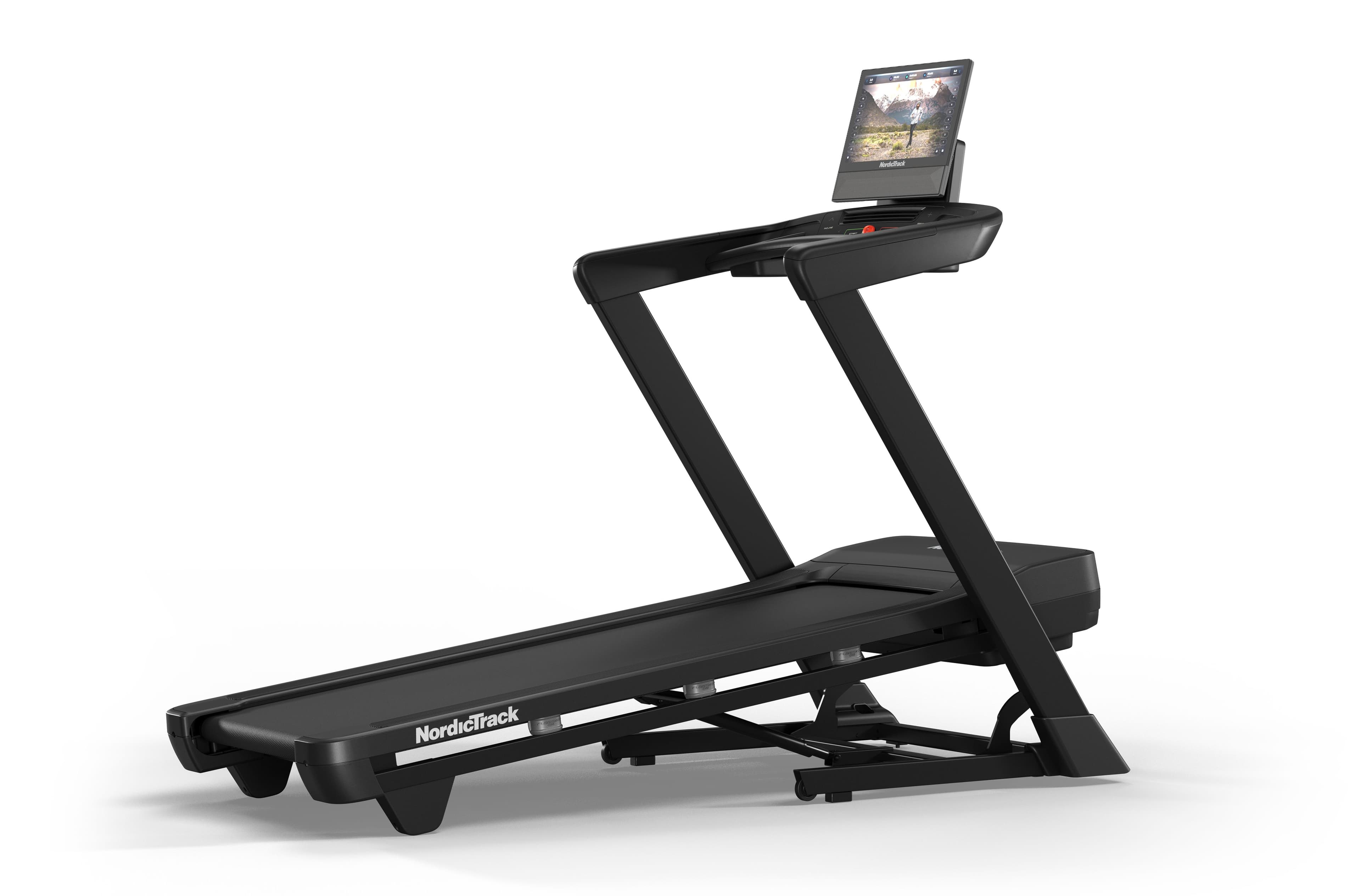
NordicTrack T Series 16 Treadmill
The T Series 16 is the stronger fit for most older adult walkers. It folds using NordicTrack's SpaceSaver design, keeping the footprint small when not in use. The SelectFlex cushioning system adjusts between soft and firm, which means you can set it softer for lower-impact walking and firmer if a family member uses it for running. The motor is 3.6 CHP, speed range is 0 to 12 mph, weight capacity is 325 lbs, and the 16-inch tilting HD touchscreen gives full access to iFIT programming.
One-touch speed and incline controls mean you're not navigating menus during a workout. The console is clean enough that getting started requires no learning curve.
For seniors interested in guided walking and incline programs, this machine paired with an iFIT membership gives access to over 10,000 workouts, trainer-led sessions, and SmartAdjust, which syncs the treadmill's speed and incline to the trainer's cues automatically.
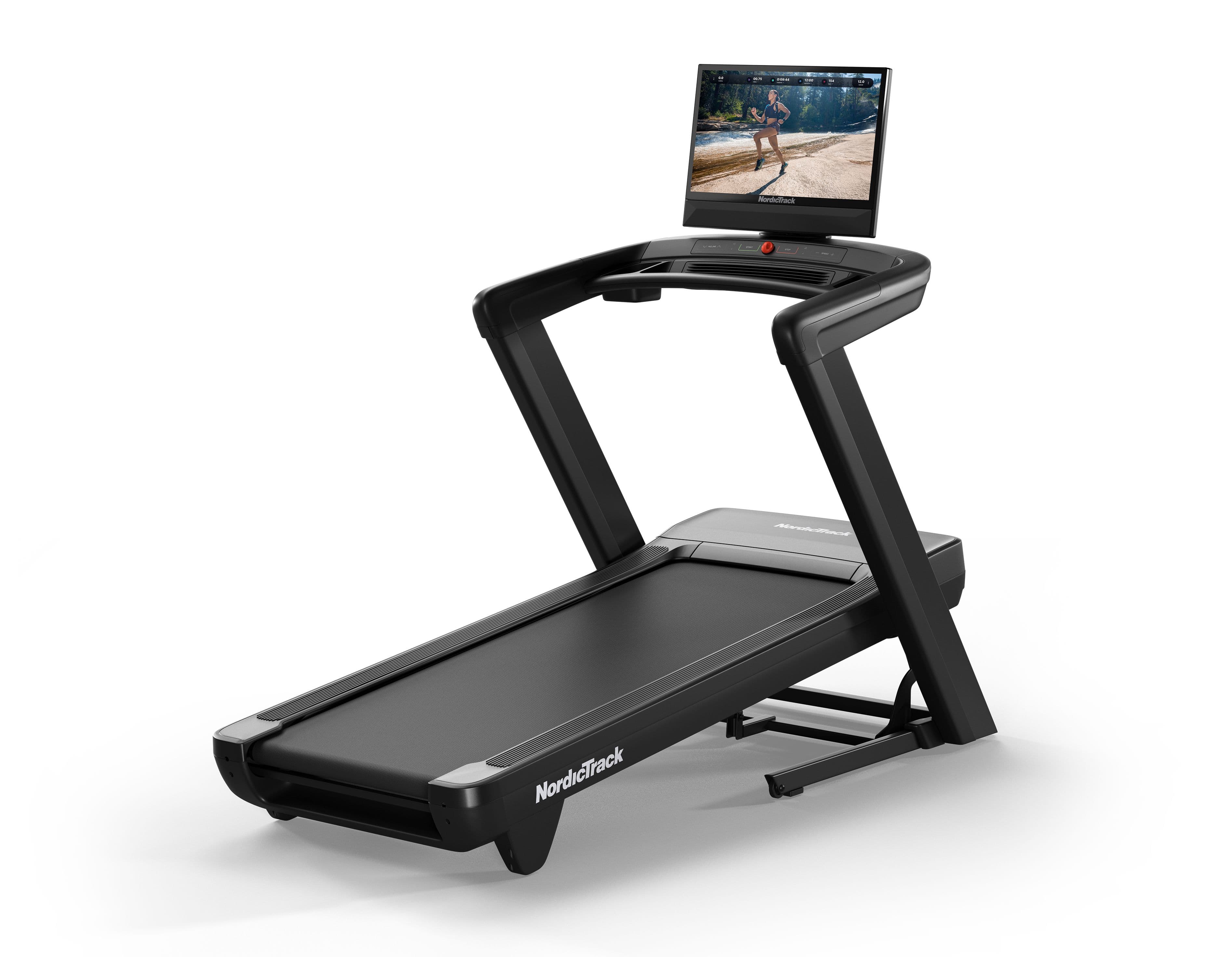
NordicTrack Commercial 2450 Treadmill
The Commercial 2450 is NordicTrack's lowest impact treadmill among leading competitors, with a cushioned deck built to absorb impact and support comfort across longer sessions. It reaches 12% incline with -3% decline, supports a 400 lb weight capacity, and comes with a lifetime motor warranty. The 24-inch pivoting touchscreen rotates so you can follow iFIT workouts on or off the treadmill.
This model suits older adults who want the most durable, longest-lasting machine in the NordicTrack lineup, who want the decline capability for terrain variety, or who prioritize maximum weight capacity and a premium cushioned deck for joint comfort.
Both models fold for storage and are available directly at NordicTrack.com. NordicTrack treadmills are also now HSA/FSA eligible, worth knowing if you're managing fitness equipment as a health expense.
Connected Fitness or No Subscription?
The answer depends on what will get you on the machine consistently.
If you walk better with a plan, guided walking programs on iFIT are genuinely useful. A trainer who cues your pace, tells you when to recover, and structures each session removes the motivation problem. The appeal is straightforward: a coach-led session at 6am without leaving the house. SmartAdjust handles the incline changes automatically, so you're just walking.
If you prefer simple and don't want a recurring subscription, the Commercial 2450 works with or without an active iFIT membership. You can use the full 24-inch screen with iFIT, or set speed and incline manually without a subscription. The T Series 16 also works without an active iFIT membership, though the screen has less to offer without it.
A practical middle path: NordicTrack includes a membership trial with most machines. Use it for a few weeks before deciding whether to continue. Most people who use guided walking regularly find it keeps sessions from feeling like a task.
Folding Treadmills: What to Check
Both models fold for storage, which matters in a home where the treadmill shares space with other furniture. Folding treadmills are safe when the locking mechanism is sound. Before each session, confirm the latch is properly released when unfolded. Check the hinge every few months for wear. A machine that feels wobbly at the hinge, or doesn't lock fully, needs service before you walk on it.
The trade-off with folding designs is that a fully assembled, non-folding frame is generally stiffer underfoot. For walking at lower speeds, this difference is minimal. For heavier or more intense use, a fixed-frame machine is more stable.
How to Start Safely: A First-Session Protocol
Before stepping on any treadmill for the first time, place the machine on a treadmill mat to protect your floor and prevent any sliding, and position it with at least 6 feet of clearance behind the belt. Attach the magnetic safety key to your clothing before starting.
Start the first session at 0.5 to 1.0 mph and hold the handrails until you feel the belt's rhythm. Two minutes at that speed gives you your footing. Then move to your comfortable walking pace, keeping at least one hand within reach of the rails for the first several sessions. Ten minutes is a reasonable session length to start.
Add 5 minutes per session over two weeks rather than jumping straight to 30-minute sessions. Stop and consult a physician before continuing if you notice joint pain, unusual shortness of breath, dizziness, or chest discomfort. If you're managing a cardiovascular condition, arthritis, or a balance disorder, talk to your doctor before beginning a treadmill program. ActivePulse on iFIT-connected NordicTrack machines monitors heart rate and can automatically adjust workout intensity based on user settings.
Explore More
FREQUENTLY ASKED QUESTIONS
References
American Heart Association. American Heart Association Recommendations for Physical Activity in Adults and Kids
U.S. Department of Health and Human Services. Physical Activity Guidelines for Americans, 2nd edition
Centers for Disease Control and Prevention. Older Adult Fall Prevention
U.S. Department of Health and Human Services / ODPHP. Move Your Way during Older Americans Month and All Year Long
U.S. Department of Health and Human Services / Healthy People 2030. Exercise for preventing falls in older people living in the community
National Institute on Aging. Falls and Fractures in Older Adults: Causes and Prevention
Ehlen KA, Reiser RF, Browning RC. Energetics and biomechanics of inclined treadmill walking in obese adults
Disclaimer: The primary purpose of this blog post is to inform and entertain. Nothing on the post constitutes or is intended to be a substitute for professional medical advice, prevention, diagnosis, or treatment. Reliance on any information provided on the blog is solely at your own risk. Always seek the advice of your physician or other qualified health provider with any questions you may have regarding a medical condition, and please consult your doctor or other health care provider before making any changes to your diet, sleep methods, daily activity, or fitness routine. Do not disregard professional medical advice or delay seeking it because of information available on this blog. NordicTrack assumes no responsibility for any personal injury or damage sustained by any recommendations, opinions, or advice given in this article. Always follow the safety precautions included in the owner's manual of your fitness equipment.
RECENT ARTICLES
Equipment | Fitness
What’s the Best Cardio Machine for Bad Knees?
Discover the best cardio machine for bad knees and how to stay active with less joint stress. Compare bikes, treadmills, and more to find the safest path to consistent, low-impact fitness.
Oct 24, 2025 · 9 min read
READ MORE
Fitness | Workouts
Walking a Mile Feels Better Than You Think
A one-mile treadmill walking workout is a simple, low-impact way to boost energy, lift mood, and build a consistent habit. Follow a short warm-up, steady pace, optional incline, cool-down, and use iFIT for guided sessions.
Sep 23, 2025 · 9 min read
READ MORE
Fitness | Workouts
Why Training on an Incline Works Better Than Flat Walking
Incline walking ramps up calorie burn, boosts glute and hamstring activation, and raises cardiovascular demand without the impact of running. Learn safe form, beginner workouts, and treadmill selection tips.
Jul 15, 2025 · 13 min read
READ MORE