
20-Minute Pilates Workouts You Can Do at Home
Four structured 20-minute Pilates routines you can do at home, complete with exact timing, form cues, and modifications to help you build real core strength and mobility.
Aug 14, 2026
·
18 min read
IN THIS ARTICLE
KEY TAKEAWAYS
- Four distinct 20-minute Pilates workouts, each targeting a different focus (beginner mat, core, resistance band, upper body), so you can rotate through a full week without repeating movements
Backed by peer-reviewed research on Pilates benefits for flexibility, balance, and muscular endurance, not just anecdote
Every session follows the same warm-up, main work, cool-down structure, making it easy to build a repeatable home routine
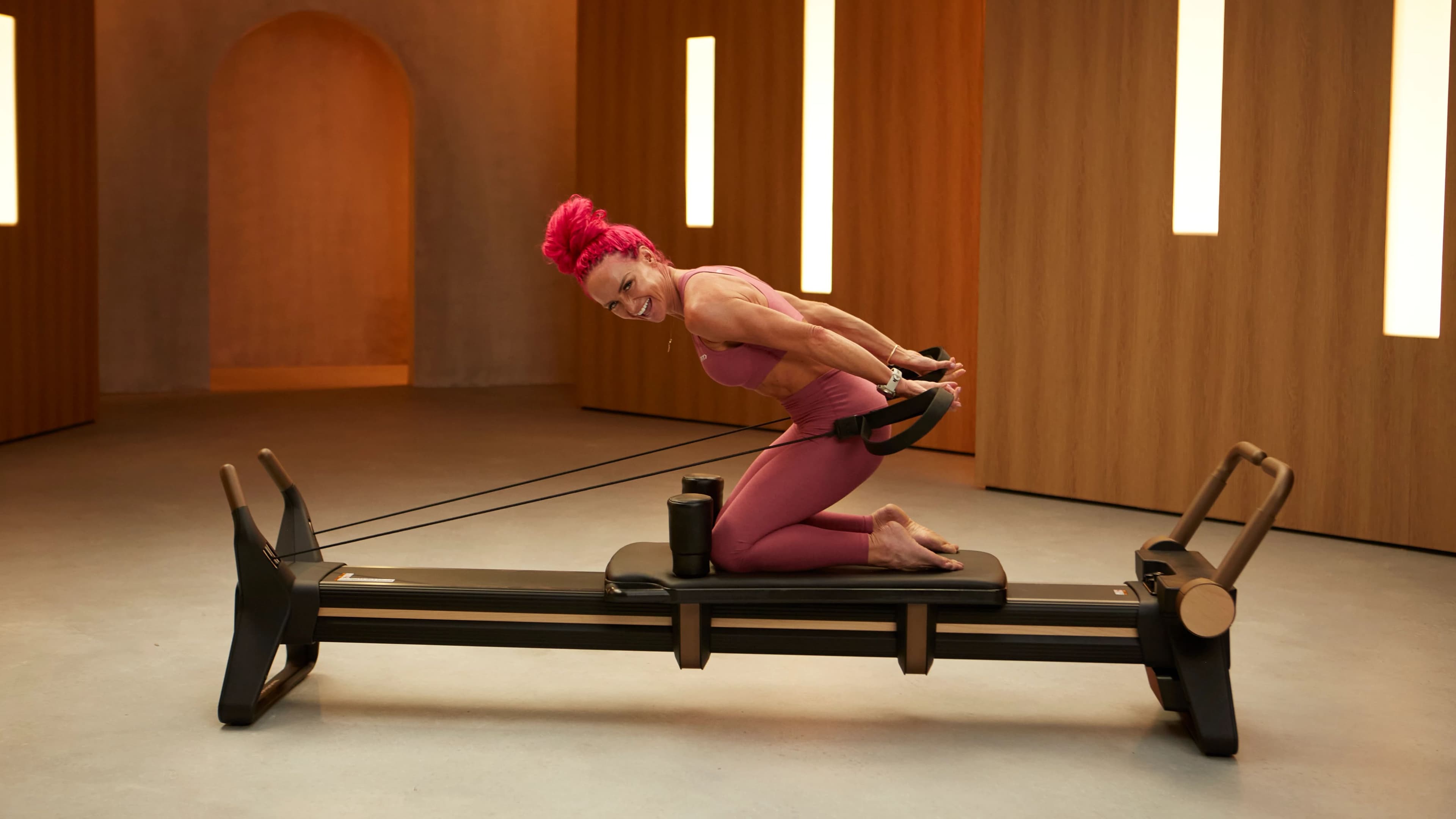
Clear progression path from mat-only Pilates into reformer-based training on the NordicTrack Ultra 1 Reformer or Ultra 1 Reform RX-S
Minimal equipment required: a mat for three sessions, plus a medium-resistance band for the fourth
Twenty minutes is a real workout. Not a warm-up, not a compromise, but a full, targeted session that can build genuine strength and mobility over time if the programming is right.
That is what this guide delivers: four structured 20-minute Pilates routines you can do at home, with clear exercises, timing, form cues, and a path to get harder as you get stronger. Each session has a distinct focus so you can rotate through them across the week without repeating the same movements every day. Three of the four sessions need nothing more than a mat. The fourth adds a resistance band.
If you have been telling yourself that 20 minutes does not count, science disagrees. Research confirms that even short, consistent bouts of physical activity provide health benefits, and that any movement is better than none. [1] The sessions below are built to prove that point in your living room.
Why 20 Minutes of Pilates Actually Works
The case for short, structured Pilates sessions is not about convenience. It is about what Pilates actually does to the body and how little time it takes to start seeing results.
A controlled 12-week study found that active middle-aged adults who did two Pilates sessions per week made statistically significant improvements in abdominal endurance, hamstring flexibility, and upper-body muscular endurance. [2] A systematic review of 16 studies reached the same conclusion: strong evidence supports Pilates for improving flexibility and dynamic balance, with moderate evidence for muscular endurance gains in healthy people. [3] And an eight-week randomized controlled trial showed beneficial effects on static balance, flexibility, and abdominal and lumbar muscle activity after consistent mat-based training. [4]
None of those programs were marathon sessions. The format that works is focused work on the right muscles, done consistently.
Pilates also works for home training because it is low-impact and easy to modify. You are working against bodyweight and, when useful, light equipment. The movements challenge the deep stabilizing muscles of the core in ways that most gym routines do not reach. That is why people who have trained for years often find Pilates genuinely difficult the first time they try it.
Twenty minutes, done right, touches every goal this type of training targets: core activation, spinal mobility, hip stability, posture, and controlled strength through range of motion.
What You Need Before You Start
You do not need much. Here is what each session in this guide uses:
For the mat sessions: a yoga mat or any non-slip surface. That is the complete list.
For the resistance band session: a medium-resistance loop or long resistance band. If you do not have one yet, you can skip that session until you have a band, or substitute bodyweight versions of the pulling and pressing exercises.
A few setup notes that apply to all four sessions:
Work in a space where you can lie flat and extend your arms overhead without hitting a wall
Turn off notifications before you start. Twenty minutes needs to be 20 minutes.
If you are new to Pilates, read the form cue for each exercise before you move, not mid-set
Have water nearby. These sessions are not cardio-heavy, but they are not passive either
Beginner 20-Minute Mat Pilates Workout
This is the starting point. If Pilates is new to you, or if you have been away from it for a while, do this session three times before moving to any of the others. The goal here is learning the movement patterns that every other session builds on: breathing mechanics, neutral spine, and core activation without substituting with hip flexors or neck tension.
Total time: 20 minutes Equipment: Mat only
Warm-Up (3 Minutes)
Breathing and Rib Cage Expansion (60 seconds)
Lie on your back, knees bent, feet flat. Place your hands on your lower ribs. Breathe in through your nose and feel your ribs expand sideways. Exhale through your mouth and feel your ribs compress. This is not belly breathing. Keep your abs lightly engaged throughout.
Pelvic Tilts (60 seconds)
Same starting position. On an inhale, let your lower back arch slightly away from the floor. On an exhale, press your lower back gently into the mat. Move slowly. Find the midpoint between those two positions. That is neutral spine, and it is where most Pilates work happens.
Knee Folds (30 seconds per side)
From neutral spine, lift one knee toward your chest, keeping your pelvis still. Lower with control. Switch sides. This warms up the hip flexors without loading the lower back.
Main Work (14 Minutes)
The Hundred (3 minutes)
Lie on your back. Lift both legs to a 45-degree angle, or keep feet on the floor if needed. Lift your head, neck, and shoulders off the mat. Look at your thighs, not the ceiling. Extend your arms alongside your hips about 2 inches above the mat. Pump your arms up and down in small controlled beats while breathing in for 5 counts and out for 5 counts. One full breath cycle equals 10 pumps. Complete 10 full breath cycles for 100 pumps. If your neck strains, lower your legs higher or place one hand behind your head.
Single Leg Circles (2 minutes, 1 minute per leg)
Lie on your back, both legs extended. Lift one leg toward the ceiling, foot flexed. Circle the leg across your body, down, around, and back to start. Keep your hips pressed into the mat throughout. Do 5 circles in each direction, then switch legs. The movement comes from the hip, not the pelvis. If your hip rocks, make the circles smaller.
Rolling Like a Ball (2 minutes)
Sit near the front edge of your mat. Draw your knees into your chest, hold your shins or behind your knees, and balance on your tailbone. Round your spine. Inhale as you roll back onto your shoulder blades, not your neck. Exhale as you roll back to balance. Your head should never touch the mat. This is the session's first spinal mobility exercise, and it should feel good. Continue for the full 2 minutes.
Swan Prep (2 minutes)
Lie face down, hands beneath your shoulders, elbows close to your sides. Inhale. On the exhale, use your back muscles, not your hands, to lift your chest a few inches off the mat. Hold for 2 counts. Lower with control. Keep your legs long and heavy on the mat; they should not lift. Continue for the full 2 minutes. This builds the upper back extensor strength that most desk workers lack.
Side-Lying Leg Lifts (2 minutes, 1 minute per side)
Lie on your side, hips stacked, bottom arm extended beneath your head. Lift the top leg to hip height, no higher. Lower with control. Do 15 reps per side. Keep your core braced so your pelvis does not shift. This is a hip abductor exercise, not a flexibility exercise. Smaller, controlled range beats big sloppy swings.
Child's Pose (3 minutes)
Kneel with your big toes touching and knees wide. Sit your hips back toward your heels and walk your hands forward until your forehead rests on the mat. Let your lower back decompress. Stay here for the full 3 minutes.
Cool-Down (3 Minutes)
Seated Spinal Rotation (60 seconds)
Sit cross-legged. Place your right hand on your left knee and your left hand behind you. Inhale to lengthen your spine. Exhale and rotate gently to the left. Come back to center. Repeat on both sides 5 times each.
Supine Twist (2 minutes)
Lie on your back, knees bent. Drop both knees to the right while extending your arms in a T shape. Turn your head left if it feels comfortable. Hold for 60 seconds per side.
20-Minute Core-Focused Pilates Routine
This session is for anyone who wants dedicated core work, the kind that reaches the deep spinal stabilizers, not just the superficial abs. A systematic review of Pilates in healthy people found strong evidence for improvements in flexibility and dynamic balance, with moderate evidence for muscular endurance gains. [3]
Total time: 20 minutes Equipment: Mat only
Warm-Up (3 Minutes)
Imprinting (90 seconds)
Lie on your back, knees bent. Take three long slow breaths to settle your spine against the mat. On each exhale, notice which parts of your back make contact with the floor and which do not. Let gravity do the work.
Dead Bug Prep (90 seconds)
Same position. Slowly lift both feet off the floor so your knees are above your hips, shins parallel to the floor. Hold for 10 seconds without your lower back arching. Lower. Continue for the full 90 seconds. This is the baseline activation exercise for everything that follows.
Main Work (15 Minutes)
Plank to Pike (3 minutes)
Start in a high plank: hands beneath shoulders, spine long. Hold for 20 seconds. Then walk your feet toward your hands, lifting your hips into a pike position. Hold for 10 seconds. Walk back to plank. Complete 5 rounds. Keep your core braced throughout; the lower back should not sag in plank or hyperextend in pike.
Teaser Prep (3 minutes)
Lie on your back, legs extended, arms overhead. On an exhale, simultaneously lift your arms, head, and legs off the mat, reaching toward your toes, to form a V-shape. Hold for 3 counts. Lower with control. Start with knees bent if full extension is too difficult. Continue for the full 3 minutes.
Side Plank (2 minutes, 1 minute per side)
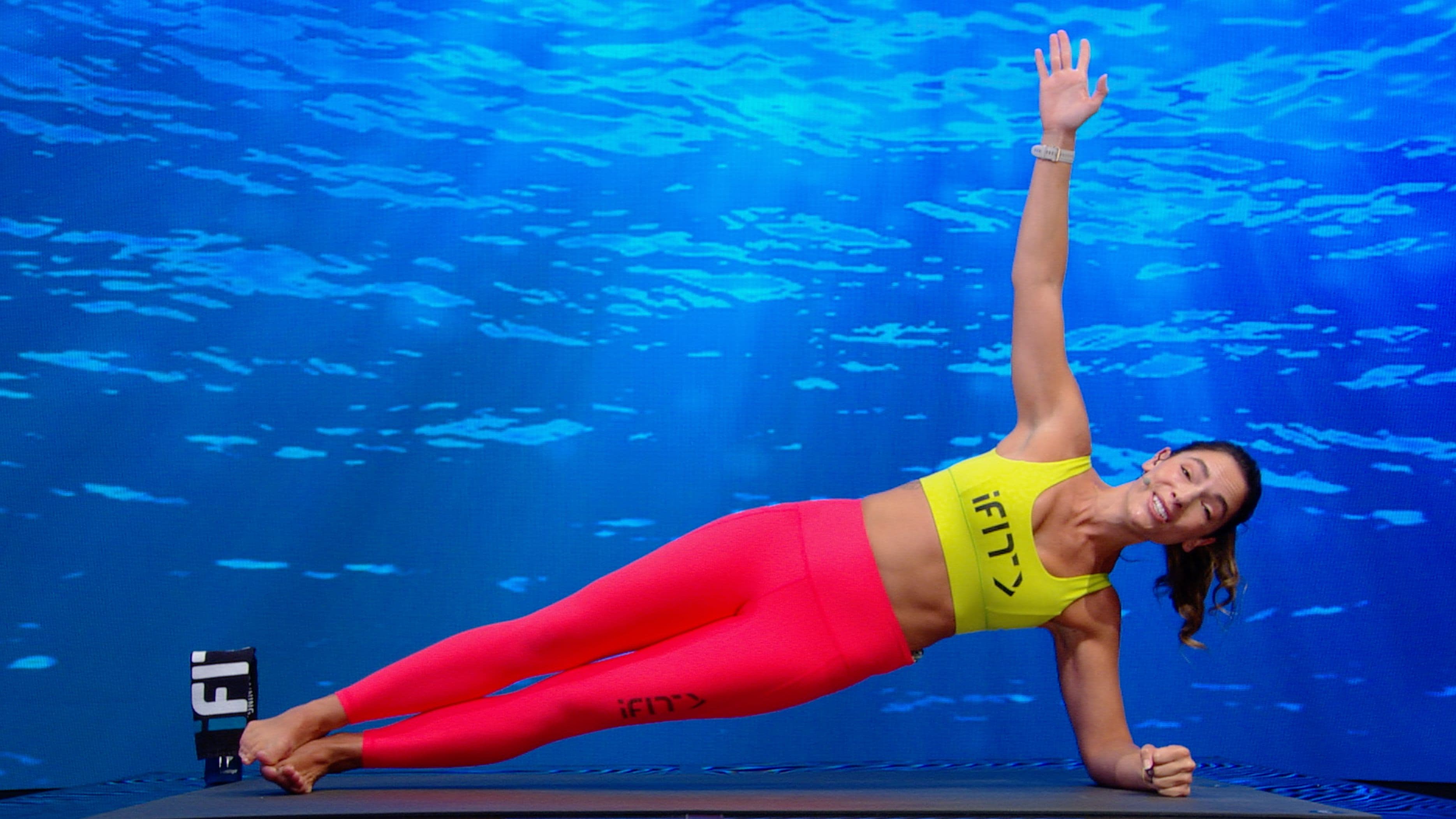
From high plank, rotate to one side and stack your feet. Support yourself on one hand, or on your forearm for less intensity. Keep your hips lifted. Hold for 60 seconds, then rotate to the other side and hold for 60 seconds. Resist the urge to drop your hip. That is the whole exercise.
Criss-Cross (3 minutes)
Lie on your back, hands behind your head, knees at 90 degrees in the air. On each exhale, rotate your right shoulder toward your left knee while extending the right leg long. Switch sides. Move slowly. This is a rotation exercise, not a sit-up. Do 20 repetitions each side. The rotation should come from your mid-spine, not your neck.
Double Leg Stretch (2 minutes)
Lie on your back, knees hugged to your chest. Lift your head and shoulders. On an inhale, extend your arms overhead and your legs to a 45-degree angle. On an exhale, circle your arms back and hug your knees in. The lower back should stay connected to the mat throughout. Continue for the full 2 minutes.
Forearm Plank Hold (2 minutes)
Forearms on the mat, elbows below shoulders. Hold for 40 seconds, rest 20 seconds, hold for 40 seconds, rest 20 seconds. Keep your hips in line with your spine. This is where the session ends: steady, demanding, and effective.
Cool-Down (2 Minutes)
Happy Baby (2 minutes)
Lie on your back, knees bent. Grab the outer edges of your feet and let your knees fall wide outside your torso. Rock gently side to side. Let your lower back and sacrum soften into the mat.
Full-Body Pilates Workout with Resistance Bands
Adding a resistance band to Pilates work increases time under tension and lets you hit the upper body more directly than mat-only sessions allow. Research shows resistance bands can be as effective as free weights and weight machines for stimulating strength gains. [5] Per updated ACSM resistance training guidelines, home-based routines using elastic bands yield meaningful benefits in strength and physical function. [6]
Total time: 20 minutes Equipment: Mat, medium-resistance band
Warm-Up (3 Minutes)
Spine Warm-Up (90 seconds)
Cat-cow on all fours, 5 rounds. Move slowly and let each spinal segment contribute.
Shoulder Circles with Band (90 seconds)
Stand with feet hip-width. Hold the band in both hands at shoulder width, arms extended in front. Keeping tension in the band, circle both arms up and over your head and behind you if your mobility allows. Return. Complete 8 rotations. This opens the thoracic spine and shoulders before the pulling exercises ahead.
Main Work (15 Minutes)
Banded Row in Pilates Stance (3 minutes)
Sit on your mat, legs extended, band looped around your feet. Hold the ends of the band, sit tall, and pull your elbows back behind your hips. Hold the contraction for 1 count. Return slowly. Complete 3 sets of 15 repetitions, resting 30 seconds between sets. Resist the urge to round your spine as you pull. The challenge of staying upright is part of the exercise.
Banded Chest Press in Bridge (3 minutes)
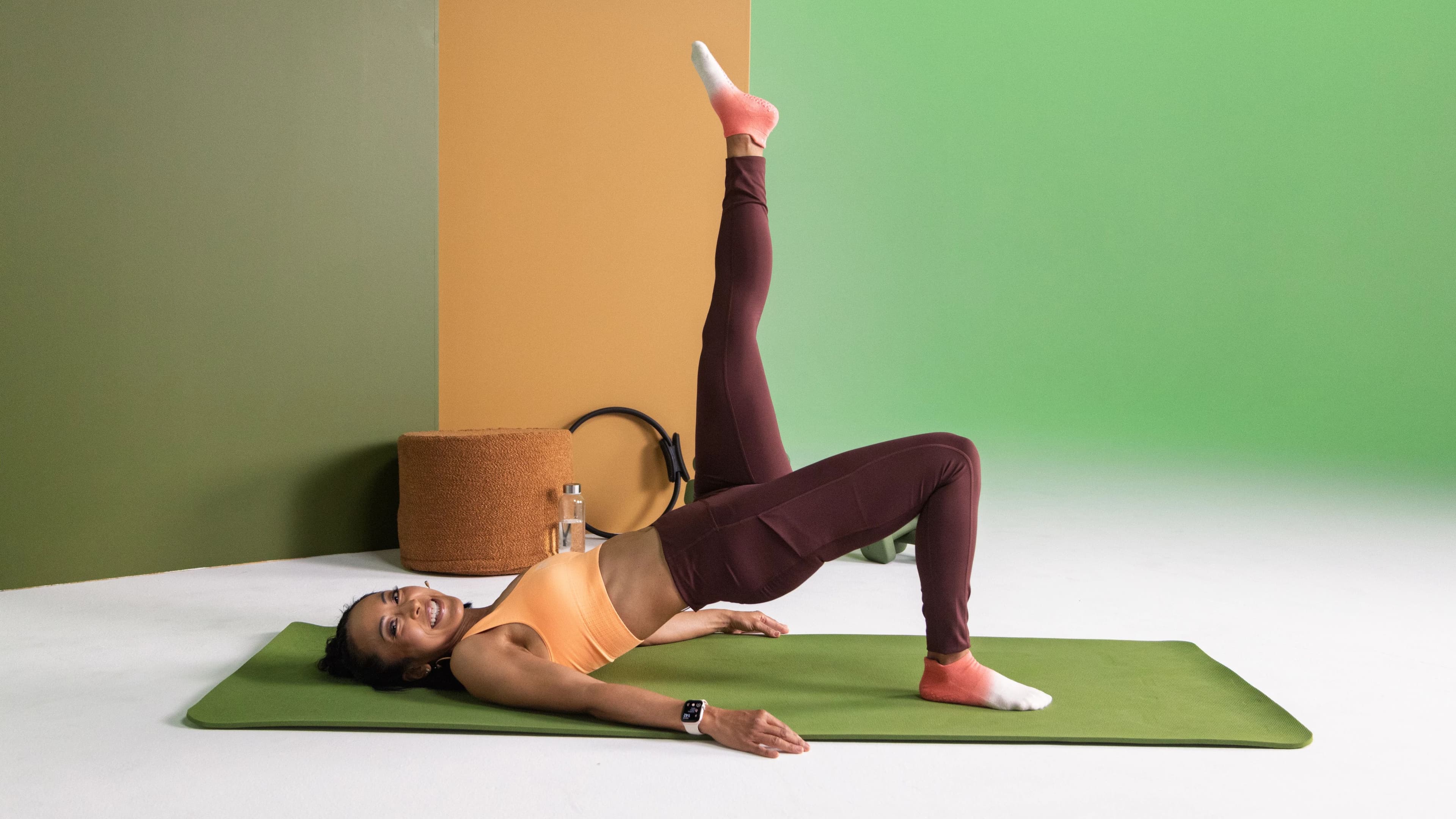
Lie on your back with your knees bent, feet flat. Loop the band under your upper back and hold the ends in each hand. Press both hands toward the ceiling, extending your arms. Lower. Complete 3 sets of 12 repetitions, resting 30 seconds between sets. On the last set, hold the bridge position throughout. This adds a lower body challenge to the upper body work.
Banded Spine Twist (2 minutes)
Sit cross-legged or in a Z-sit. Hold the band taut between both hands, arms extended at shoulder height. Rotate your torso to the right, keeping your arms and the band in line with your chest. Return to center. Rotate left. Complete 2 rounds of 10 repetitions per side. Breathe out as you rotate.
Banded Leg Press (2 minutes)
Lie on your back, knees bent. Loop the band around both feet. Hold the ends and press your legs toward the ceiling against the band's resistance. Bend back to 90 degrees. Complete 2 sets of 15 repetitions, resting 20 seconds between sets. Control the return. Do not let the band snap your legs down.
Banded Side-Kick Series (3 minutes, 90 seconds per side)
Lie on your side. Loop the band around both ankles. Lift your top leg and kick it forward, hold for a count, bring it back to center, then kick it back behind you. Return to center. Repeat 10 times per side. Keep your core braced so your body stays in a long line rather than folding at the hip.
Standing Roll-Down with Band (2 minutes)
Stand tall, band held in both hands at hip level, slight tension. Inhale to lengthen your spine. On the exhale, drop your chin to your chest and slowly roll down, vertebra by vertebra, until your hands reach the floor. Inhale at the bottom. On the exhale, roll back up starting from your low back, then mid-back, then shoulders. Repeat 5 times. This is the session's transition from work to recovery.
Cool-Down (2 Minutes)
Figure Four Stretch (2 minutes)
Lie on your back. Cross your right ankle over your left knee. Flex your right foot. Either stay here or reach your hands through to hold the back of your left thigh. Hold 60 seconds per side.
Upper Body Pilates Exercises for Strength and Posture
Upper body work is where Pilates surprises most first-timers. The exercises do not look hard, but they demand sustained stability and awareness that accumulates quickly. This session pairs posture-focused back work with shoulder and arm sequences that will make the muscles between your shoulder blades earn their keep.
Total time: 20 minutes Equipment: Mat only (band optional for added resistance)
Warm-Up (3 Minutes)
Chin Tucks (60 seconds)
Stand or sit. Gently draw your chin back without lifting or lowering your head. Hold for 3 seconds. Release. Repeat 10 times. This resets the cervical spine position before loading the upper back.
Arm Circles (60 seconds)
Arms extended to the sides, 10 small circles forward, 10 small circles back. Then 10 large circles forward, 10 large circles back. Keep your shoulders down.
Thoracic Extension Over Foam Roll or Rolled Mat (60 seconds)
Roll your mat into a cylinder and position it horizontally beneath your mid-back. Let your head drop back gently and your arms open to the sides. Hold for 60 seconds. This is a passive decompression exercise, not a stretch.
Main Work (14 Minutes)
Swimming (3 minutes)
Lie face down, arms extended overhead. Lift your right arm and left leg simultaneously, about 3 inches off the mat. Switch to your left arm and right leg. Begin alternating in a flutter motion. Inhale for 5 counts, exhale for 5 counts. Complete 5 breath cycles, rest for 20 seconds, then repeat twice more. Keep your gaze down, not forward. This protects the cervical spine during the exercise.
Dart (2 minutes)
Lie face down, arms alongside your body, palms down. Squeeze your shoulder blades together and lift your arms, chest, and head a few inches off the mat. Hold for 5 counts. Lower with control. Continue for the full 2 minutes. Unlike Swan Prep, the arms stay low and the back work is isolated rather than arm-assisted.
Thread the Needle (2 minutes, 1 minute per side)
Start on all fours. Slide your right arm under your body and along the mat to the left until your right shoulder and cheek rest on the ground. Hold for 60 seconds. Come back to all fours. Repeat on the left side. This rotation exercise addresses the thoracic mobility that most desk workers have lost.
Shoulder Tap Plank (3 minutes)
High plank position. Tap your right hand to your left shoulder, set it down, then tap your left hand to your right shoulder. Alternate for 45 seconds. Rest 15 seconds. Repeat for 3 sets. Resist any rocking in your hips. The goal is a stable center while one arm is off the mat.
Open Leg Rocker Prep (2 minutes)
Sit near the front of your mat. Hold the backs of your thighs and lean back slightly, lifting both feet off the ground with knees bent. Hold for 10 seconds, lower, and repeat for the full 2 minutes. If stable, extend one leg at a time. This challenges the deep core stabilizers that support the upper back in every seated activity.
Child's Pose with Arm Reach (2 minutes)
From Child's Pose, walk both arms to the right side of the mat as far as possible. Hold for 60 seconds to stretch the left latissimus. Walk to the left side and hold for 60 seconds.
Cool-Down (3 Minutes)
Doorway Chest Stretch (60 seconds)
Stand in a doorway with your forearms on the frame. Lean gently forward until you feel a stretch across your chest. Hold 60 seconds.
Seated Forward Fold (2 minutes)
Sit with legs extended. Reach forward as far as comfortable while keeping your spine long rather than rounded. Hold for 2 minutes. This closes the session and begins releasing the hip flexors and hamstrings that are often shortened after upper body-focused Pilates work.
How to Progress from Beginner to Intermediate
The four sessions above give you a full week of home Pilates training. When that week gets manageable, when nothing surprises you and the work does not feel challenging, it is time to make adjustments.
The most effective way to progress in Pilates is not by adding more time. It is by adding precision to movements you already know. Reducing momentum, slowing the tempo, extending holds, and eliminating compensation patterns are all progression tools that work without requiring new exercises or longer sessions.
A few specific progressions to apply when you are ready:
Lower Your Leg Angles in Core Work
A leg held at 90 degrees is easy. A leg held at 45 degrees is harder. A leg held close to the floor is harder still. As your core strength improves, work toward lower leg angles in exercises like the Hundred, Double Leg Stretch, and Teaser Prep.
Reduce Your Rest Periods
In the band session and upper body session, the built-in rest is generous for beginners. As you get stronger, cut rest periods in half. The cardiovascular demand will increase alongside the strength demand.
Add the NordicTrack Ultra 1 Reformer
Mat Pilates is a complete training method. A reformer takes it further. The spring-resistance carriage adds load that bodyweight training cannot replicate, and introduces resistance angles that bodyweight training does not provide. The NordicTrack Ultra 1 Reformer pairs with iFIT programming designed specifically for reformer-based training, so your progression has structure and instruction rather than guesswork.
If you are looking for a reformer built for athletes who train at home with more advanced spring configurations, the NordicTrack Ultra 1 Reform RX-S is built for that.
Work with an iFIT Instructor on the Reformer
Once you have the movement vocabulary from these mat sessions, structured reformer programming accelerates your progress significantly. The Resilient Body series with Ashley Paulson on iFIT is a beginner-level reformer program that builds directly on the core and hip stability work from the sessions above. Ashley's coaching approach is methodical and cue-heavy, which is exactly what someone moving from mat to reformer training needs. Find it on your reformer or read more on ifit.com.
The NordicTrack hardware and iFIT programming are built as one system. The reformer provides the resistance and carriage mechanics. iFIT provides the instruction, programming structure, and progression that turns a machine into a training partner.
What to Do After Your First 20-Minute Session
The first session is the hardest to fit in. The second one tends to be easier. The third one starts to feel like something you do, not something you are trying to do.
Consistency is what separates people who get results from Pilates and people who feel like they are perpetually starting over. The U.S. Department of Health and Human Services recommends that adults do muscle-strengthening activities on at least 2 days per week, and physical activity guidelines confirm that any amount of movement carries health benefits. [1] Three of the above sessions in a week, done consistently for four to six weeks, is enough to feel a meaningful difference in core strength, posture, and ease of movement.
After completing a few weeks of these sessions, consider reviewing your form on the core exercises with video instruction, or pairing one of the above sessions with a short iFIT reformer introduction if you have access to a reformer.
The goal is not to perfect 20 minutes. It is to keep showing up for it.
FREQUENTLY ASKED QUESTIONS
References
U.S. Department of Health and Human Services. Physical Activity Guidelines for Americans, 2nd Edition: Top 10 Things to Know
Cruz-Ferreira A, Fernandes J, Laranjo L, Bernardo LM, Silva A. A systematic review of the effects of Pilates method of exercise in healthy people
Kibar S, Yardimci FÖ, Evcik D, Ay S, Alhan A, Manço M, Ergin ES. Can a Pilates exercise program be effective on balance, flexibility and muscle endurance? A randomized controlled trial
American Council on Exercise. Everything You Need to Know About Resistance Band Workouts
American College of Sports Medicine. ACSM Unveils Landmark 2026 Resistance Training Guidelines
Disclaimer: The primary purpose of this blog post is to inform and entertain. Nothing on the post constitutes or is intended to be a substitute for professional medical advice, prevention, diagnosis, or treatment. Reliance on any information provided on the blog is solely at your own risk. Always seek the advice of your physician or other qualified health provider with any questions you may have regarding a medical condition, and please consult your doctor or other health care provider before making any changes to your diet, sleep methods, daily activity, or fitness routine. Do not disregard professional medical advice or delay seeking it because of information available on this blog. NordicTrack assumes no responsibility for any personal injury or damage sustained by any recommendations, opinions, or advice given in this article. Always follow the safety precautions included in the owner's manual of your fitness equipment.
RECENT ARTICLES
Fitness | Workouts
How to Practice Pilates At Home and Get a Great Workout In
Updated 12/2/2025
Aug 21, 2023 · 13 min read
READ MORE
Fitness | Workouts
Short and Sweet: The Power of 20-Minute Workouts
May 1, 2023 · 5 min read
READ MORE
Fitness | Equipment
New Year, New Practice: Pilates Fitness Goals for Longevity
Start the year with sustainable Pilates fitness goals focused on strength, balance, and consistency, building a movement practice designed for long-term well-being.
Dec 26, 2025 · 7 min read
READ MORE